Today at 00:13

The Ukrainian tradition of Kosiv painted ceramics has been included in the Intangible Cultural Heritage List of UNESCO during its latest meeting in Bogota, Columbia.
The artistic tradition of painting of ceramics such as dishes, ceremonial items and tiles, originated in the 18th century in the region of Ivano-Frankivsk. According to custom, local clay is used in intricate designs depicting folkloric beliefs, village life and the customs of Hutsul culture.
“Ceramics is a combination of three types of clay, hand work, fire and a touch of God’s blessing. I always think about these words when I take a piece of clay and start working with it,” one pottery master from Kosiv said.
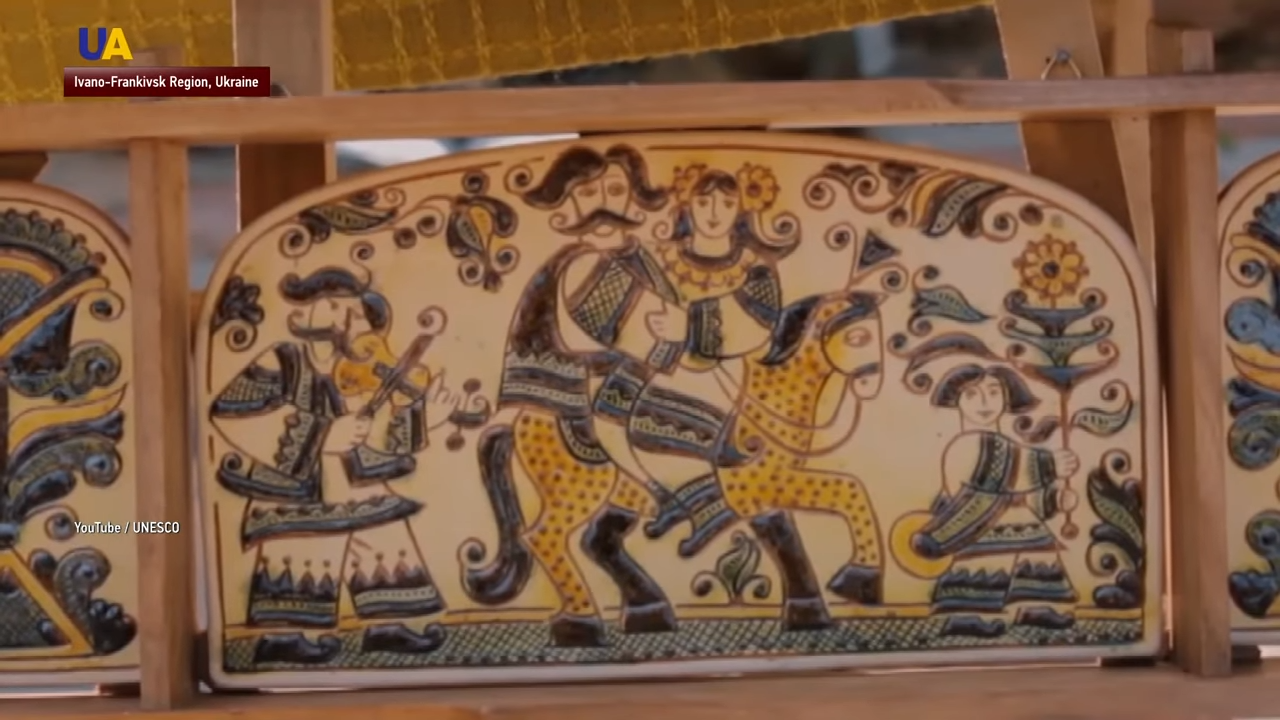
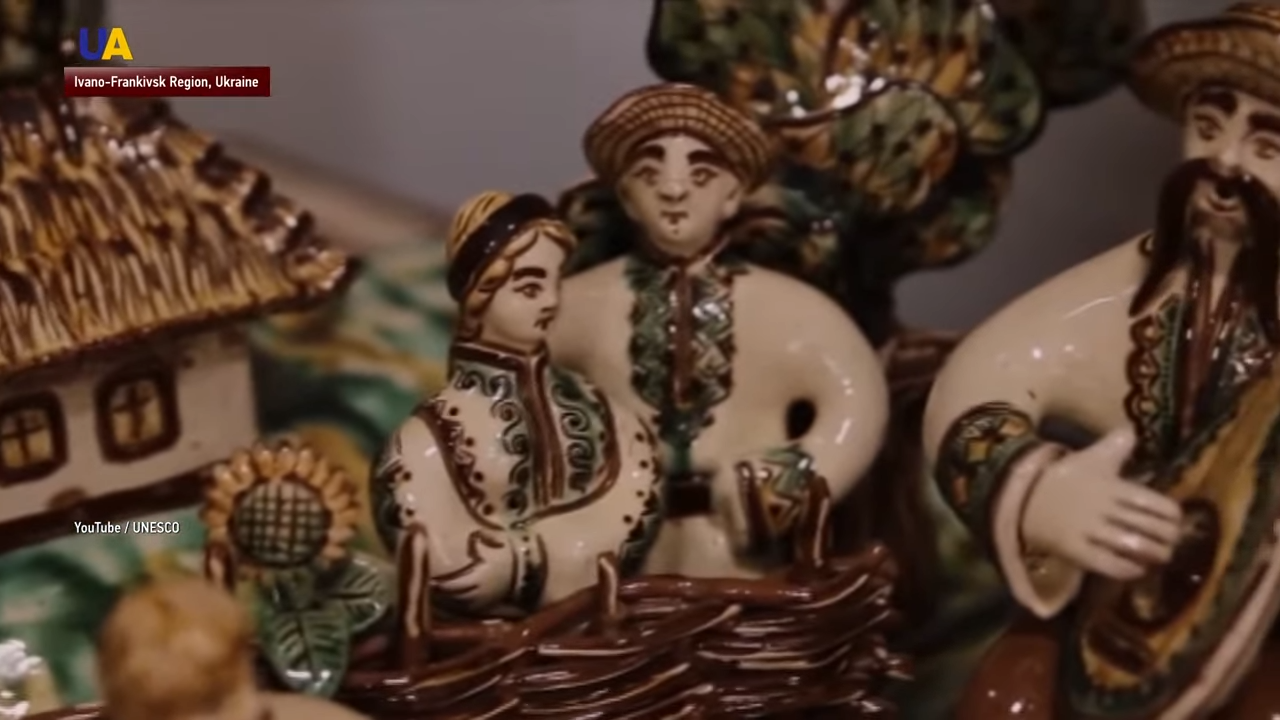
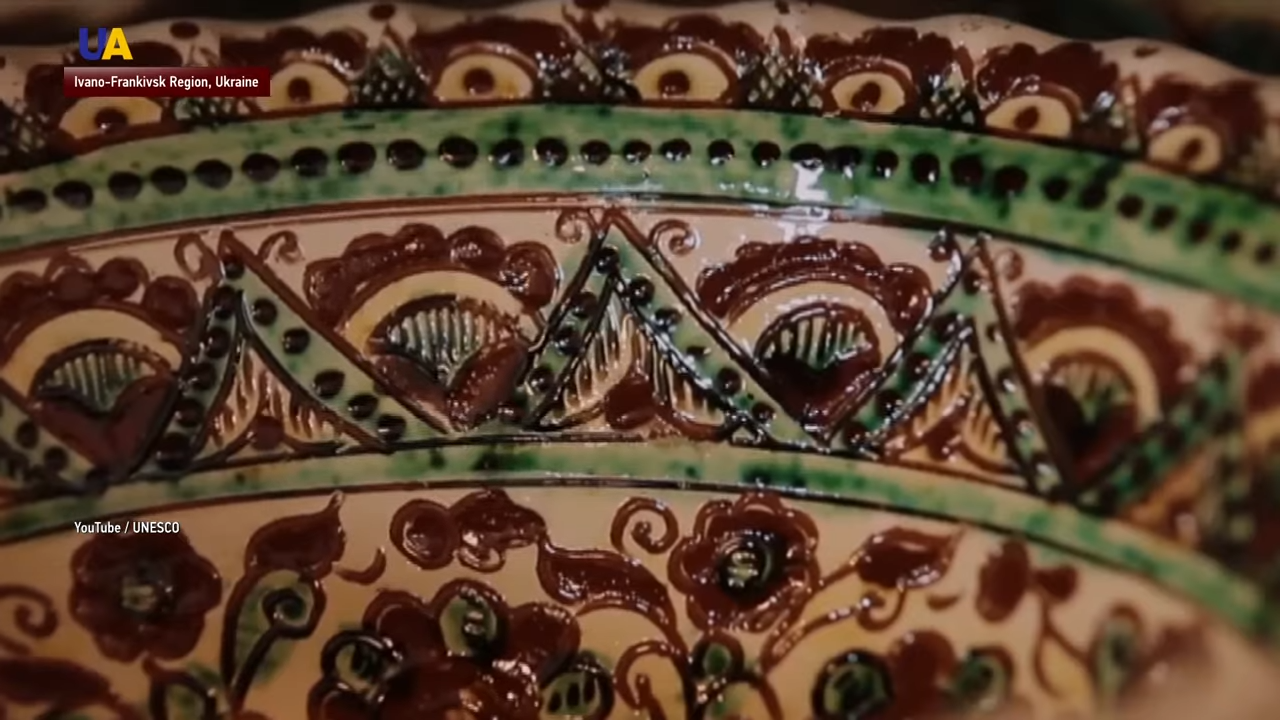
The foundation for the decorative system of Hutsul ceramics was laid in the 19th century through a technique known as ‘rytuvannia’, which means engraved painting. In this technique the master first lays down a layer of white clay and then paints ornaments onto it after drying. After being filled with brown engobe, the ceramics are fired for the first time.
Another pottery master described how the colors depict nature, “The second stage is painting with green and yellow paints which are characteristic for Kosiv ceramics. These are our natural beautiful colours; green, like a forest, yellow, like the sun and brownish, like Mother Earth.”
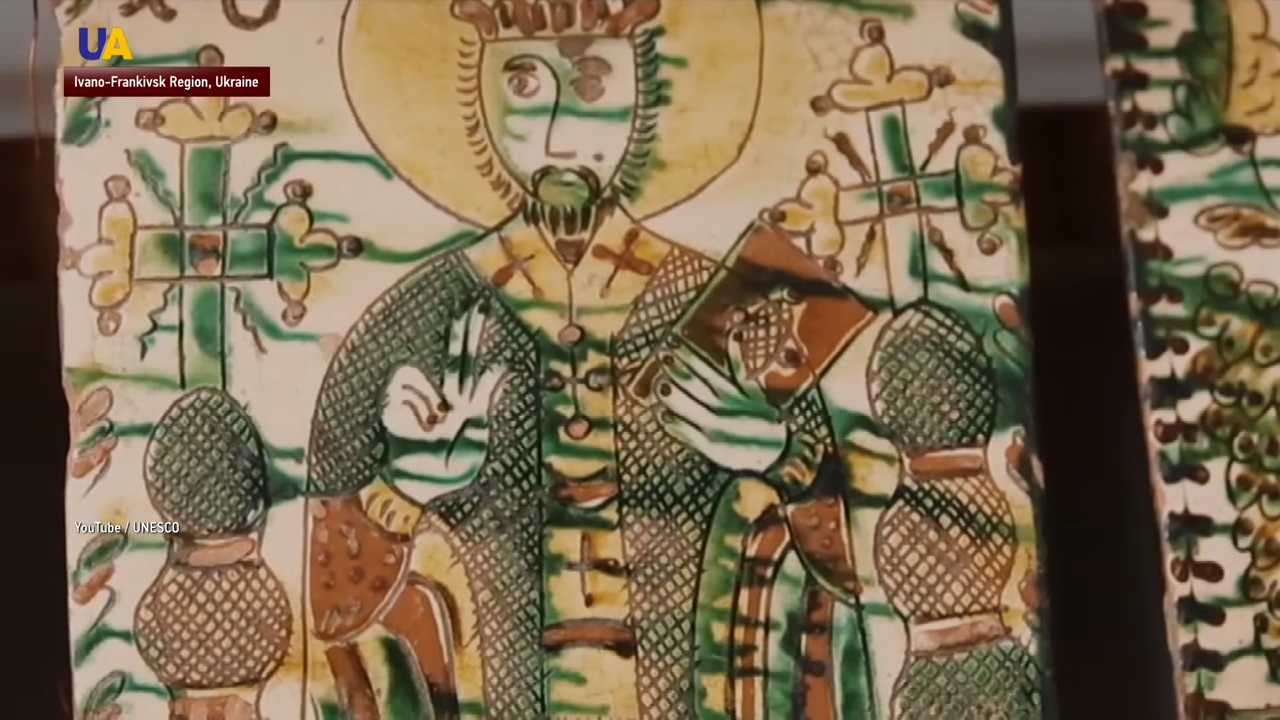
Images often include religious and biblical scenes featuring saints, churches and bell towers.
Masters of the craft work in small workshops which are, often family-owned. They are vital chroniclers of local history.
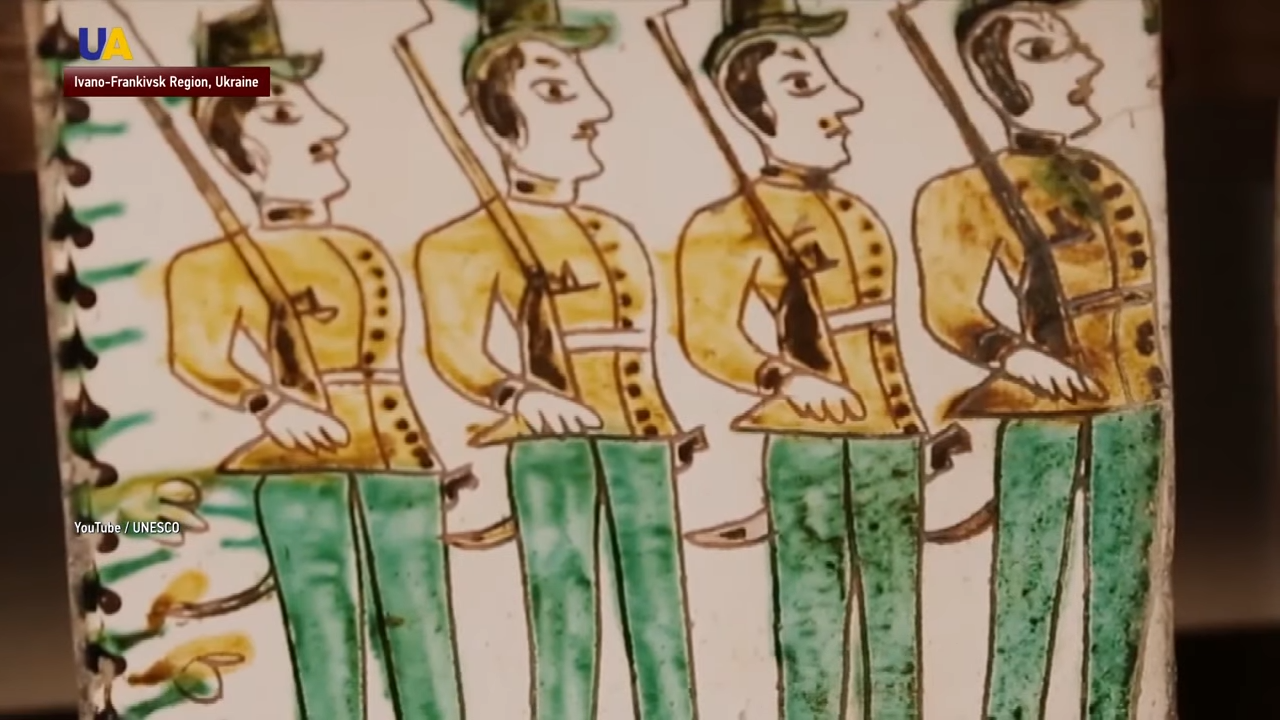
There are ages of local history, the life and everyday routine of Hutsuls in these picturesque narratives. On the oven tiles, platters, bowls, we can see Austrian soldiers, pub owners and potters, weavers, comic love sketches and dances, but also sacred and heraldic motives.