Yesterday at 20:06

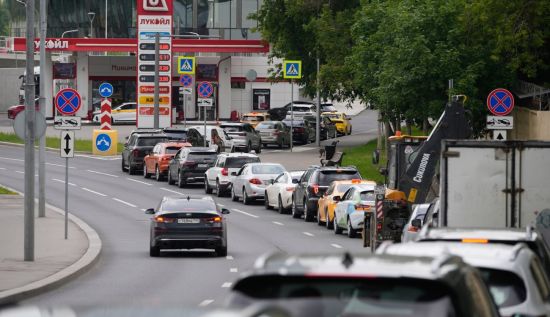
Some Russian airports have begun warning airlines about restrictions on aircraft refueling. Such notices have appeared in Makhachkala, Mineralnye Vody, Krasnodar, Astrakhan, Nizhny Novgorod, and several other cities. Experts believe this may signal a reduction in the availability of aviation fuel in Russia. According to analysts, this is a direct consequence of Ukraine’s long-range strikes on Russia’s energy infrastructure, UATV English reports.
Because of security concerns linked to Ukrainian drone attacks, Moscow has reportedly been forced to scale back and relocate some of its major propaganda events. One example was the annual Russia Day concert, which for the first time in 23 years was moved from Red Square to a cultural center elsewhere in Moscow.
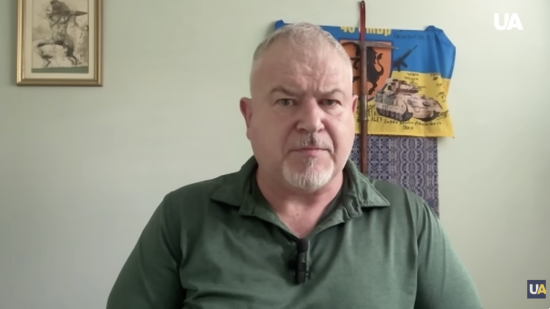
In an interview with Ukrinform, former commander of the Canadian Joint Operations Command Christopher Coates argued that territorial concessions by Ukraine would not bring lasting peace, but would instead allow the Kremlin to regroup and continue its aggression.
“These strikes force Russia to disperse resources, reduce revenues, and remind Russians that war has a price. By themselves they will not determine the outcome of the war, but they are an important part of a broader strategy,” Coates said.
Analysts also point to mounting economic pressure on Russia. According to research cited from the Kiel Institute for the World Economy and the Stockholm Institute of Transition Economics, Russia’s foreign trade turnover has fallen to its lowest level in roughly fifteen years. Meanwhile, the liquid assets of Russia’s National Wealth Fund have reportedly declined from the equivalent of 6.5% of GDP before the full-scale invasion to 1.8% by April 2026.
Political analyst and public policy expert Liudmyla Pokrovshchuk argues that economic difficulties are becoming increasingly noticeable to ordinary Russians and are generating growing public dissatisfaction.
Meanwhile, Ukrainian strikes continue to target Russian military and logistical infrastructure. According to the Security Service of Ukraine, Ukrainian drones recently struck facilities connected to the Russian Navy in Kronstadt, including ammunition storage sites and military infrastructure.
The campaign also increasingly focuses on isolating occupied Crimea. Commander of Ukraine’s Unmanned Systems Forces Robert Brovdi has stated that Ukrainian forces are implementing a “logistical lockdown” of the peninsula by targeting transport, military, and energy routes used by Russian forces.
According to President Volodymyr Zelenskyy, Ukraine’s drone forces struck more than 356,000 Russian targets between June 2025 and June 2026. He indicated that long-range attacks on military and strategic facilities inside Russia would continue to expand.
At the same time, the European Union is expected to discuss a 21st sanctions package against Russia, with foreign ministers set to focus on additional measures designed to increase pressure on Moscow and limit its ability to sustain the war effort.
As reported earlier, operators of the “Alpha” Special Operations Center of the Security Service of Ukraine, together with Ukraine’s Special Operations Forces and Main Directorate of Intelligence, successfully struck the Tamanneftegaz terminal in Russia’s Krasnodar Krai.
According to the SSU, the facility is the largest liquefied hydrocarbon transshipment complex in southern Russia, playing an important role in the country’s energy export infrastructure.
In addition, during the night of June 13, Ukrainian Defense Forces struck an oil preparation and pumping facility in Volgograd region.
Military officials stated that the site is involved in the preparation, transportation, and pumping of oil through main pipelines to Russian oil refineries and export infrastructure.
Ukrainian forces also targeted and hit Russian command posts located in the occupied parts of Donetsk region and Zaporizhzhia region, as well as in Russia’s Bryansk region and the occupied part of Kherson region.
The strikes are part of Ukraine’s ongoing campaign against Russia’s military command-and-control network and critical energy infrastructure supporting the war effort.
Read also: Russian Sabotage in Europe. Ukraine Was Only the First Testing Ground