Yesterday at 20:06

The Easter ceasefire exposed the weakness of temporary silence regimes
The thirty-hour Easter ceasefire announced in April 2026 was meant to be a gesture of goodwill. In practice, it became a demonstration of how fragile any Kremlin promises are without a reliable verification mechanism. Ukraine’s General Staff recorded more than two thousand instances of ceasefire violations involving weapons use in just the first 12 hours, ultimately logging more than ten thousand violations over the entire ceasefire period. The West received yet another reminder that a formal declaration of a ceasefire and actual silence on the front line are not the same thing.
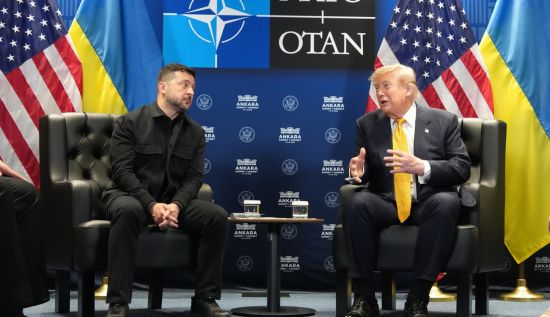
The same scenario played out in May. Kyiv proposed an unconditional ceasefire starting May 6, while Moscow announced its own separate pause for May 8–9 ahead of the Victory Day Parade. Already on May 6, the Ukrainian side recorded 1,820 Russian violations, and the three-day ceasefire of May 9–11, brokered through the mediation of the US administration, collapsed before its official end, amid mutual accusations and overnight drone strikes.
The problem lies not in the declaration of a ceasefire itself, but in the capacity to record violations, establish accountability, and ensure a rapid response. In a war where thousands of drones and artillery systems operate daily along a front line stretching more than 1,200 kilometres, even brief periods of silence become extraordinarily difficult to verify. Any pause without clear monitoring procedures quickly transforms into a space for mutual recriminations.
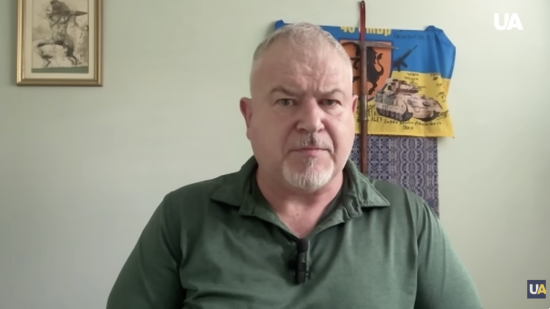
Read the FULL article by Igor Popov, head of United Ukraine Think Tank, expert on political and security issues.
The expert argues that any viable scenario for ending the war must begin with a comprehensive ceasefire. In his view, such a step would represent far more than a humanitarian measure; it would serve as the first serious test of whether a broader peace framework is capable of functioning. If the parties fail to maintain the ceasefire even during its initial stages, prospects for a political settlement would diminish significantly, increasing the risk of renewed escalation.
According to Popov, one of the most pressing unresolved issues concerns the mechanism for monitoring compliance. During the conflict in Donbas between 2014 and 2022, this role was performed by the OSCE Special Monitoring Mission and the Joint Centre for Control and Coordination. While these institutions provided an important framework, their effectiveness was often undermined by restricted access to occupied territories, delays in responding to incidents, and persistent Russian political pressure.
The analyst notes that the OSCE is unlikely to be able to quickly deploy a substantially larger mission along the current front line. As a result, alternative monitoring arrangements are increasingly being discussed among policymakers and security experts.
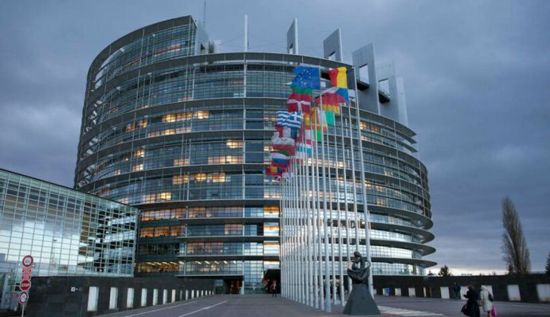
The author points out that a simplified model has gained support in recent discussions, whereby the United States would assume responsibility for technical monitoring through satellites, drones, and artificial intelligence. He highlights that European policymakers appear to be moving in a similar direction. At the EU Foreign Affairs Council meeting on 11 May 2026, High Representative Kaja Kallas announced plans to strengthen the EU Satellite Centre in order to support the monitoring of a future ceasefire and prevent sanctions evasion.
Popov emphasizes that although such an approach appears technologically sophisticated and politically attractive, especially for governments that favour technological solutions, its practical limitations should not be underestimated. Remote monitoring tools can detect troop movements, explosions, and damage to infrastructure, but they are far less capable of explaining the circumstances behind these events.
The security expert stresses that technology alone cannot establish intent or responsibility. Satellite imagery cannot determine whether an incident resulted from a deliberate attack, a technical malfunction, or a false-flag operation. Likewise, algorithms cannot interview witnesses, collect testimony, or provide immediate assistance to civilians affected by violence. Consequently, incidents risk becoming subjects of competing political narratives rather than objectively verified facts.
He further argues that a modern equivalent of the Joint Centre for Control and Coordination would be necessary to ensure the sustainability of any ceasefire arrangement. Such a mechanism should include a stronger international presence, clearly defined response procedures, and the ability to review complaints from both sides in real time.
The analyst explains that this institution would be responsible for conducting initial verification of incidents and escalating disputed cases to the political level when necessary. Without such a structure, a ceasefire could quickly deteriorate into a cycle of mutual accusations, creating opportunities for provocations while limiting Ukraine’s ability to effectively substantiate its claims.
In conclusion, the expert argues that Europe is once again confronting a challenge it has faced repeatedly throughout its history: preserving peace requires more than diplomatic declarations. It also demands sustained investment in institutions, personnel, and monitoring mechanisms. As a country situated at the heart of the European security environment, Ukraine has legitimate grounds to expect such long-term commitments.
Finally, Popov warns that without serious institutional support, any ceasefire may prove to be little more than a temporary pause before the next round of hostilities rather than a genuine step toward a lasting peace settlement.
Read the FULL article on The Gaze: To Maintain a Ceasefire, Reliable Monitoring Mechanisms Will Be Needed
Read also: Europe’s Cyber Front Runs Through Kyiv. Why Ukraine Should Teach the EU Digital Defence