Yesterday at 20:06
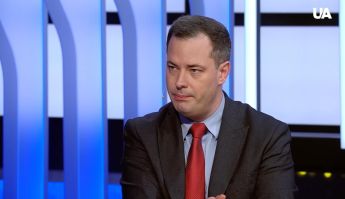
The illusion of the Kremlin’s omnipotence is finally shattered: renowned American political adviser and analyst Jason Jay Smart reveals ironclad signs of the imminent collapse of Putin’s war machine.
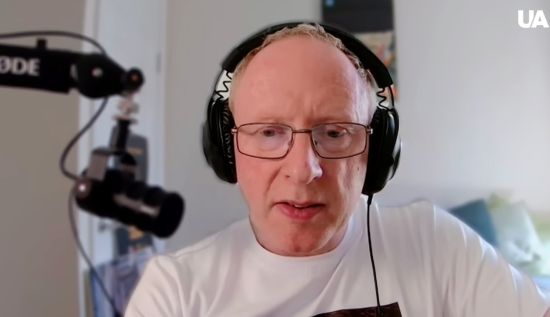
In this interview, Henry Keen and Jason Jay Smart conduct a harsh anatomical analysis of Russia’s systemic decline. Why have massive Ukrainian DeepStrike drone attacks on Saint Petersburg fundamentally shifted the balance of fear and caused the Russian elites to panic? How did Volodymyr Zelenskyy’s open letter to Putin destroy Moscow’s plans for a prolonged war of attrition?
— So this week has been really insane. The Ukrainian Unmanned Systems Forces struck St. Petersburg. Wow. And right against the backdrop of Putin’s economic forum, the showcase event. The commander of the Ukrainian Armed Forces, Robert Brovdi “Madyar,” called it a slap in the face to the dictatorial regime. Fancy, but true.
On the front line, according to DeepState analytics, Russia is attacking more while gaining less. In May, over 7,000 attacks. Seven thousand. This is almost a 40% increase in assault intensity, but only 14 square kilometers came under Russian control again, occupied. This looks like a very poor efficiency rate to me for the Russian war machine.
But President Zelenskyy, in his open letter, another topic, called on the Kremlin dictator for a truce and stated that he is ready to meet with him.
So the most striking image of the week, of course: Putin is hosting the economic forum in St. Petersburg, eager to show that Russia is strong, stable, and completely under control. Meanwhile, Ukraine is hitting nearby infrastructure with drones. This creates a highly uncomfortable contrast for the Kremlin, if you ask me.
Again, but for you as a foreigner, very, very well integrated into Ukraine, yes, but still — what do you think? St. Petersburg on fire. Do you think Putin actually feels embarrassed?
— I think he feels embarrassed. And look, the difference is that Russia gained 14 square kilometers — five and a half square miles — in the total month of May. And what did that achieve for them? Some destroyed farmland, which, okay, they got. Does it make Russia any stronger? No. Does it gain any prestige? No. How does it help Russia? It really doesn’t.
But if you look at what Ukraine is doing, attacking things like this in front of the international community, they see that Russia is completely insecure, that Putin cannot provide security.
But look also at the attacks across all the different oil infrastructure. Twenty-five percent of gasoline and diesel production was taken offline. That’s huge.
Ukraine is actually changing the way that Russia as a state functions, versus what Russia achieves — nominal gains for 30,000 dead and injured soldiers. It doesn’t achieve anything.
It’s night and day, the difference between the philosophy behind this war and the strategy of Ukraine versus Russia.
— Well, okay. But if even St. Petersburg, Moscow, and St. Petersburg no longer feel entirely safe, what do you think rural Russians feel about all this? They can’t be feeling any safety either, right?
— Most likely they don’t feel safe either. I mean, especially if they are connected with people who don’t live in rural Russia, who are living in other cities, and they see that things are rapidly changing.
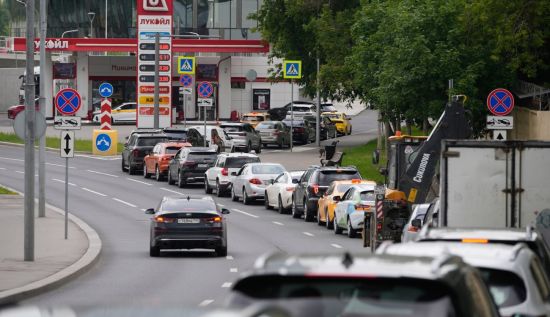
The gas shortages are across the entire country. That means that the cost of food and other goods and services are going to go up because there is a higher cost now than there was before.
But also there is a lack of labor in Russia, which is further going to drive up the cost for everybody. So all in all, everybody in Russia is feeling the economic burn that’s created by this war. We see that the Russian population as a whole isn’t very passionate about this war anymore. They don’t really see what it’s doing for them. And they’re right. The fact is, it’s bad for them too.
If anything, Putin has been bad for everybody involved. So fortunately, I think that there is a realization in the population that things are going terribly wrong. Remember, this is a three-day special military operation that’s passed 1,500 days, and now it’s losing territory.
— Well, things are moving south a bit, but right. I mean, we can say that. But the moment for Zelenskyy’s letter — astonishing. Obviously, Ukraine strikes deep inside Russian territory, allowing Ukraine to have cards, you know, big and pretty beautiful.
But against that backdrop, President Zelenskyy addressing the Kremlin dictator once again, this time from an even stronger position, reminding Putin of the war’s cost and things like that — like over, you said, 30,000 killed and severely wounded. And he also called on Putin to be constructive. I mean, since the war is happening and everything that he said, what’s the point of talking in this tone of voice to a brutal dictator who instigated the war? Maybe I’m missing the point here.
— Well, I think the reality is there are a few different things here.
I think that, frankly, Ukraine is probably in the very near future going to have some very major breakthroughs in the direction of Crimea or Donbas.
And when it has those breakthroughs, they would like to have this record that before that happened, Putin was given an option. And Putin chose not to take the option, the olive branch, to try to find a deal.
He believed, through his arrogance, through his hubris, that he could continue fighting this war, and it will be rubbed in his face in the end.
Because I think Ukraine is on the verge of doing something very big. We’ve seen all the signs about it for the past few weeks. And as a result, we can be pretty sure that Russia is not going to be prepared for this. And this letter will serve to once again incite the Russian population to recall that their leader has done nothing else but destroy Russia’s ability to operate as a normal state.
— Okay. As a normal state. I would love to talk for hours about that, but a straightforward question. Jason, do you believe there will be talks or not?
— No, I don’t think so. I don’t think it’s — one, I think it’s bad for Putin, the way he would look at it, because he’s already said that Zelenskyy is not a serious leader, that he’s a dictator and everything else. For him to meet with him would then discredit everything that Putin has said so far before his domestic audience.
I don’t think he would be willing to take that risk. But moreover, ultimately, we know what he’s motivated by. And it’s not because of anything that’s going to come up with peace talks. This war is necessary for him to be able to maintain his dictatorship.
So how do you explain that to somebody else? I don’t think you really can. Everything that we’ve heard about peace talks for three and a half, four years now has been a waste of everybody’s time. There’s never been any intention to end this war from Russia.
— Okay. Well, let’s slide to a different topic. I agree with that, but I don’t know who’s going to come next after Putin. At some point, though, I think we’re going to see something happening with him. But another question is about what Russia is doing on the front line: attacking with way more assaults and getting way less.
So far, the Russians refuse to understand, to grasp the language of diplomacy. They just don’t want to, which is utterly stupid.
The picture of the front line according to DeepState: more than 7,000 assault operations.
In general translation, it’s about a 40% increase in the quantity of offensive actions, while the quality plummeted no less. Like you said, just 14 square kilometers occupied. But seriously, Russia burns through people and resources in vain. Why? What’s the point?
I mean, I understand — Putin wants war, and while the war exists, he exists. Is that the thing? Is it the public image or what? Because the public image of Vladimir Putin has been shattered recently.
Well, I think it’s worth noting that if you look at the oligarchy in Russia, it’s grown substantially due to this war. I mean, it’s doubled.
But more than that, the oligarchs that are around Vladimir Putin himself — their net worth has increased several times over what it was before. Like 400% growth. And that’s the oligarchs around Putin.
Now, all the oligarchs in Russia have had an increase — let’s say, I don’t recall the number, I would say it was about 27% to 35% over the past few years. But those close to Putin — we’re talking three times more value, net worth today than they had before. Four times. Five times. So if you’re looking at that sort of massive transfer of wealth within the population, this war is a very convenient cover for that.
The transfer of wealth that’s occurring right now in Russia is second probably only to the collapse of the Soviet Union. It is absolutely substantial, what is occurring across Russia.
We see them seizing assets right now across the country from people who are in the oligarchy, who have left, people who speak out against the government. Time and again, Putin in the last few weeks has talked about the need to go after illegal deals from the 1990s and take assets from those people.
We’ve heard Elvira Nabiullina, who is head of the Central Bank, talk about the fact that there is cash, U.S. dollars and euros in banks, in private personal accounts, and that the Russian government should go for those. That’s where this is all heading. This is about the enrichment of a very elite class in the population. This war fundamentally is about that today.
So when they are burning through soldiers in Russia, I’m absolutely certain they don’t care because it’s just a material good to them.
It’s like killing people in Ukraine. They just don’t care.
So if you don’t care at all about this, it’s just another day at work. Then why should we be surprised? They want to continue this. If they’re making lots of money, why would they want to stop?
— So, are you literally telling us, Jason, that oligarchs are running Russia, or Putin runs the oligarchs?
— Well, it’s a collective system. He’s the head. It’s a mafia, is a better way of phrasing that. And he’s the don of the mafia, but there are other parts of the mafia, and they all work with him.
— So, talking in business terms, shall we? Russia increases the input in terms of assaults, and still the output is plummeting, which translates into — if not the escalation in the number of assaults — well then, this means that the Ukrainian Defense Forces are literally breaking the very backbone of the Russian war effort. Is that what is happening on the front line, or am I just engaging in wishful thinking here?
— No, that’s accurate. I mean, think about it this way: Russia’s recruitment level right now is about 35% less than what it has to be. The front lines at this point have become brittle.
We saw Ukraine take back incredible amounts of territory just in the past few weeks. It’s pushing further and further into what was occupied, and as it’s doing that, it is essentially liberating this territory.
It means that today Russia has already reached the apex, the highest point of occupation. At this point, it’s just going to decrease, because the net amount of territory that Ukraine is liberating is greater than the amount of territory that Russia takes.
So now Russia is receding, and the height is already over. It won’t get higher again, and Russia is being pushed further and further back. What’s interesting is that because they lack soldiers, it means that today Russia will only continue to lose territory. And life expectancy at the front is like 20–30 minutes at different points for the Russians, which means that it’s going to be impossible for them to coalesce and to advance.
So as this happens, we’re watching the disintegration of the Russian military inside Ukraine.
— Okay. But Russians are at least trying, looking for a way, let’s put it that way, to improve it all. They call it “small assault groups.” I don’t know what that means, but in fact it’s when one infantryman — seriously, just one man — runs across a field in a desperate hope, as this is actually a kill zone, for God’s sake, still hoping that a swarm of angry Ukrainian birds — drones — will somehow spare him. So what’s the plan?
— There is no plan. I’m pretty sure that the reason the Russians do that still today is because it serves no military purpose. It doesn’t advance Russia in any way. I think it’s just to keep Ukraine from being able to rapidly move east. So you have to at least put up some resistance, show that there are people there.
Because I can’t understand what it does. It quite literally does zero to advance Russia’s objective of reaching Kyiv. I think it’s about that. But that’s why Russia ultimately, I think, has also realized what Ukraine realized.
Ukraine realizes that the actual battlefield, day in and day out, won’t change how this war ends.
It’s attacking within Russia. And I think that Russia also realizes it has to have some sort of paradigm shift if it wishes to see the war go in its direction. And so the battlefield can’t be its only center of focus.
— Okay, let’s talk a little bit about Washington and NATO. Are they beginning to see the real Russia at the moment? Well, the United States House of Representatives has passed a bill — finally — with new aid to Ukraine and sanctions against the Russian Federation.
Also, Marco Rubio called the war against Ukraine a strategic disaster for Russia that can never be won. Mark Rutte, during his visit to Kyiv, spoke very bluntly. Russian recruits are poorly trained, poorly equipped, and if they have any good chance at anything, then it’s dying. So my question in this regard is this:
From the Ukrainian perspective, it looks as if the West is finally starting to talk about Russia not as a great invincible military power, but as what it actually is — weak, drained, and actually exhausted, as exhausted as it gets. Is that the picture that you see from Washington, Jason?
— That’s definitely the picture I see. I think that overall there’s been a change of heart in many cases, as people realize that, one, Russia is certainly not our ally. But also Russia is working openly with enemies, such as Iran. We’ve seen that continuously. It has done what it can to supply intelligence to Iran, to strike American soldiers, to kill American soldiers in foreign countries.
And so if that’s the case, it’s very hard to justify being friends with Russia, thinking that somehow we’ll work together. Unfortunately, some people still believe that. But overall, I think that times are changing. Today, it’s become ever more clear that Russia is a common enemy, not just the enemy of Ukraine.
— Times are changing. Hearts are changing. The results of the House of Representatives vote — this $400 million, if I’m not mistaken, for Ukraine and more — that is a good omen. Narratives about supporting Ukraine again dominate the Senate. For how long? Until the next ballgame, or is it unpredictable?
— It’s hard to predict. But I think at this point it’s probably reached a turning point. It’ll probably get more positive from here, mostly because I think that the electoral gain that came from opposing Ukraine — because there’s definitely a segment that opposed it — has already passed its peak.
And it’s very hard to justify that position with everything else that has transpired since then. I mean, if you have to pick examples of the U.S. misspending money, why the border wall is a great expenditure but this isn’t, or Iran is a great expenditure but this isn’t, it’s really hard to justify.
So I just don’t see it as being politically useful. Even if you’re a MAGA Republican and firmly believe that this is a bad use of money, there are other things you can talk about that would probably be less of a problem, more unifying, and help you more in an election than Ukraine. Ukraine is not a very good issue for them anymore.
— Even the — I call him, you know, the only adult in the room — Marco Rubio calls this war a strategic disaster. Russia. Why do many — you said it, some are believing Russia is a friend. Why do many European and American politicians still behave as if Vladimir Putin holds all the cards, all the advantages, and is definitely going to win, while Moscow, St. Petersburg, or the refineries are burning?
— Well, that’s the incredible part. I think a lot of it is just built on a myth that was built up during the Soviet period, where we understand Russia to be a much greater country than it is.
And it doesn’t appreciate what modern Russia has become. It’s just become a shell of a serious country.
You know, it has nuclear weapons — if they work. Nobody really knows. Do the launchers work? Nobody’s really quite sure. It’s got a lot of tanks, but we found out a lot of them are rusted. I mean, they’ve got a ton of artillery, a lot of which apparently didn’t work. Hence why they had to get more from North Korea, in which case those explode quite a bit. It’s not very impressive. It’s sort of in terminal decline. And to see it all playing out, I think, has been somewhat surprising to people in the West.
Read also: Why Ukrainian Weapons Head West: the War Created a New DefTech Market for NATO