Yesterday at 20:06

Kyiv opens controlled arms exports after four years of pause
Following the de facto export ban introduced at the start of the full-scale invasion in 2022, Ukraine is returning to the global arms market. Defense News reports that President Volodymyr Zelenskyy has officially confirmed preparations for regulatory steps to launch the first export contracts in 2026, and Ukrainian parliamentarians from various factions have formed a political consensus under which the needs of the front remain a priority, but surplus capacity is to be sold to partners in order to attract investment into domestic production.
For its part, the analytical outlet Lawfare notes that in 2025 the capacity of Ukraine’s defence-industrial complex was estimated at approximately $35 billion, while government orders covered only a third of that, and in 2026 the sector’s capacity could reach $50 billion. It is precisely this gap between production capability and domestic funding that triggers the export logic.
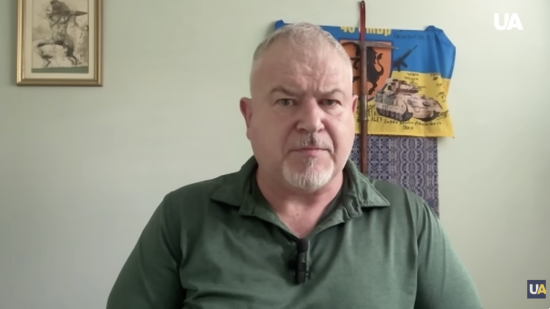
Read the FULL article by Bohdan Popov, Head of Digital at the United Ukraine Think Tank, communications specialist and public figure.
Popov notes that alongside Ukraine’s export liberalisation, the United States is approving new categories of weapons for Kyiv. On 5 May 2026, the State Department approved a potential Foreign Military Sales transaction of 1,532 JDAM-ER kits valued at $373.6 million, as The Defense Post records. The package includes 1,200 KMU-572 kits for 500-pound aviation bombs and 332 KMU-556 kits for 2,000-pound bombs, converting Soviet-era free-fall munitions into precision weapons with a range of over 70 kilometres. Boeing has been designated as the prime contractor.
The expert argues that FlightGlobal notes the weapons will be deployed on F-16 platforms, which Ukraine is receiving from European partners, as well as on modified Soviet-era MiG-29 and Su-27 aircraft. The export model here is not a one-way transfer, as Ukraine plays the role of integrator, combining Western munitions with its own aviation and unmanned infrastructure.
Popov notes that Ukraine’s position in the global market is not taking shape in a vacuum. According to the latest SIPRI report, global arms flows in 2021–2025 grew by nearly ten per cent owing to surging European demand. Germany rose to fourth place among the world’s largest arms exporters, with 24 per cent of its exports going to Ukraine as aid, while Italy grew its volumes by 157 per cent. This European demand structurally requires not merely old platforms, but precisely those solutions that actually work under fire — and it is here that Ukraine is building a competitive offer.
The expert argues that according to Defense News, American and European companies are already expressing interest in Ukrainian strike and reconnaissance UAVs, anti-drone systems, and programmes for integrating Western munitions with post-Soviet air-defence systems known as FrankenSAM.
Popov notes that the fundamental shift is that Ukraine, with an army of approximately one million servicemembers, is simultaneously building an industrial export framework. The government is opening two specialised export offices, in Berlin and Copenhagen, with additional locations planned in the United States and in Global South countries.
The expert argues that two models are being considered — Build in Ukraine and Build with Ukraine — under which partners either invest in production on Ukrainian territory or open joint production lines in their own jurisdictions. For a Western customer, this means shortening the time from research concept to series production, because Ukrainian developers work in cycles of several weeks rather than years. This speed is today the defining characteristic of precisely the type of weapon NATO needs, from compact strike UAVs to electronic warfare assets and anti-drone networks.
Popov notes that the combination of Ukrainian demand, Western financing, and a growing American military order is creating a market structure that would have been unthinkable before 2022. Ukraine is not merely absorbing aid — it is beginning to export competencies, serial prototypes, and weapons maintenance services. For a Western reader, this dismantles the outdated image of Kyiv as an unfathomable financial burden and opens a different perspective.
The expert argues that a future NATO member with Europe’s largest army, comprising one million combat veterans and scalable production, is becoming an infrastructural component of collective defence. The JDAM-ER deal, the export offices in Berlin and Copenhagen, and allied interest in Ukrainian UAVs together outline the contours of a new DefTech market, in which Ukraine positions itself not as a supplicant but as a partner with unique battlefield verification of its product.
Read the FULL article on The Gaze: Why Ukrainian Weapons Head West: the War Created a New DefTech Market for NATO