Yesterday at 20:06

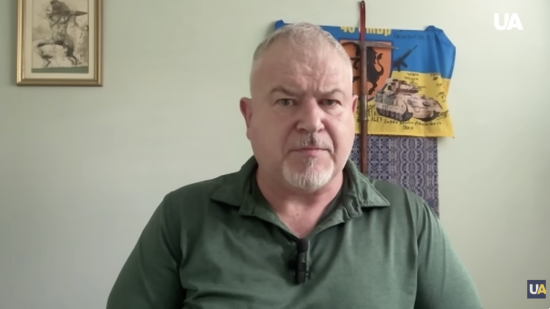
In this special episode, Valeriy Borovyk, a combat veteran and founder of the defense company “First Contact,” reveals the unique history behind the rise of the Ukrainian drone revolution — from the early volunteer experiments of 2014–2015 to the modern, large-scale production of autonomous systems capable of burning out the enemy both on the front line and deep within the rear of Russia.
We break down in detail how a technological leap in first-person view (FPV) drones, long-range unmanned aerial vehicles, and Artificial Intelligence-driven interceptors has allowed the Armed Forces of Ukraine to compensate for shortages in artillery, missiles, and manpower. We also explore why cheap Ukrainian anti-drone systems are set to permanently reshape the global concept of air defense, and why the fierce technological race with Russia continues to rage, demanding constant adaptability in engineering solutions.
— Over the year, the Unmanned Systems Forces hit Russian targets of various levels. The figure here is nearly $40 billion. We’re not even talking about the numbers right now. I want to know — in your opinion, thanks to what have we managed to move from the point where unmanned systems and UAVs were used primarily on the front line to eliminate Russian occupiers, to the point where today drones can strike targets far beyond the battlefield, deep in the rear on the territory of the Russian Federation?
I understand this journey cannot be described in a few sentences, but how did Ukraine go through it?
— Well, it’s a puzzle that started coming together at the end of 2014 and the beginning of 2015.
For instance, we released the first kamikaze drone in Ukraine and submitted it for certification and procurement in 2015. It was called the Yatagan drone.
Back then, it was very difficult even to talk about drones. They called them loitering munitions. It wasn’t clear where to place them, relatively speaking — which branch of the military should receive them. There were tons of questions, and we were dealing with regulations.
That was the beginning. I wouldn’t say the state supported all of this. It was something new. There were literally five or six companies, enthusiasts, who started doing this.
Then came Minsk I and Minsk II. Funding for offensive weapons, including drones, was stopped. Reconnaissance drones continued to receive some funding, but strike drones did not. When the full-scale war came in 2022, Ukraine was basically not prepared with strike drones.
I remember how we were constantly being hit by artillery corrected by Orlan drones. At that time, I was serving in a National Guard special forces company, and we had nothing to respond with. We had no combat drones and very few reconnaissance drones.
The state started asking everyone: “Give us drones.” But you couldn’t get components, and you couldn’t find specialists because many had gone to the front with rifles in their hands or had left the country.
To be honest, the process restarted largely through the enthusiasm of manufacturers, through renewed production, research and development, and the simplest possible devices. Gradually, we reached what we have today.
I remember the appearance of the first FPV drones. We demonstrated one of the first FPV drones to Commander Zaluzhnyi. He asked for a written concept, so we prepared a concept paper on the development of FPV drones.
The idea took off.
FPV drones and medium-range strike systems were not funded for several years. Now medium-range strike capabilities are being funded, and in parallel deep-strike systems are being funded as well — long-range strike capabilities.
If I had to summarize how it all came together, I would say it was a puzzle assembled from enthusiasm, patriotism, persistence, and creativity. Manufacturers, self-taught engineers, designers, IT specialists — many, many people participated in this process.
At first, everything was driven by enthusiasm. Then the state provided serious support. The Ministry of Digital Transformation became involved in funding, coordination, and implementation.
There were meetings, numerous regulatory changes, and frankly we had to fight with those losers in the military establishment who had not helped since 2015. We know many of them by name. They were people who did not contribute to the development of the drone industry.
Eventually everyone saw that drones were the future and began supporting them. Now significant funding is coming into different sectors. There is still bias, lobbying, and corruption has not disappeared.
But the synergy between manufacturers, enthusiasts, companies, and the state — which finally began funding, supporting, and scaling implementation — has led us to where we are today.
I couldn’t have said this before. Previously, we were neck and neck with the enemy. But now it is visible even from the results of the strikes.
Look at where they strike and what results they achieve. Look at where we strike and what results we achieve. I think that in the past month and in the months ahead we are already seeing, and will continue to see, greater Ukrainian effectiveness than that of our opponent.
— I wanted to show a statement by the Commander-in-Chief of the Armed Forces of Ukraine, Oleksandr Syrskyi. You have already touched on this point, and now we can expand on it.
According to Syrskyi, in terms of FPV drone use, Ukraine’s Defense Forces have already surpassed the Russian Army by a ratio of 1.5 to 1. During the last month, this advantage continued to grow in favor of the Armed Forces of Ukraine. As he also noted, since the beginning of 2024, Ukrainian drone operators have neutralized 12,500 more Russian occupiers than Russia managed to mobilize during the same period. Valeriy, this isn’t the limit, is it?
— Naturally, it’s not the limit.
We are scaling up. The enemy is not standing still either. They are scaling up as well and providing a worthy response. We should not overpraise ourselves. The enemy is adapting too.
But we need to understand very clearly that this technological excellence and the leap we made in the drone industry have effectively saved the country.
We do not have the same human resources. At the start of the war, we also did not have the same quantity of equipment, weapons, ammunition, or missiles. We all remember the shortages.
Now, thanks to the drone component, we have effectively not only leveled the playing field, but we have stopped the enemy and are even reclaiming territory faster than they are able to capture it.
It is fair to say that this technological leap helped save the country, helped repel the enemy, and I believe that in the end it will help us win.
Without this breakthrough in drone technology, the situation would have been entirely different. Today drones are not just one component of warfare — they are one of the key reasons Ukraine has been able to compensate for disadvantages in manpower and conventional military resources.
— We still have a couple of minutes, and as a follow-up I’d like to present a short piece of material. I also want to ask you something. First of all, Ukraine now has an Unmanned Systems Forces Day, which is very important, and the corresponding decree was signed by the President of Ukraine yesterday. Today, Ukrainian UAVs perform several different functions. If we’re talking about interceptor drones, Ukrainian drone interceptors… Valeriy, how has Ukraine progressed in this area? And I’d also like to hear from you, as a specialist in this field, to what extent Ukrainian interceptor drones are helping not only Ukraine, but other countries as well.
— Look, it’s a natural process. Why are we better at scaling this technology? Why were we among the first to use it? Because we didn’t have normal systems. We didn’t have enough traditional air-defense systems — systems capable of kinetic interception of missiles, machine guns, and so on, supported by effective detection capabilities.
Second, we were under constant attack. We were being attacked by long-range strike systems — Shaheds, or Gerans as the Russians call them. So we had to find a countermeasure, and we found one.
On the other hand, Russia did not face large numbers of Ukrainian long-range strikes a few years ago, so they had less incentive to develop cheap countermeasures against them. This was a natural process of adaptation in our defense.
That’s why we scaled this capability and demonstrated to the entire world that with relatively cheap drones costing one, two, or three thousand dollars, you can destroy attack drones worth tens of thousands of dollars.
Today we are genuinely ahead of everyone in this technology. At the same time, it’s relatively easy to scale and easy to copy. I was recently at the ILA exhibition in Berlin. Many companies are already presenting similar systems. I think we’ll see the same thing at Eurosatory next week. As for exporting these technologies, I’ll give you an example.
The teams who demonstrated our drones to countries in the Persian Gulf encountered a very specific situation. To be honest, many people there want to simply press a button and have the system automatically fly out and destroy the target.
They don’t have the system we have — although even we don’t yet have it fully developed — including radar networks that can provide guidance and target designation. They also don’t have large numbers of pilots willing to train, improve, and spend time manually controlling these drones. That’s simply how their systems are organized.
Some countries, such as the Emirates, demonstrated fairly effective air defense. But at what cost? How much did they spend on missiles that were used to shoot down targets that could potentially be intercepted by inexpensive drones? That’s one reason why large-scale adoption abroad has not yet happened.
And honestly, I’m not sure it will happen on a massive scale because this technology is relatively easy to copy. What you really need is the infrastructure behind it: radars, target designation systems, three-dimensional radar coverage, triangulation systems that tell the drone where to fly, and then a human operator who visually completes the interception.
Once all of this is scaled and combined with an effective terminal guidance system — which doesn’t yet fully exist — using artificial intelligence, then it will become a true “fire-and-forget” weapon. And that would fundamentally change warfare.
For example, in Afghanistan, when the United States supplied the Mujahideen with Stinger missiles, those weapons began shooting down the Soviet Union’s previously dominant aviation. They were “fire-and-forget” systems. You launched them and didn’t need to guide them afterward.
The same principle applies here. Once interceptor drones receive effective autonomous guidance systems, they will be scalable on an entirely different level. But I’ll repeat: the world has already started moving in this direction.
The systems may be more expensive. They may be less effective. They may not be battle-tested. Nevertheless, companies in other countries have strong lobbying capabilities and will be able to supply various types of interceptor systems around the world.
As for Ukraine, we need to secure our share of that market. For that to happen, the state needs to properly open the gates for exports instead of sitting on these golden eggs. The current policy has already demonstrated its inefficiency.
There were attempts to exchange drones for missiles and pursue various forms of military-political bargaining. I think that approach is mistaken. In my opinion, it would be better to allow companies to sell directly wherever the Ukrainian state considers it acceptable and authorized.