Today at 20:39
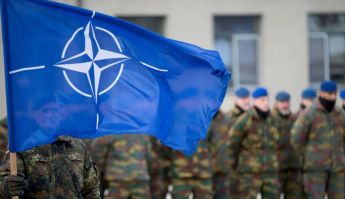
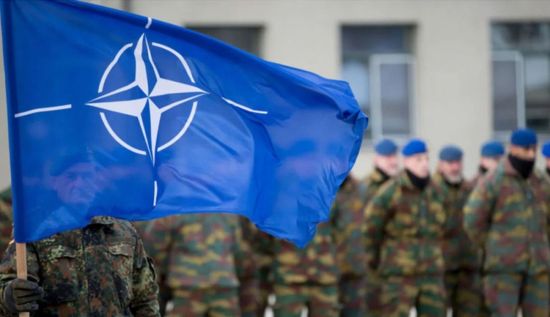
The United States has provided its NATO allies with a document outlining plans to reduce the American military presence in Europe, The New York Times reports, citing sources. While the Pentagon has not specified a timeline for the changes, European countries are already discussing new approaches to regional security. Journalists from FREEДОМ examined how Europe plans to ensure its own security in the future.
NATO countries are preparing for a reduction in the U.S. military footprint on the continent. Washington plans to significantly decrease the number of its aircraft and naval assets stationed in Europe. According to The New York Times, the number of F-16 and F-15E fighter jets will be reduced from 150 to 100, while all aerial refueling aircraft are expected to be withdrawn from Europe.
Maritime surveillance aviation will also be cut from 26 to 15 aircraft. In addition, the United States plans to redeploy a cruise missile submarine and an aircraft carrier along with its escort vessels to other regions, while removing one of its two strategic bomber groups from Europe.
According to experts, these changes could limit the ability of European NATO members to conduct long-range strike operations and maritime surveillance.
“Although each of these reductions can be managed individually, together they represent a significant shift in posture and create challenges for European deterrence readiness across all domains,” said Giuseppe Spatafora, an expert at the European Union Institute for Security Studies.
Although Washington has not yet announced an exact timeline for implementing the plans, European governments are already discussing how to guarantee security with less direct U.S. support. According to Bloomberg, this issue was central to a meeting of the defense ministers of Poland, Germany, France, Italy, and the United Kingdom on June 12.
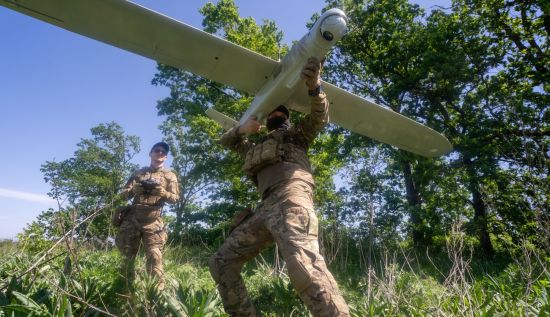
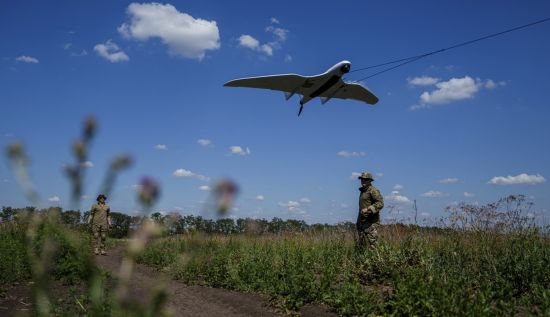
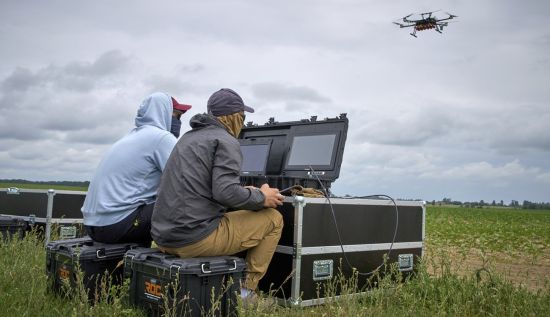
One of the most urgent challenges discussed by allies is how to counter Russian drones that violate the airspace of European states. According to Politico, NATO countries plan to grant the Alliance’s military commander greater operational flexibility in responding to such threats. This would allow for faster redistribution of resources within NATO.
“There have been numerous Russian provocations against the Baltic states and Poland involving drones. For example, several drones entered Polish territory simultaneously without carrying explosives. In response, NATO strengthened air defense capabilities, deploying surface-to-air missile systems from the Netherlands and sending French fighter jets to the area. At the same time, NATO countries did not convene consultations under Articles 4 or 5 of the Alliance treaty. Instead, concrete steps were taken that would have been impossible without U.S. support,” noted international affairs expert Dmytro Levus from the United Ukraine Center.
On June 12, Sweden’s emergency response forces deployed fourth-generation Gripen multirole fighter jets to intercept a Russian Su-24 tactical bomber and a Su-34 supersonic fighter-bomber over the Baltic Sea.
According to the Swedish Armed Forces, the Russian aircraft were operating near Swedish airspace but did not violate it. Military officials stated that they could not speculate on the reasons for the flights but considered the situation highly serious.
“Russia’s behavior is serious and represents a recurring pattern that threatens both our territorial integrity and security,” said Eva Skoog Haslum, Chief of the Joint Operations Command of the Swedish Armed Forces, in a statement published on the military’s website.
From June 16 to June 26, Lithuania, Poland, and France will conduct the multinational Gallant Boar 2026 exercises near the Suwałki Corridor. The main objective of the drills is to practice joint military operations and improve coordination among allied forces. Special attention will be given to capabilities required for the rapid and effective defense of this strategically important area.
Earlier, NATO launched a large-scale effort to strengthen the defense of its newest members, Finland and Sweden. In Finland, the new multinational Forward Land Forces Finland unit has officially begun operations as part of the Alliance’s rapid reaction forces.