Today at 00:13

On June 21, 2025, global geopolitics shifted dramatically when the United States launched a major military operation, codenamed “Midnight Hammer,” targeting Iran’s main nuclear sites. This bold move has far-reaching implications for international relations, economic stability, and Ukraine’s strategic position.
Dive in this topic with Anton Kuchukhidze, political scientist and foreign policy analyst, expert at the “United Ukraine” Think Tank, in his article for The Gaze.
Firstly, political scientst explains that on the evening of June 21, 2025 (Washington time) — and early morning June 22 in Europe — the United States carried out a massive air and missile assault on three major sites tied to Iran’s nuclear program: Fordow, Natanz, and Isfahan. The operation, launched in support of Israel, significantly escalated tensions in the Middle East and sparked global fears of a potential World War III. Code-named “Midnight Hammer,” it marked the largest combat deployment of B-2 bombers in U.S. history. The Pentagon reported the involvement of over 125 aircraft, including seven B-2 stealth bombers that dropped 14 GBU-57 bunker-busting bombs, alongside a barrage of Tomahawk cruise missiles.
President Donald Trump stated that the operation effectively dismantled Iran’s nuclear capabilities, which he claimed were nearing the production of nuclear weapons. Israeli Prime Minister Benjamin Netanyahu praised the strike as a “historic” action aimed at stopping a nuclear threat from what he called the world’s leading state sponsor of terrorism. Iran confirmed the attacks, saying it had preemptively removed enriched uranium from the targeted facilities, minimizing radiation risks, though it acknowledged substantial damage to the sites.
Secondly, Kuchukhidze argues that the global economy is already feeling the impact of Operation Midnight Hammer. Oil prices surged by 7% the day after the strikes, amid fears of supply disruptions from the Persian Gulf — a region where Iran plays a key role, contributing about 4% of the world’s oil exports. Bloomberg reports that China, a major buyer of Iranian oil, is urgently seeking alternative suppliers such as Saudi Arabia and Qatar, a move that could temporarily drive up global energy prices. Grain and commodity markets have also reacted, with prices climbing due to concerns over regional instability and the security of vital trade routes — particularly the Strait of Hormuz, which handles around 20% of global oil shipments.
For Ukraine, the U.S. military engagement with Iran presents both challenges and opportunities. A major risk is that Washington’s focus on the Middle East could lead to a decrease in military and financial support for Kyiv — aid that has been crucial since 2022 in Ukraine’s fight against Russian aggression. Resources may now be redirected to bolster Israel and expand U.S. military presence in the region.
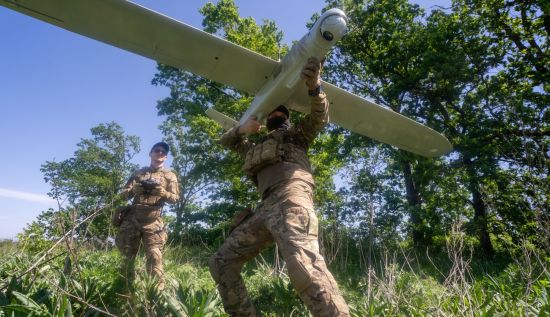
However, the situation may also bring strategic benefits for Ukraine. Firstly, Israeli airstrikes likely damaged Iranian facilities involved in manufacturing Shahed drones, which Russia has heavily relied on to attack Ukrainian cities. This could reduce the intensity of those assaults. Secondly, greater U.S. control over maritime routes in the Persian Gulf may disrupt arms shipments from Iran to Russia. Thirdly, the conflict puts Moscow in a bind: either support Iran militarily and risk direct confrontation with the U.S. and Israel, or stay out and damage its credibility as a dependable ally — especially in the eyes of China, North Korea, and others.
Thirdly, expert emphasizes that whether Operation Midnight Hammer marks the beginning of World War III is still uncertain. While the post-Soviet multipolar world makes a traditional global war less likely, localized conflicts — like those in Iran or Ukraine — carry the risk of expanding. Iran has already retaliated with missile strikes on Israel, and the potential involvement of proxy forces such as Hezbollah and the Houthis raises the likelihood of a wider regional confrontation. Russia, although cautiously supporting Iran, is avoiding direct commentary to prevent provoking a clash with the U.S. Meanwhile, China — reliant on Iranian oil — is responding with restrained diplomatic rhetoric, though it may seek leverage through economic channels and trade negotiations.
Global economic interdependence serves as a barrier to full-scale war. For instance, Taiwan, which produces 70% of the world’s microchips, has remained untouched due to its essential role in the global supply chain. Iran, on the other hand, is more exposed, as its economy is heavily reliant on energy exports. Still, any escalation in the Persian Gulf — a vital artery for global oil transport — could spark economic instability severe enough to ignite a wider geopolitical crisis.
Read the full article by Anton Kuchukhidze on The Gaze: Is the World on the Brink of World War III?
Read also: G7 2025: A Summit Caught Between Old Alliances and New Powers