Yesterday at 20:04

After the Budapest Memorandum’s collapse, Ukraine is pursuing new security arrangements with concrete partner commitments. A return to vague, nonbinding promises is off the table after nearly four years of full-scale war. Kyiv’s diplomacy now centers on building a postwar system of security guarantees through talks with key partners—both military and political—and via a “coalition of the willing” that already numbers more than 30 states. The strategic aim is straightforward: deter any renewed aggression by making the costs for Russia prohibitively high.
Read more in the article by Igor Popov, head of United Ukraine Think Tank, expert on political and security issues.
Firstly, the political expert explains that President Volodymyr Zelenskyy has said these guarantees should function “like NATO’s Article 5,” triggering an automatic partner response if Ukraine is attacked again. The emphasis is on bilateral and multilateral pacts that spell out timelines and concrete actions by guarantor states. Work is underway: the “Compact” has catalyzed bilateral security agreements, with the UK, France, Germany, Italy, Canada, and the United States among those now onboard.
This growing coalition is unprecedented for a non-NATO country. Still, many of today’s agreements primarily codify military and other forms of assistance. Genuine security guarantees must go further, establishing clear, pre-agreed response protocols in the event of fresh aggression.
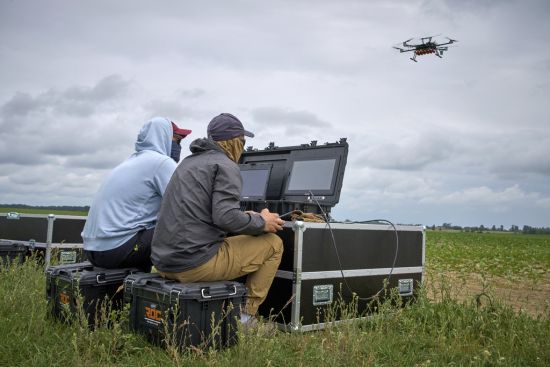
Secondly, Popov argues that a robust domestic defense sector is another pillar. In 2025, Ukraine continued dedicating a large share of its budget to the defense-industrial complex, launching more than 300 new facilities to produce ammunition and drones and signing dozens of deals with global firms, from Germany’s Rheinmetall to Turkey’s Baykar.
Thirdly, the author emphasizes that Denmark’s funding model illustrates innovative guarantees. Copenhagen created a dedicated Ukraine Fund pooling public and private money; in 2023–2024 alone, it delivered over €1.8 billion, including €1.2 billion for military support, with multi-year financing approved in advance. The Netherlands, Norway, the Czech Republic, and others plan to follow suit. For Ukraine, this ensures steady resources; for donors, it provides transparency and oversight.
Finally, the specialist summarizes that no single instrument can deliver absolute security. But taken together—binding agreements, long-term force funding, defense-industry investment, allied presence, the Danish-style fund, integrated air defense, and Black Sea maritime cooperation—these measures build an architecture that makes renewed aggression against Ukraine highly unlikely. For Western partners, this is not only support for Kyiv; it also strengthens their own security and the wider rules-based order.
Read the full article by Igor Popov on The Gaze: What Could Security Guarantees for Ukraine Look Like?
Read also: Why Ukraine’s Victory Matters for International Law