Today at 20:05

The war in Iran has exposed a new and alarming vulnerability in modern conflicts: water infrastructure. Recent strikes on desalination facilities in Iran and Gulf states have demonstrated how access to drinking water can become a strategic target, placing millions of civilians at risk and expanding the boundaries of what is considered acceptable in warfare.
For countries across the Persian Gulf, desalination plants are not auxiliary facilities but essential infrastructure that sustains daily life. In several Gulf states, the overwhelming majority of drinking water depends on these systems. As tensions escalated in 2026, attacks and threats directed at water facilities highlighted how quickly a military confrontation can evolve into a humanitarian crisis.
Analysts warn that a “water shock” may have consequences even more immediate than an energy shock. While disruptions to oil supplies primarily affect economies, interruptions to water systems directly threaten public health, social stability, and the basic functioning of entire states. The growing integration of power generation and water treatment facilities further increases their vulnerability during conflicts.
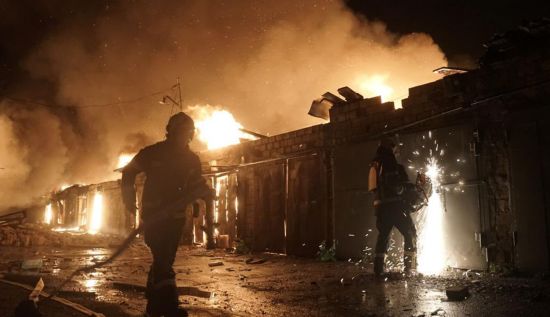
For Ukraine, these developments are particularly familiar. Since the start of Russia’s full-scale invasion, Ukrainian cities have repeatedly faced attacks on energy, water, and other critical civilian infrastructure. Millions of people have experienced blackouts, heating outages, and disruptions to water supplies, while damage to hydropower, water treatment, and distribution facilities has reached billions of dollars.
At the same time, Ukraine has become a testing ground for innovative approaches to infrastructure resilience. Decentralized energy generation, battery storage systems, mobile power units, and backup solutions for water utilities have helped communities maintain essential services despite sustained attacks. These experiences are increasingly attracting international attention as governments seek ways to protect critical infrastructure from future threats.
The growing use of civilian infrastructure as a tool of coercion raises broader questions about international law and the protection of non-military targets during armed conflicts. As attacks on water systems become a reality not only in Ukraine but also in the Middle East, experts argue that new international mechanisms may be needed to strengthen accountability and safeguard infrastructure indispensable to civilian survival.
Ukraine’s experience places it in a unique position within this debate. Having endured years of attacks on energy and water networks while simultaneously developing practical solutions for resilience and recovery, Kyiv has accumulated expertise that could help shape future international standards for protecting critical civilian infrastructure.
Read the full article by Ihor Petrenko, Founder of the United Ukraine Think Tank and Doctor of Political Science.