Today at 15:05
Europe is increasingly reassessing its long-standing reliance on the United States for nuclear deterrence as political and strategic shifts in Washington prompt European leaders to explore new security arrangements of their own.
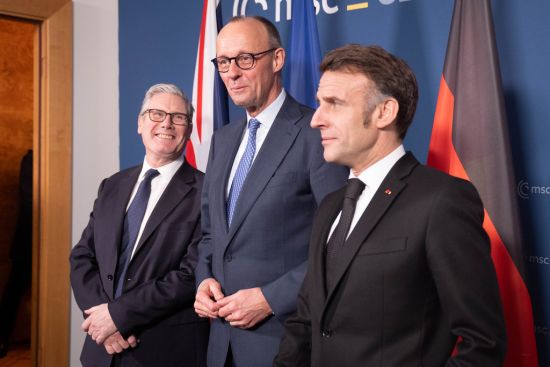
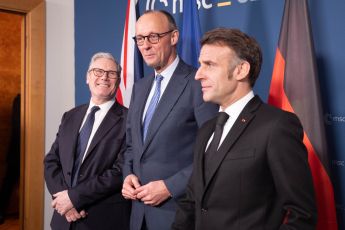
Recent initiatives led by France and Germany suggest that discussions about a European nuclear deterrence framework have moved beyond theory. French President Emmanuel Macron has outlined a renewed vision for France’s nuclear doctrine, including closer cooperation with key European partners, while Berlin has launched formal consultations with Paris on the future of European nuclear security.
The growing debate reflects broader concerns that the United States is placing greater emphasis on the Indo-Pacific while expecting European allies to assume more responsibility for their own defense. Although Washington continues to reaffirm its NATO commitments, statements by senior U.S. officials have encouraged European governments to prepare for a future in which American military support may become more selective.
Alongside the Franco-German dialogue, cooperation between France and the United Kingdom has also intensified. New bilateral mechanisms for strategic consultation and nuclear coordination are emerging, signaling Europe’s desire to strengthen its own deterrence capabilities while formally maintaining the existing NATO framework.
At the same time, experts caution that significant challenges remain. France’s nuclear arsenal is considerably smaller than that of the United States, while Paris retains exclusive authority over any decision to use its nuclear forces. Political uncertainty, including future elections in France, and legal constraints affecting some European states also complicate efforts to build a more integrated deterrence architecture.
Europe is entering a transitional period in which confidence in the traditional NATO model is being tested, even without any formal changes to the Alliance itself. Rather than replacing NATO, European governments appear to be building additional layers of security designed to hedge against future uncertainty.
Whether these initiatives ultimately strengthen NATO or gradually reshape the continent’s security architecture remains an open question. What is already clear, however, is that discussions once considered politically impossible have now become part of Europe’s mainstream strategic debate.
Read the full article by Dmytro Levus, foreign policy expert and analyst at the Kyiv-based United Ukraine Think Tank.