Today at 20:04

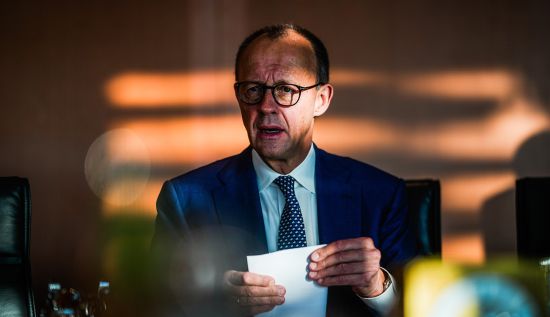
German Chancellor Friedrich Merz warned that Russia is preparing for further aggression beyond Ukraine, saying Moscow poses a growing threat to the Baltic states, Moldova and other parts of Europe while already waging a hybrid war against Germany, UATV English reports.
Speaking at a press conference in Berlin, Merz said Russia’s actions extend well beyond its war against Ukraine.
“We see clear preparations by Russia for further aggression. It goes far beyond Ukraine: it threatens the Baltic states, threatens Moldova and threatens other parts of Europe,” he said.
The German chancellor stated that Germany is already experiencing hybrid attacks orchestrated by Russia, including sabotage, espionage and cyber operations targeting critical information networks.
“We are facing extensive acts of sabotage, espionage attempts and attacks on our information networks. All of this constitutes forms of hybrid warfare against Germany,” Merz said.
Reiterating a previous assessment of Europe’s security environment, he added: “We are not living in a state of war, but we are no longer living in peace either.”
Merz described Germany as one of the main targets of Russia’s hybrid campaign because of its central position in Europe, while stressing that Berlin is rapidly strengthening its own defense capabilities.
The chancellor also praised Ukraine’s military and technological progress since the start of Russia’s full-scale invasion.
“What is truly impressive in this context are the capabilities Ukraine has developed over the past four years, and from which we are now benefiting as well,” he said.
Asked whether Russia could exploit the time needed for European countries to rebuild their defense capabilities, Merz expressed confidence that NATO’s deterrence remains strong.
“I assume that we still have a sufficiently high level of deterrence within NATO,” he said.
Merz added that Alliance members are united on the need to strengthen Europe’s defense capacity.
“Deterrence works. At the same time, we understand that in the future we must do much more ourselves. NATO must become more European in order to remain transatlantic,” he said.