Today at 20:05
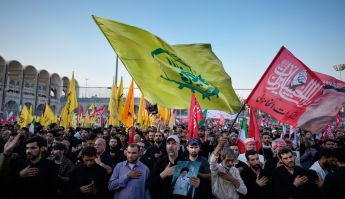
The success of the security agreement depends entirely on whether the Lebanese state will be able, for the first time in history, to disarm a powerful pro-Iranian proxy force on its soil
On June 26, in Washington, Israel and Lebanon signed an American-brokered trilateral framework that ties any Israeli withdrawal from the south to the verified disarmament of Hezbollah. U.S. Secretary of State Marco Rubio called it “the beginning of the beginning.” It builds on a ceasefire reached on June 3, in which the two sides agreed to advance pilot zones where the Lebanese army would take exclusive control, excluding all non-state actors.
The idea is easy to state and very hard to execute, and it places the Lebanese state, not Israel, in the position of having to defeat the proxy on its own soil. The deal is officially trilateral, with the United States as its guarantor, yet it pointedly excludes the one actor whose weapons it is designed to remove.
Read the FULL article by Valentyn Gladkykh, political analyst, expert at the United Ukraine Think Tank.
Gladkykh argues that the proposed security mechanism rests on a carefully sequenced implementation process rather than simultaneous concessions by both sides. Under the framework, two initial security zones have been designated where the Lebanese Armed Forces are expected to gradually assume full responsibility. Only after the dismantling of Hezbollah’s military infrastructure and the verification of disarmament would Israeli forces withdraw, reconstruction begin, and displaced civilians return under the exclusive authority of the Lebanese state.
The political analyst notes that the most sensitive aspects of the arrangement remain concealed within a confidential security annex that has not been made public. As a result, the central question of who will actually carry out Hezbollah’s disarmament remains unresolved. According to Gladkykh, Israeli officials nevertheless view this sequencing as the agreement’s principal innovation because troop withdrawals are now conditioned on verified implementation rather than on political assurances that failed to produce results following previous agreements in 2006 and 2024.
The expert argues that this reversal of sequencing also creates a fundamental political dilemma. Hezbollah has historically justified retaining its weapons by citing the continued Israeli presence in southern Lebanon. Under the new framework, however, disarmament becomes the prerequisite for Israeli withdrawal, effectively transforming Hezbollah’s arsenal into the justification for Israel’s continued deployment rather than the reason for its departure.
According to the analyst, Hezbollah has responded by firmly rejecting the proposed arrangement. Secretary-General Naim Qassem reportedly described the agreement as humiliating and pledged to continue resistance until Israeli forces fully withdraw. Other senior figures within the movement have warned that attempts by the Lebanese Armed Forces to enforce disarmament could trigger internal armed conflict.
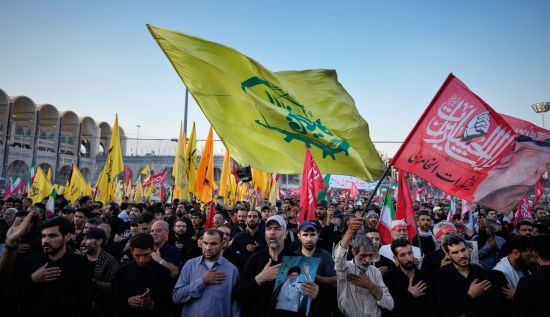
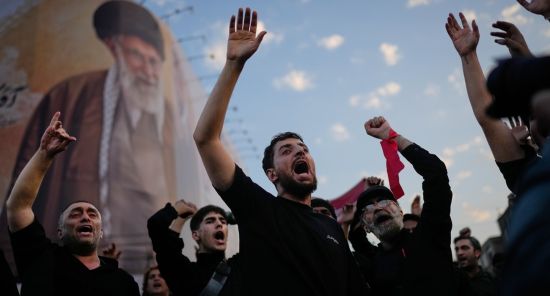
Gladkykh notes that Israeli military leaders have likewise adopted a firm position. Hezbollah fighters remaining in designated areas would be granted only a limited period to relocate northward before facing military consequences. These developments have already generated protests in Beirut, while Lebanon’s chief prosecutor has instructed security institutions to prepare for possible domestic unrest.
The political scientist argues that the Lebanese state now finds itself trapped between conflicting pressures. On one side, Israel demands effective implementation of the agreement; on the other, Hezbollah rejects disarmament and continues to portray itself as the legitimate defender of Lebanon against Israeli occupation. Against the backdrop of thousands of casualties since fighting intensified in March, Lebanese society itself remains deeply divided over whether the agreement represents a path toward stability or merely legitimizes a prolonged Israeli military presence.
According to the expert, the Lebanese government has nevertheless committed, together with the United States, to prevent reconstruction funds and external financial assistance from reaching Hezbollah. In his assessment, this represents a broader effort to curtail the extensive financial networks through which Iran has supported the organization for decades.
The analyst emphasizes, however, that the Lebanese Armed Forces face an extremely difficult task. The army is widely perceived as lacking the military capacity to confront Hezbollah directly, while any attempt to enforce disarmament risks being interpreted by parts of the population as an attack against the country’s Shiite community and the broader so-called “Axis of Resistance.” Consequently, the greatest danger is not only that disarmament fails, but that the process itself further destabilizes Lebanon internally.
Gladkykh also observes that Israel continues to hedge its own commitments. While Prime Minister Benjamin Netanyahu has presented the pilot security zones as evidence that Hezbollah can be disarmed and territory transferred to Lebanese state control, other Israeli officials have simultaneously acknowledged the possibility of maintaining a prolonged military presence. The analyst notes that Israel continues to control approximately one-fifth of Lebanese territory, while military operations—including drone strikes and the destruction of Hezbollah infrastructure—have continued even after the signing of the agreement. In his view, the framework intended to end the conflict is therefore being implemented while active hostilities persist.
The political analyst argues that the significance of the agreement extends far beyond Lebanon itself. He describes it as the first major test of a broader regional order that Washington is attempting to construct—one that simultaneously seeks limited engagement with Iran while reducing Tehran’s influence over Lebanon through the weakening of Hezbollah. Within this strategy, Hezbollah is no longer portrayed primarily as a force resisting Israel but increasingly as the principal obstacle to the consolidation of Lebanese state sovereignty.
According to Gladkykh, the United States is pursuing these two objectives simultaneously by maintaining channels of economic engagement with Iran while restricting financial flows to Hezbollah. He cautions, however, that this delicate balance can only succeed if the Lebanese Armed Forces accomplish a task that no previous state institution has managed: establishing an effective monopoly over the use of force in southern Lebanon.
In conclusion, the expert argues that the outcome of this process will carry broader implications for the Middle East. If the Lebanese state succeeds in reclaiming control over the south and disarming Hezbollah, it would strengthen the principle that sovereign governments alone should possess armed force. If it fails, the agreement risks joining the long list of previous ceasefire arrangements that remained largely symbolic. In Gladkykh’s assessment, southern Lebanon has therefore become more than a contested border region—it has become a test of whether state sovereignty in the post-war Middle East can be translated from diplomatic declarations into political reality.
Read the FULL article on The Gaze: Lebanon Must Disarm a Power Stronger Than the State. The South Is the Test of Whether It Can
Read also: How the Russian Myth of “Inevitable Victory” Is Crumbling in the Fuel Crisis