Today at 14:23
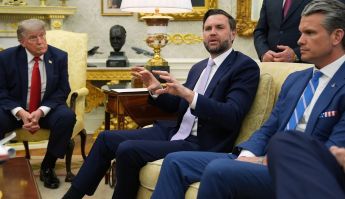
Kyiv has several months to convert Washington’s new statements into concrete weapons and technologies
Recently, the official rhetoric of the United States and the Trump administration has changed radically. Moreover, it has changed at multiple levels. At first, there were only isolated publications in the Western media claiming that at the G7 summit the allies had allegedly managed to convince Trump that the situation at the front was evolving more favorably for Ukraine than for Russia. Then came official statements from the U.S. representative to the UN that Russia must immediately agree to a ceasefire, otherwise things will only get worse for it. Overall, time is not on Russia’s side.
After that, journalists at the White House began asking Trump himself directly who, in his opinion, is winning. He replied that Zelenskyy is handling the challenges quite well and the situation for Ukraine is developing in a positive direction. Finally, Marco Rubio disavowed all the Russian fantasies about the “spirit of Anchorage” and other supposedly existing agreements between Trump and Putin, reached in Alaska, concerning the framework for ending the war. Rubio stated that no agreements had been made there. There were only conversations, but they led to nothing, because otherwise the war would already be over.
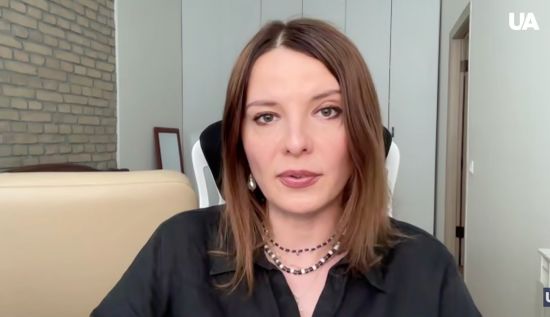
Read the FULL article by Petro Oleshchuk, political scientist, Ph.D., expert at the United Ukraine Think Tank.
Oleshchuk argues that recent changes in political rhetoric toward Russia deserve attention not because of the statements themselves, but because of the practical implications they may carry for Ukraine. In his view, the key question is whether this shift will translate into concrete policy decisions and meaningful support rather than remaining at the level of political messaging.
The political scientist contends that the underlying reason for this rhetorical change lies in Russia’s increasingly difficult strategic position. While developments on the battlefield remain important, he emphasizes that Ukraine’s long-range strikes against Russian oil refineries and fuel transportation infrastructure have created growing pressure on Moscow’s economic rear. According to Oleshchuk, fuel shortages emerging across several Russian regions illustrate that these attacks are beginning to undermine sectors vital to Russia’s war effort.
The analyst argues that these developments challenge the perception that Russia is steadily gaining the upper hand. Echoing John McCain’s famous description of Russia as “a gas station masquerading as a country,” he suggests that Moscow increasingly resembles a gas station struggling to supply its own fuel. In his assessment, such realities are difficult for both Russian leaders and Western policymakers to ignore.
According to the expert, these developments also undermine President Vladimir Putin’s narrative of military success. He argues that claims of territorial advances become less convincing when Russia cannot adequately protect its own airspace or ensure the stable functioning of strategically important industries. This, Oleshchuk suggests, provides Ukraine with a compelling argument when engaging its American partners by demonstrating that Russia is not, in fact, winning the war.
The author also believes that recent events in the Middle East have contributed to changes in Washington’s strategic calculations. He argues that the Trump administration is reassessing aspects of its foreign policy following the conflict with Iran, which, from Washington’s perspective, failed to produce a clear political victory. Although the United States retained the military capacity to escalate further, the administration ultimately concluded that prolonging the conflict would be counterproductive and accepted certain Iranian demands instead.
The political analyst notes that this outcome has generated domestic political challenges for President Trump ahead of congressional elections. In this context, he suggests that achieving a visible foreign policy success related to the Russian-Ukrainian war could become an attractive political objective.
Oleshchuk argues that the administration may therefore seek to reframe its approach to Ukraine. Rather than presenting itself simply as a leader who ended another international conflict, Trump could instead emphasize delivering another strategic victory for the United States. Such a narrative, in the expert’s view, would be more politically advantageous during an election campaign.
At the same time, the analyst cautions against excessive optimism. He stresses that American policy will continue to be guided primarily by U.S. national interests rather than by Ukraine’s priorities. Nevertheless, he believes Washington increasingly recognizes an opportunity to place substantial pressure on Russia and strengthen its own geopolitical position.
The expert suggests that supporting Ukraine can be viewed in Washington as a strategic investment. By helping constrain a major geopolitical rival while simultaneously demonstrating American strength, the United States could reinforce its international credibility without committing large numbers of its own troops.
However, Oleshchuk observes that the United States remains cautious about significantly expanding its direct investment in the war. For now, he argues, Washington’s approach consists largely of political statements and efforts to associate itself with Ukrainian military successes. He cites media reports suggesting that American intelligence may have supported Ukrainian drone operations against Moscow as an example of this tendency.
The political scientist emphasizes that cooperation with the Trump administration will continue to require active engagement by Ukraine. He argues that Kyiv should intensify its work with both chambers of Congress, where bipartisan support for Ukraine—including among Republican lawmakers—still creates opportunities for advancing policies favourable to Ukrainian interests.
According to the analyst, one particularly promising initiative would be renewed advocacy for a modern version of the Lend-Lease mechanism. Such an approach, he argues, aligns with Trump’s broader political philosophy because it emphasizes loans, investment, and economic returns rather than unconditional aid. In his assessment, this framing could make continued support for Ukraine more attractive to Republican legislators.
In conclusion, Oleshchuk warns that Ukraine should avoid becoming overly dependent on the United States despite the current favourable political environment. While the coming months may offer a valuable opportunity to advance Ukraine’s agenda in Washington—particularly in the context of congressional elections—he argues that American administrations will always retain the option of seeking a future rapprochement with Russia when it serves their own interests. For this reason, Ukraine should take advantage of the present window of opportunity while continuing to diversify its international partnerships.
Read the FULL article on The Gaze: Has Washington Finally Changed Its Mind on Ukraine?
Read also: Iran’s Regime Outlasted the War. Can It Outlast the Peace?