Today at 20:04

“This war will end when Putin dies, is arrested, or Russia collapses — not before.”
Today’s guest is military analyst and former US Air Force nuclear and missile operations officer Jake Broe.
NO Kremlin fantasies or propaganda! Only harsh military reality:
Why is Russia “burning” lives and money? Jake Broe explains why Moscow is losing by spending years and billions to capture small towns.
AFU Strategy: Analysis of the highly effective “land-for-time” strategy as Russia bleeds on the battlefield and at fuel stations.
Key topics: The real significance of Pokrovsk and Kursk, strikes on oil refineries, and Russia’s economic spiral. Who is the real winner? “China is the biggest winner in this war, and they are preparing for Taiwan.”
Read the FULL interview between UATV English host Henry Keen and Jake Broe here.
— Well, let’s start with the battle of Pokrovsk. Russian tactics and Ukrainian defense. Deep State reports significant Russian advance in Pokrovsk. Are Ukrainian forces encircled or not? Is Ukrainian retreat inevitable or not? And what’s going on? If so, how will this affect the overall front line in Donetsk? Do you think, Jake?
— Concerning Pokrovsk, Ukraine for the last four years has been trading land for time. I argue: what military in the history of the world has done a better job of trading land for time? If you zoom in far enough, it looks like the Russians are making daily advances, but you have to zoom out and think about the big picture. What percent of Ukraine’s total territory have the Russians taken over the last thousand days? About 1%. How many casualties has the Russian military taken? How much of their National Wealth Fund have they squandered over the last three and a half years?
President Zelenskyy says that the forces in the city, Ukrainian forces, are outnumbered 8 to 1. But that’s military science: you want to minimize casualties while holding territory and maximize the losses that the invaders are taking. It’s a difficult situation, but making daily videos about this war for four years now, I remember the story of early 2022 when Lysychansk and Severodonetsk were surrounded, the cauldron was collapsing, the Russians were advancing, they were going to have a huge breakthrough. How much farther beyond Severodonetsk and Lysychansk have the Russians gone in the last three and a half years?
The story of early 2023 was Bakhmut. The cauldron was collapsing, the Russians were enclosing, they’re going to have a breakthrough. How much farther beyond Bakhmut have they gone in the last two and a half years? The story of 2024 was Avdiivka. Avdiivka is surrounded, the cauldron is collapsing, the Russians are advancing, they’re going to have a breakthrough. How much farther have they gone since taking Avdiivka a year and a half ago, and it’s the next midsize town. It’s Pokrovsk. So Pokrovsk has been the story of 2025. Kostiantynivka the story of 2026. Sloviansk the story of 2027. Kramatorsk the story of 2028, right? How much longer can the Russians keep wasting men, wasting material, wasting resources, and wasting time to take midsize town after midsize town in one oblast of Ukraine?
— Right. Well, how much longer, Jake?
— We’re going to find out, Henry. This war is going to continue until either Putin is dead or arrested by his own people, or there’s a total political-economic collapse of Russia, which I think is the only way to make this war end.
— That makes two of us. I’m sure you’ve heard Putin offered a corridor of sorts for journalists into the combat zone, a temporary ceasefire for five or six hours for even Ukrainian journalists to come and see that Ukrainian forces are in a dead end, pocketed, surrounded, helpless at least. The Ukrainian foreign minister calls it a trick. We all know what happened in Ilovaisk. It’s either fake or setup or both. As we know, Putin and a fair deal are two mutually exclusive concepts.
— You’re right. Putin has called for these ceasefires a couple times in the last two years, and every time he has done it, it’s purely for rotating Russian troops. If Putin is publicly declaring he wants a ceasefire, it’s because he wants to advance his own forces to get into positions to encircle even more without Ukrainians firing on them. Russia doesn’t care about the lives of journalists. They deliberately target journalists every day, trying to kill the people reporting the truth of this war. I didn’t even report on that in one of my videos because it’s not worth mentioning. It’s obviously a Russian trick. They’re trying to rotate and move their own forces without Ukrainians firing on them.
— I absolutely agree, and I know my two colleagues, my dear colleagues, just passed away—were killed, murdered by incriminators, by a Russian Lancet drone. They deliberately did that. I know that. Another question. Ukrainian armed forces liberated new territories in the region. Any strategic significance? Can we call it a counteroffensive yet or not?
— No. I think these are fire-control units. Two months ago the Russians went pretty deep—about 10 km—in a very straightforward salient, and Ukraine had to respond. They had to send some of their elite units to control and contain. The Russians were then sliced and diced and took horrendous casualties. This is near the city of Druzhkivka, north of Pokrovsk. Nothing has been significantly changing on the battlefield in this region in my opinion. The last two months the Russians have been trying armored columns to have breakthroughs. Twenty-nine vehicles were destroyed three or four days ago. It’s the same thing we’ve been watching for four years in the Donbas region. I don’t think anything significant has been changing that will determine the outcome of this war. Ukraine is trading a little bit of land for a little bit more time as their own defense production increases and the West gets serious about sanctioning Russia’s economy.
— There are other sorts of sanctions, deep attacks deeper into Russian territory. Recently, Vasyl Maliuk confirmed that in summer 2023 one of three Orlans was destroyed in Kapustin Yar, Russia—that is deep into Russia if you look at the map. And with recent Ukrainian strikes on Russian refineries and thermal plants all over Russia causing a drop in oil production, etc. It’s all good, but how serious do you think the blow is for Putin’s war effort and his war challenges?
— Something changed on August 1, and Ukraine decided, “We’re not going to hold back anymore.” I think Donald Trump was saying, “Don’t do deep strikes into Russia during the peace process. We’re trying to get a ceasefire; we’re trying to end the war.” But even Donald Trump, I think, has given up on the idea of Russia willingly stopping this war under any terms. Russia wants territory.
It’s not about anything else that Putin says or Lavrov says. About twenty different refineries have been struck in the last months by long-range Ukrainian drones. We’re seeing gas lines, shortages, price hikes. Russians at the pumps are seeing 98 rubles per liter for gasoline. To an American—$4 a gallon—that doesn’t seem crazy, but you have to put it in perspective of the monthly salary of an average Russian worker. These are horrendous prices.
When you go after energy, when you go after fuel and shipping costs, that is baked into the price of everything. If it costs more to ship, and Russia’s a very big country and they have to move everything the final distance by truck, this gets added to the price of groceries and consumer goods. The prices Russians pay for everything are already horrendous in Russia. Double-digit inflation for consecutive years now. It doesn’t take long in double digits for your money to halve in purchasing power. Russians feel this, and I think the Kremlin to a certain extent is okay with it, because they want people struggling economically so they’re more willing to sign contracts to go to Ukraine and fight and die.
Ukraine cannot stop. They have to keep going and expand their listed targets. I approve of what Ukraine is deciding to do—finally going after thermal power plants. They went after this dam in Belgorod. If Russia views it as a valid military target in Ukraine, Ukraine has to reciprocate. We can’t have asymmetrical warfare. Obviously there are things the Russians do and target that Ukraine never would. I don’t see any benefit in deliberately targeting apartment buildings or hospitals or schools or purely civilian targets. But if it relates to energy and income that supports the Russian military, Ukraine can’t hold back. They have to go for these targets.
— Can the Russian Federation adapt? I understand that the Kremlin and Russia are two different entities. We get that. But can the Russian Federation as a whole adapt quickly?
— They’re trying. They’re trying to import gasoline and diesel from Kazakhstan and Belarus. I think Russia is trying to export crude oil to China and then have Chinese refineries immediately send it back. Russia is an energy giant that makes profits from exporting. When they refine oil products and export them abroad, they get a good price and then use those profits to subsidize their domestic markets. If Russia can’t export refined oil products anymore—every kind of refined product—the subsidies for their own people are gone. Russians at the pumps and in their own commercial and industrial sectors for lubricants or benzene or polyethylene or whatever are going to have to pay higher prices because the subsidies from exports are gone. Russia might find a way—if they pay top dollar—to get the imports they need to stabilize their markets from other countries, but it just makes inflation worse.
— It does. What about us—Ukrainians? What kind of air defense is needed for Ukraine to adapt to the recent wave?
— Zelenskyy was talking about a deal when he came to D.C. a couple weeks ago; he said he was meeting with defense companies in the United States and wants to purchase about 20 Patriot air-defense battery systems. This will take more than a decade to accumulate, but that’s the scope and size. In the meantime, until all these air-defense systems can be built and delivered, Ukraine has to adapt and find a way.
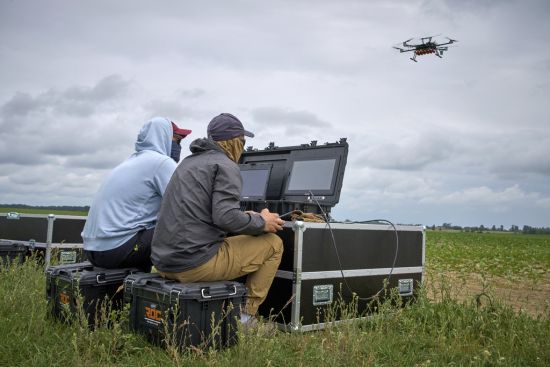
The best solution is going after the drone factories in Russia to stop their production. You can go after the launch sites and the air crews. Ukraine is trying to create their own interceptor drones—the Wild Hornets. I saw Zelenskyy in London and the UK just penned a deal to produce these Octopus interceptor drones. They’re going to produce a couple thousand and then start making as many as Ukraine needs. This is new technology being invented today. Ukraine is the world leader in drone-interceptor technology against long-range enemy drones and even someday missiles. There just aren’t enough Patriots in existence, or IRIS-Ts or SAMP/Ts, to meet Ukraine’s air-security needs. I’m afraid Russia is going to keep getting successful hits, which is why Ukraine has to go harder on Russia to slow them down.
— Let’s put the high-tech aside for a moment. The Ukrainian armed forces say they will maintain positions on the territory of Russia—Kursk. Is that a good decision, Jake, militarily and politically? Does that affect Russian morale in particular, and does that exert any pressure on Putin?
— There’s a lot in war that is symbolic. The fact that Ukraine earlier this year was able to punch into Kursk and then hold this territory for several months was a big deal. It shattered the image of invincibility. Russia wants to look tough; they want to look strong. Ukraine is constantly doing symbolic things that are not going to win the war for them, but they shatter this image of invincibility. I notice it on social media. I think since the election of Donald Trump there’s been a huge drop-off in support for Russia. Propaganda accounts get their checks from the Kremlin and will keep blasting nonsense and disinformation every day, but the average person is confused: why hasn’t Russia won this war?
Joe Biden left office in January. Trump’s been in for ten months. He shut down USAID. He cut funding for Radio Free Europe and Voice of America. He ended all direct military aid even though he’s still selling weapons to Europeans and those weapons are being delivered. If you go back in time, the narrative was: the deep state or the decadent West will abandon support for Ukraine and then the Russians will overtake Ukrainians on the front lines in three to six months—Putin will be in Kyiv by Christmas. That was the narrative at the end of 2024, and they still haven’t taken Pokrovsk ten months later. Going into Kursk, blowing up that Oryol missile—there are a lot of things Ukraine does to make Putin look weak, and he does. The ruling elite of Moscow—the inner circle, the upper echelons of Russian society—know things are bad. They know they are not decisively going to win this war anytime soon, and they’re panicking—about their financial future and the lives of their children if Putin commits to who knows how much longer of war: war with Ukraine, war in the Caucasus, war in the Baltics, a direct confrontation with NATO.
Putin isn’t going to be with us much longer. He’s an elderly man, gambling it all to get the Soviet empire back. For younger Russians, they’re greatly concerned. Going into Kursk and other things like that are symbolic acts they need to internalize to understand they are not the mighty, second-most-powerful military in the world that Putin has been selling to the Russian people for 20 years.
— Russia might not be, but what about China? China supplies millions of components for these Shaheds. How does this change the balance in the drone war, for instance? Should the West respond with sanctions against Beijing or should there be no response?
— I don’t think the world understands what China really wants or is planning. China has appreciated that this war is a distraction. China can do operations in South America, Africa, Southeast Asia—wherever. They have basically taken over Central Asia as their sphere of influence; they’ve ejected the Russians because the Russians are distracted in Ukraine. China has been the biggest winner from this war dragging out for four years.
They can dictate their terms and prices to the Russians—pay the lowest dollar. Anytime the Russians need to buy something from China, they rip them off and charge the maximum amount. When your customer is desperate, you can bend them over, and that’s what the Chinese have been doing to the Russians for four years. They like that the focus is not on them as they plan their invasion of Taiwan. I think this is going to happen at some point in the next two years. This will not be a good development for the world. I hope we can find a way to persuade or deter China because a lot of people will die if this happens. But the weaker Russia gets, the more it becomes a junior partner—a vassal state—of the Chinese. At this point Putin’s even okay with that as long as he can still get a win and stay in power.
— All right, back to high-tech on the battlefield. Ukrainian armed forces and innovations like the Mahal electronic defense system that reaches about 150 meters against FPVs, or the unmanned tactical drone fighter FAV-1—presented recently in the Philippines. Are any of those a game-changer?
— One single system isn’t going to change the course of the war. But Ukraine is in a unique situation where they are getting funding from European partners to develop their own new technology. Ukraine isn’t going to get everything they need from Western partners because inventories aren’t there; especially in the United States, we have our own defense requirements—minimum levels. You can argue the United States is preparing for war with China right now. Ukraine has to invent new technologies at the lowest cost possible to produce more units.
Each system may work great in one situation and not in another—doesn’t matter. Ukraine has to find a way. Ukraine’s strength is that they can take risks, experiment, and challenge themselves to come up with solutions that don’t exist in any NATO arsenal. This will greatly benefit Ukraine once the war is over, because Western partners will want their technology, instructors, and operations teams to train NATO partners. We’re already seeing some deals being signed. Ukraine’s defense production factories will continue producing a lot once the war is over because there will be buyers, and this will be a huge plus for the Ukrainian economy once the Russians are defeated.
— What about nuclear weapons? Putin touts his nuclear-powered “Poseidon” or whatever that means. Trump calls for US nuclear tests as well. Is that irresponsible saber-rattling or not? What would you do as US President if you were informed that China and Russia are testing their nuclear hammers, waving them all over the place?
— My job in the Air Force was nuclear missile operations officer. I’ve spent a lot of time thinking about nuclear weapons. The tweet my president sent yesterday was insane— incredibly irresponsible. Even the Kremlin was shocked at what Trump said. Peskov tried to clarify: this “infinite-flying” cruise missile tested four days ago—there was no detonation, no nuclear weapon going off. This was a capability test for a nuclear delivery system, but nobody is testing nukes. Same with this underwater Poseidon torpedo that Russia says they successfully tested—I don’t believe anything the Russians say.
When Russia’s military is struggling on the battlefield, Putin’s security blanket is to talk about his nuclear weapons. I saw a clip of Putin visiting wounded soldiers in a hospital—this is a war Putin started, and these people lost limbs or took bullets to serve him, and the only thing he wanted to talk about was his “wonder weapons”—this Poseidon missile and this “infinite-flying” cruise missile. Trump doesn’t actually understand that we ended nuclear testing with a series of treaties the entire world agreed to. We had all the information and data we needed. There’s no reason to test nuclear weapons anymore.
The United States did over 1,000 tests over 50 years, and we share that data because we don’t want any other nation conducting nuclear tests. The last nuclear test by Russia was 1990. The last by the United States was 1992. The last by China was 1996. If this moratorium goes away and we all start testing again, we’re irradiating our planet. It gets into the groundwater. When you set off a nuclear weapon, the radiation spreads. I would pray there wouldn’t be any above-ground tests, but even underground tests are not good for the planet. The nation that would benefit the most from the moratorium ending is China, because China conducted the fewest tests prior to the ban and would love to start testing again. That would not be in America’s best interest. I hope this is one of those tweets that gets forgotten two weeks later.
— I agree with you, Jake, but Russians on state TV call to sink the USS Gerald R. Ford. It’s rhetoric for a domestic audience. Is that commented on by the American side in any way?
— I don’t understand why Solovyov and propagandists on Kremlin state TV get away with saying this. This should outrage MAGA, J.D. Vance, Pete Hegseth, and Donald Trump, when nothing is said on Kremlin TV without Kremlin approval. You don’t have freedom of speech in Russia, let alone on national television. When Solovyov says “we need to nuke the Gerald R. Ford aircraft carrier and the strike group that goes with it,” he is threatening to kill thousands of American sailors. He even said on air, “We should smuggle weapons into Venezuela so if the United States attacks Venezuela, this will kill more American soldiers.” I don’t know why this isn’t front-page news in the United States—why my president doesn’t talk about it.
This is a conundrum: Kremlin TV daily threatens to kill Americans and I get no reaction, no response from MAGA or my government. I’m going to keep sharing these clips and talking about them in my videos, but it often feels like I’m screaming into the void.