Today at 20:04

This interview features an in-depth conversation with Doug Klain, an American Ukraine policy expert, deputy director for policy at the organization Razom for Ukraine, and nonresident fellow at the Atlantic Council.
He explains why the growing US-China rapprochement could change the war’s course, how Trump influences international politics even outside the White House, and why Europe stands at the brink of a new escalation.
Klain analyzes nuclear balance strategy, NATO’s threshold for shooting down Russian aircraft, and the risks of “appeasing Putin.” He stresses that Ukraine is the front line of European security, and right now Washington must strengthen its air defense and reduce reliance on Chinese components for drones.
“Fascism has engulfed Russian society. The danger comes not only from the Kremlin but from the Russian public that supports it,” says Doug Klain.
The United States and China have moved to cool trade tensions after a meeting between President Donald Trump and Chinese leader Xi Jinping, agreeing to scale back some tariffs and to hold off on Chinese restrictions on rare earth exports, a U.S. analyst said in an interview. The expert described the outcome as a limited de-escalation after months of tariff pressure from Washington, not a breakthrough.
Ukraine, however, was not a central part of the talks, despite concerns in Kyiv that it could become a bargaining chip between Washington and Beijing. The analyst noted that while China’s support for Russia’s war has been discussed in Washington — and U.S. lawmakers have drafted measures to sanction Beijing for it — the Trump administration is reluctant to impose tough secondary sanctions on China while it is trying to strike economic deals.
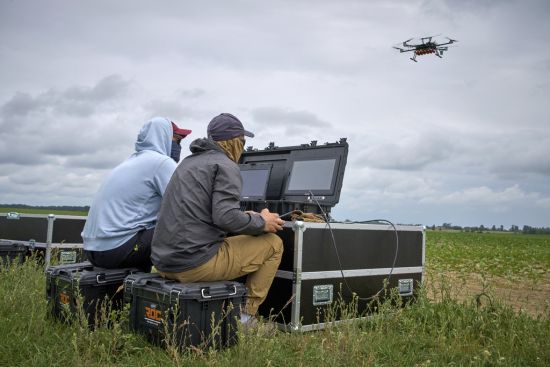
According to the interview, Ukraine’s best protection against being sidelined is to reduce its dependence on Chinese components for FPV and other drones by boosting domestic production and seeking U.S. and EU help to loosen export controls on Western parts. That “de-risking” would make Ukraine’s defense industry less vulnerable to shifts in U.S.–China relations.
The analyst also said Moscow’s recent display of nuclear-capable or advanced weapons fits a familiar pattern of Russian “nuclear saber-rattling” aimed at deterring Western support for Kyiv. He backed proposals in the U.S. Senate to target Russia’s nuclear and energy sectors with sanctions if the threats continue.
On European security, he added that NATO allies are increasingly debating when to shoot down Russian drones or aircraft violating allied airspace after incidents over Poland and the Baltic region. European capitals appear more willing to show force than Washington, he said, which under Trump has often tried to lower the temperature with Russia. Strengthening air defense on NATO’s eastern flank and in Ukraine itself, he argued, remains the most effective U.S. contribution.
More details from the interview between UATV English host Henry Keen and Doug Klain, an American Ukraine policy expert, deputy director for policy at the organization Razom for Ukraine, and nonresident fellow at the Atlantic Council.
— First things first, the United States and China. All right. Trump and Xi Jinping. Is that a siege of sorts? And who sieges who here, do you think?
— It’s an interesting situation. For months now, President Donald Trump has been courting Xi Jinping, hoping to strike some kind of grand bargain. We’ve seen opening shots of a potential trade war with these massive tariffs that the US has variously leveled against China. But today we have big news coming out of this meeting between these world leaders: the US and China seem to have struck some kind of deal to hold back on export controls of Chinese rare earths and for the United States to hold back, or at least dial back, its tariffs on China.
— Right. You said trade war. Is that just a trade war or is there any chance that it could turn into a real war between China and the United States? Or you don’t believe that?
— That’s one of the big risks and fears here in Washington. For years the United States and defense planners have worried about the risk of a potential war with China, likely sparked over China’s plans to try to take Taiwan by force. That is a scenario that US military planners are working on right now, and it’s driving a lot of US policy.
— Do you believe that Ukraine is on the table of negotiation as an object of a trade between the United States and China?
— From the reporting we’ve seen today on these talks between Trump and Xi, it doesn’t seem like Ukraine came up much. China’s role in supporting Russia’s invasion of Ukraine has been a topic in Washington. There’s legislation in Congress to sanction China for its involvement in the war. That legislation has moved a bit in recent weeks, but I don’t think legislators are expecting to vote on it anytime soon.
— Some experts say that we are a part of a deal, but what can Ukraine do to prevent being collateral in a bargain between Washington and Beijing? Is there anything?
— It’s a good question. The biggest thing Ukraine has to do is solidify its own defense. One of Ukraine’s vulnerabilities is its reliance on Chinese components for building Ukrainian drones, especially FPV drones. That’s one of the big efforts underway in the Ukrainian defense industry: to derisk from China, to produce more components in Ukraine, and to strike deals with the US and Europe to lower costs and decrease export controls on Western components. That’s a priority.
— And if I say that right now the United States lacks leverage and tools over the Chinese effort to support Russian military aggression in Ukraine, would I be right?
— The United States has tools to influence Chinese behavior and Chinese support for Russia. The question is whether the United States will use them. There’s been a debate over sanctions in Washington. The big piece of legislation that Senator Lindsey Graham has introduced to sanction Russia over its war contains secondary sanctions that would also sanction China for its support. But there hasn’t been much interest from the Trump administration in sanctioning China over this, especially as it is trying to strike other deals. Some of these sanctions would contradict the deals Trump is trying to make. That’s one reason there hasn’t been much interest in going after it.
— Let’s talk about that show-off that Putin is throwing. Putin shows off — I mean Thunderbird, Poseidon underwater drone, both nuclear-powered, both “unparalleled in our galaxy.” Putin talks to wounded soldiers in a Russian hospital. “War is in Russian genes.” A full spectrum of morbid delusions if you ask me. Yet all that military party he’s throwing — is that a sign of strength, do you think, or the other way around?
— At times it almost feels like the height of the Cold War, with countries trying to show off how great their nuclear arsenals are and how much damage could be inflicted. There’s a pattern we’ve seen from Moscow over the last couple of years: using its nuclear arsenal to rattle sabers and threaten Ukraine’s backers. It was somewhat successful in deterring the United States under Joe Biden from giving as much support to Ukraine as it should have.
And it’s a tactic Vladimir Putin is trying to use again with Donald Trump. Trump’s concerns about nuclear annihilation are well reported, and it’s a fear Putin is trying to play off. Sometimes these threats, as we’ve seen from people like Dmitry Medvedev, have sparked the opposite reaction from Trump — dispatching US nuclear submarines to threaten Russia in turn. So Putin may find himself in new territory with Trump. Trump is less predictable than past US leaders.
— What do you think — if the United States is to sanction Russia, if these sanctions are going to target its nuclear sector — would that be the right step to take?
— Absolutely. I go back to that sanctions legislation from Lindsey Graham, which contains, in addition to sanctions on Russian oil, sanctions on Russian nuclear energy. That is another key component to go after Russia’s war effort. As Russia escalates its nuclear saber-rattling, I think we’re going to see more interest from policymakers in Washington in trying to contain Russia’s nuclear escalation.
— I believe you’re right. I can’t agree more. But next question: I was born and raised in Europe, in a Baltic state, Latvia. So it is a very important question to me personally. Russian missiles and drones over NATO — Poland, Romania, Baltic states — Belgian defense minister says Moscow could be wiped off the face of the earth. All that said, do you believe that NATO will use force in response when it comes to that? I repeat my question. Not “is NATO capable of using force” — it is capable, we know that — but will it actually apply that force? Do we have what it takes?
— That is the key question. After the meetings at the United Nations General Assembly a couple of weeks ago, it seemed like there was political will to strike these Russian drones and perhaps fighter jets if they come back into NATO airspace.
There have been incursions since then, but not on the scale of what we saw in Poland with those dozens of drones or the multiple Russian fighter jets that were in Estonian airspace for, I think, 13 minutes. I think we’re seeing more discussions from NATO leaders on what is the threshold at which their air defenses need to take down these Russian raids into NATO airspace. If we get to the point where there is something as egregious as what we saw in Poland, I think we’re more likely to see NATO forces try to down these Russian aircraft.
We do see some differences between drone incursions and fighter jets. We’ve seen Russian jets going into NATO airspace, buzzing seacraft, for years, and that is a threat NATO forces are more prepared to handle. They understand how to navigate those situations better. Even so, I think there is growing appetite for a show of force.
— Right. Well, Mr. Klein, you were talking about the threshold. What is the American threshold? How should the United States respond to systematic drone provocations — and cyber sabotages, by the way — incidents in Europe, and it’s escalating. So what is the threshold, when the time comes? Is it not yet?
— I think the threshold is going to be different for European states and for the United States. The US, as we’ve seen, has a more complicated tolerance for Russian provocations under the Trump administration. We’ve seen the US dial back its offensive cyber operations against Russia during this administration.
Much of US policy toward Russia here is about how President Trump can try to convince Vladimir Putin to make peace, to negotiate. Often we’re seeing him dial back pressure on Russia in order to convince Putin to dial back his own provocations and aggression. That strategy has not produced real results. That’s one of the reasons there is more appetite in the rest of Europe to take down these Russian jets and show force against those provocations.
The question is where European states can take action and when they are ready to do so without the explicit backing of the United States, which may not happen.
— True. And that’s all about escalation, but everyone talks about escalation. I’m here in Ukraine for four years already. I’ve witnessed it all — colleagues and friends wounded and dead. I see Russia escalating in Ukraine. Should the United States, you think, strengthen air defense in Europe to avoid escalation — just air defense? I know Europe should be acting on its own, but what about air defense? I know the United States is capable of doing that like this.
— You’re 100% correct. The United States should be strengthening air defense as well as other forces stationed on NATO’s eastern flank, and it should be strengthening Ukraine’s air defense. Ukraine is the front line of defense for Europe. The more the United States and other allies invest in Ukraine’s indigenously produced air defense, such as interceptor drones, the more it strengthens Ukraine’s ability to hamper Russia’s air attacks and the more it creates dividends for NATO as a whole through co-production deals with Ukraine. It’s squarely in our interest to help Ukraine in this way, and that is a very powerful argument in Washington. It’s one we’re making much more nowadays.
Read also: What Could Security Guarantees for Ukraine Look Like?