Today at 17:05

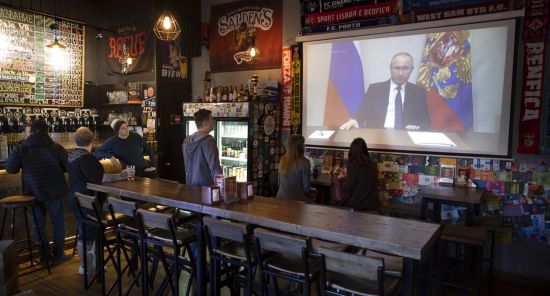
Russian disinformation campaigns have become increasingly sophisticated, evolving from isolated falsehoods into coordinated influence operations that combine official messaging, state media, proxy websites, artificial intelligence, and sympathetic voices abroad. According to a new study by the United Ukraine Think Tank, these operations now seek not only to spread misinformation but to shape public debate before key political and military decisions are made.
The report argues that modern Russian influence campaigns operate as interconnected ecosystems in which government officials, state-controlled media, AI-generated content, and third-party commentators reinforce the same narratives while appearing to act independently. Rather than relying on individual fake stories, the Kremlin increasingly promotes broad strategic messages designed to undermine support for Ukraine and deepen divisions within Western societies.
Among the study’s key findings is Russia’s effort to restore its international image without changing its behavior. Moscow has sought to portray itself as a “normal” global actor through sports, culture, and carefully framed discussions around sanctions, while simultaneously promoting narratives that present Ukraine as a burden to Europe and military assistance to Kyiv as a source of instability.
The report also highlights the growing technological dimension of Russian information operations. Networks such as Storm-1516 and the Matryoshka campaign reportedly use artificial intelligence and large-scale coordinated content distribution to overwhelm fact-checkers, influence social media conversations, and amplify pro-Kremlin narratives. Researchers also warn that some campaigns are now designed to influence the datasets used to train future artificial intelligence models.
Rather than focusing solely on debunking individual false claims, the study argues that democratic societies should expose the broader structure behind coordinated influence operations. Understanding how narratives are constructed, amplified, and synchronized across multiple platforms has become increasingly important as information warfare continues to evolve alongside conventional military conflict.
The authors conclude that Ukraine’s experience places it at the forefront of identifying and countering new generations of Russian hybrid operations. As these tactics increasingly target democratic societies beyond Ukraine, the country’s experience offers valuable lessons for partners confronting similar threats.
Read the full article by Igor Popov, Head of the United Ukraine Think Tank and expert on political and security affairs.