Yesterday at 20:03
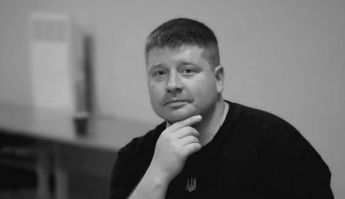
Cameraman Yevhen Karmazin was from Kramatorsk. Because of his gentle character and appearance, friends often called him a “little bear,” but despite this, he had an iron inner core. Yevhen was never afraid to report from the “zero line,” was ready to work extremely quickly and in any conditions. This is stated in a story by “Ukrainska Pravda. Life.”
Yevhen was killed on October 23, 2025, as a result of Russian shelling by a “Lancet” drone of a car in Kramatorsk, when he and his colleagues arrived to film a story. He was 33 years old.
Never Afraid to Go to the “Zero Line”
Yevhen Karmazin was born in Kramatorsk, Donetsk region. From an early age, he was an authority for his friends and everyone who knew him.
“He was respected in any company, starting from school, from the yard where he grew up. In life, Zhenia was a kind, honest and sensitive person. Everyone who had spoken with him even once said that about him. That is how we raised him. Zhenia was the best friend in the world to me,” says his father Oleksandr Karmazin.
Studying at school came easily to him, he grasped everything on the fly.
“Although I almost never saw him doing homework. If there was a math olympiad, Zhenia went; if someone needed to be the captain of a military game, it was him too,” his father says.
After school, Yevhen studied at the Donbas State Engineering Academy in the field of “Automation and Computer-Integrated Technologies” and received a diploma as an IT specialist. After the liberation of Kramatorsk in 2014, Yevhen’s father worked as deputy director for personnel at the new regional channel “DoTeBe” and hired his son.
“We met Zhenia somewhere around 2015. I worked at “ДоТеБе” as a director, and at first Zhenia was responsible for occupational safety. Then, watching us, he wanted to learn something new. That is how he became a cameraman. We were constantly in touch, helped him, gave him some advice on editing,” says colleague Vladyslav Bobrun.
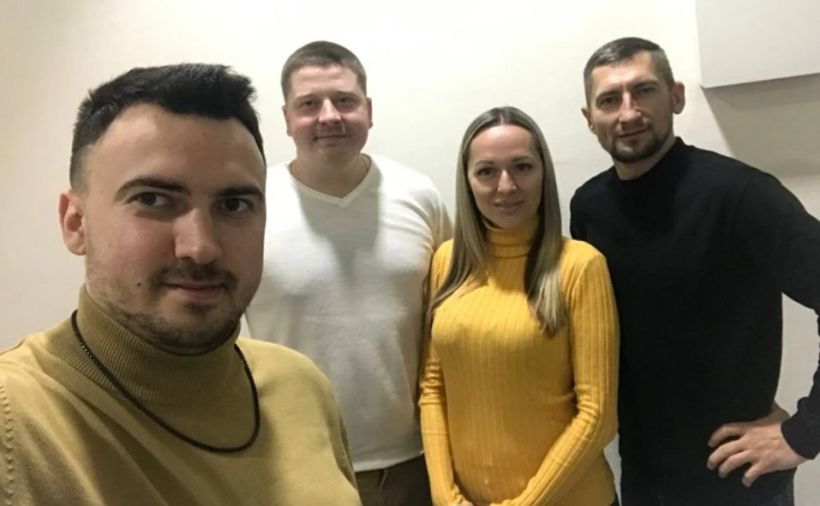
From the beginning of the ATO, Yevhen filmed stories about the war from Pisky, Avdiivka, Marinka and other settlements suffering from the Russians. He did this until 2025. In general, he was never afraid to go to the “zero line” — he had been on all fronts, with all branches of the military, spent nights with tank crews and UAV operators in trenches.
Later, he worked at the “Region Donbas” TV channel under the Donetsk Regional Military Administration, and in 2021 he joined the multimedia platform of Ukraine’s international broadcasting FREEДOM as a cameraman, when it was just opening a branch in Kramatorsk.
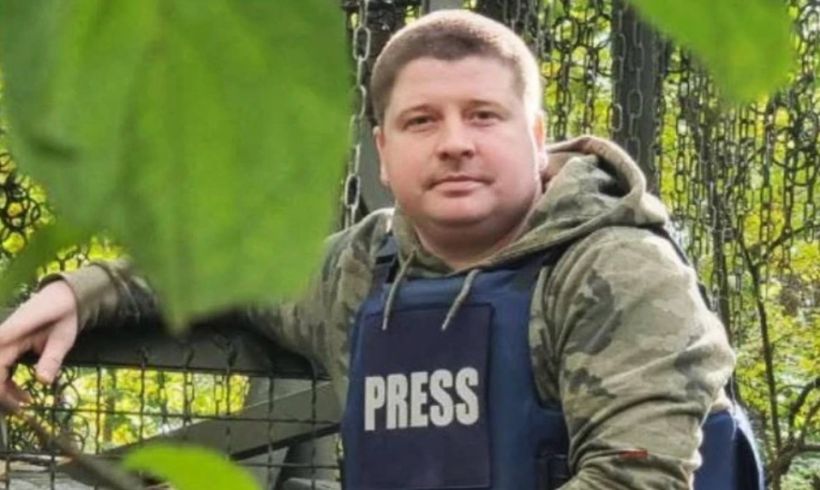
“We had a milestone — Zhenia and I broadcast the president when he took office. Zhenia not only helped set everything up technically, but also sat at the director’s and sound consoles. That is, he did all the sound then. It was a big responsibility,” recalls Vladyslav Bobrun.
The main team at FREEДOM was Yevhen, special correspondent Oleksandr Kolychev and journalist Olena Hramova.
“We met even before the full-scale war, went to all kinds of filming, but we called them ‘bows and wrappers.’ Everything turned upside down in 2022, we became support for one another. We complemented one another very much in character and charisma,” says colleague and friend Oleksandr Kolychev.
The team worked extremely smoothly and technically, understood one another without words — from half a glance it was already clear what and how needed to be done.
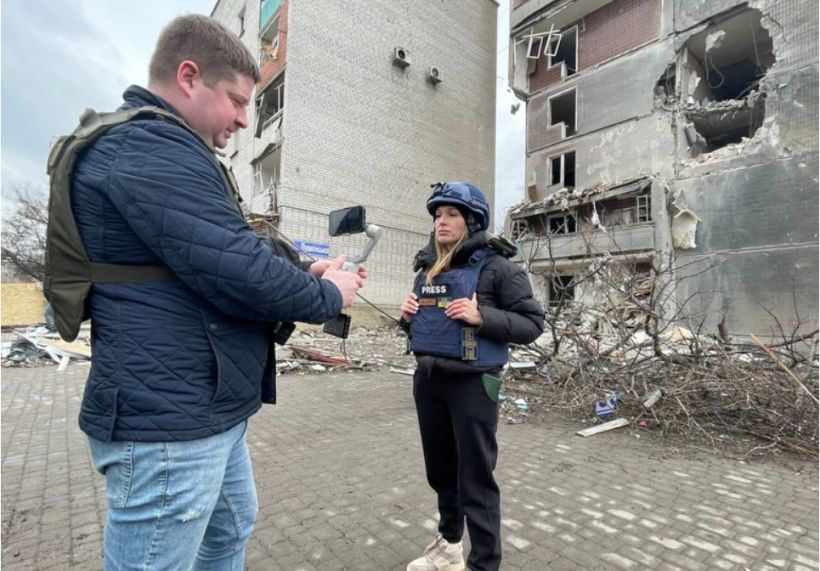
“We did everything very quickly, sometimes we filmed a report in 20 minutes. Because when you go to Druzhkivka or Kostiantynivka, or where the conditional first or second line is, that is how everything needs to be done. They look for some person, interview them, I film small details. All of this was uploaded on the go into our chat, edited and delivered to the editorial office as an almost finished product. Then we got a little drone, we began showing 3D in the frame. It was very interesting for us to experiment, it was such a passion, and it was in unison among the three of us,” shares Oleksandr Kolychev.
Yevhen loved to joke, to tease Olena, and always reconciled everyone.
“Sometimes, for work, he could get a little lost. We could call him because we had a trip somewhere, a ‘rush,’ and he was asleep. Sometimes we came and banged on his door. And he said: five minutes, everything will be ready now. And then we rushed somewhere. We made fun of it, drove and laughed. We had very good relations,” says Oleksandr Kolychev.
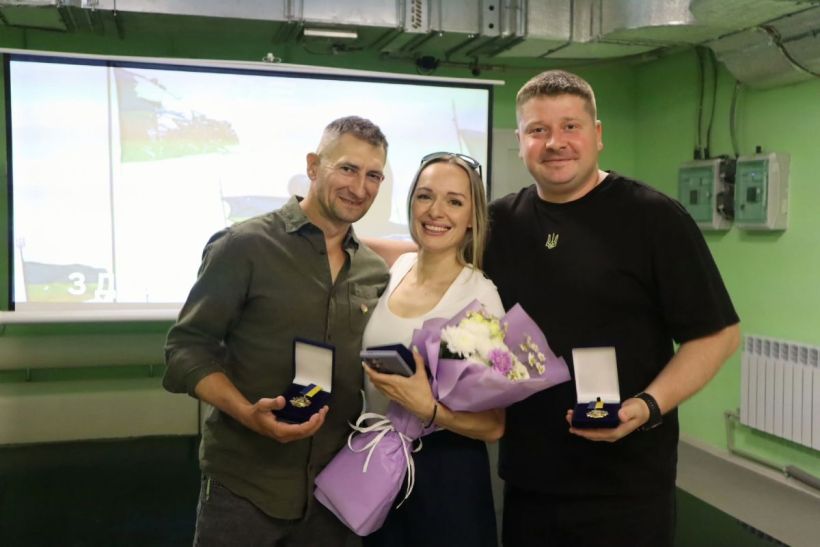
“Olena always called Zhenia Zheniochok. No one else called him that. They worked together in a team for many years in a row. As I said at the farewell — a team for life. And that is true. In addition, Yevhen’s parents treated Olena like a daughter. If they called Zhenia and he said that we were here with friends, Olena was nearby and everyone sent them greetings, then they were calm about their son,” says friend Svitlana Sulakova.
A “Little Bear,” a Kind Soul and a Person With a Big Heart
Finding something common in all the memories of Yevhen is very simple — everyone who knew him remembers first of all his kindness and humanity. And that is how he was throughout his whole life — sincere, attentive to others, capable of compassion.
“Back at school, Zhenia stood up for everyone who could not stand up for themselves. He had a friend there who was a quiet, calm, homey boy. Zhenia always stood up for him, because his friend himself could not respond to aggression. But when the war came, Serhii went to fight and was severely wounded, lost a leg and an arm. So Zhenia sat by his bed in the hospital and cried, and he comforted him, saying, Zhenia, everything will be fine,” Yevhen’s father shares.
In 2021, Yevhen became a father. He loved his son Kyrylo very much and was upset when he had not seen him for a long time.
“He always remained the best father for his son, always mentioned in any conversation among colleagues or friends how joyfully and happily he spent time with his child. From his stories it was clear that his son was the dearest thing in Zhenia’s life,” says friend and colleague Svitlana Sulakova.
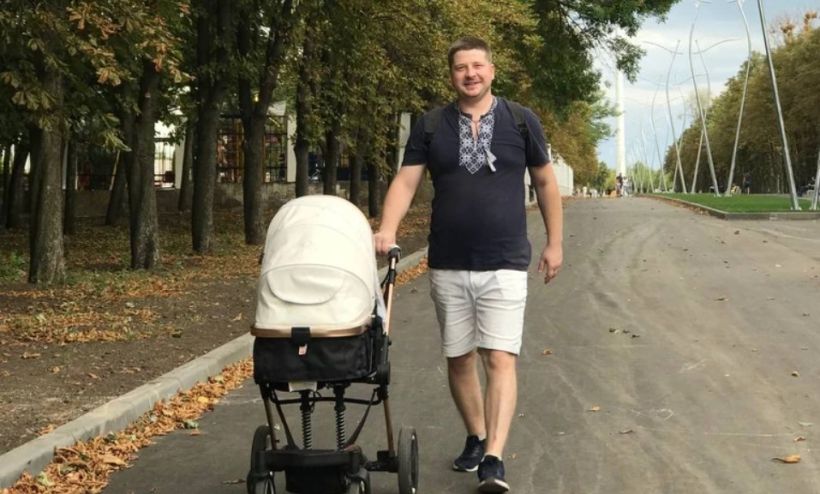
Yevhen was also gentle in communication with friends or colleagues.
“He was such a big guy, over 100 kg, over 180 cm tall, but he was as kind as a child, in the good sense. He was soft, we called him ‘little bear,’ ‘bear.’ If something needed to be asked, he was the first to come to help. Olena and I were near Ria Pizza in 2023 when an Iskander hit there. The car was badly damaged, and Zhenia helped for a month with his own car, then presented me with another work car of his and I could drive it, could come and repair something,” says Oleksandr Kolychev.
Yevhen had golden hands: he did repairs at home himself or helped his father with them in the studio.
“Besides filming, he also worked with electronics. He made various installations, even video surveillance, I remember, he installed it. He repaired phones, some small household appliances. In short, he was always moving around to earn money for his family,” says friend and colleague Dmytro Hlushko.
He loved arranging pleasant surprises for loved ones.
“He was a kind soul and a person with a big heart. I had a wedding a year ago, Zhenia came to it from Donbas, his filming rotation had just ended then. It moved me to tears at the time, because honestly I thought he would not be able to come to Kyiv,” shares Vladyslav Bobrun.
Yevhen was fond of tennis, billiards, football.
“He was mega-active, he had so much life energy, just an incredible amount,” the friend adds.
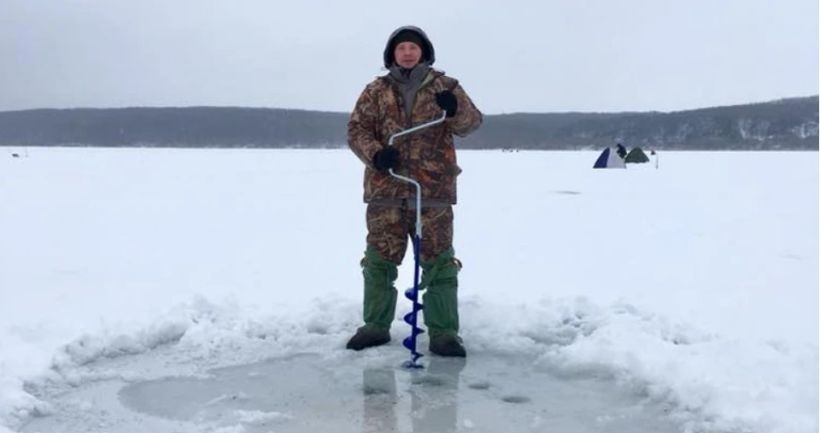
Fishing was Yevhen’s comfort on his days off; he often took with him relatives, friends and their families, who were friends with one another.
“Zhenia was the organizer of everything, he gathered everyone in a fatherly way: ‘So, everyone to the Blue Lakes for the weekend, whoever didn’t come, I’ll come pick you up now,’” says Vladyslav Bobrun.
He loved organizing picnics for loved ones.
“Once I also went with my husband, Yevhen, Olena and Sania to rest in nature, where there was both fishing and a picnic. It was during the full-scale war. You could say it was somewhat extreme recreation, because while fishing we saw our army working against the enemy not far from us and FPV training, although we were in a relative rear area. Everyone remembered that rest,” recalls Svitlana Sulakova.
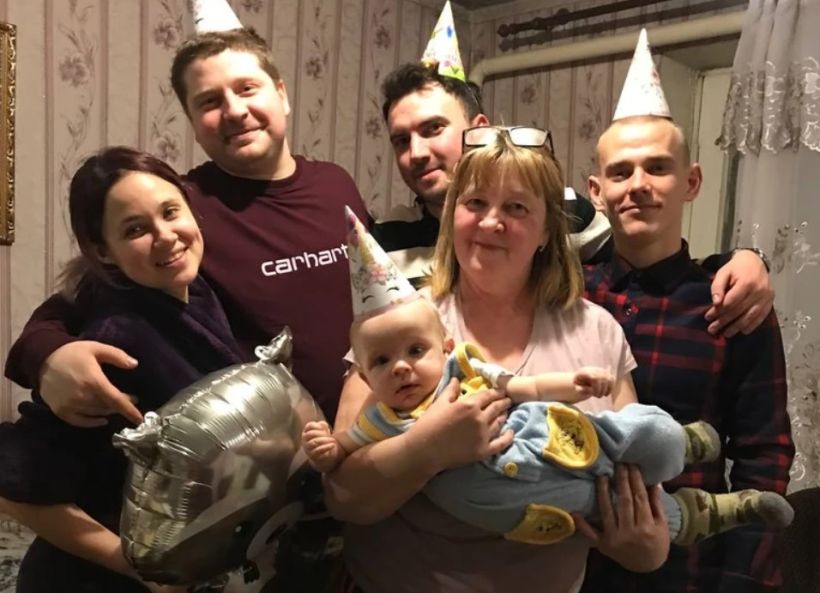
Also, after work, Yevhen, Olena and Oleksandr often rested together.
“If we filmed material, but it was not very important and not that urgent, then we spent time together. Such compatibility was the norm for us,” says Oleksandr Kolychev.
“The Best Place on Earth”
At the beginning of the full-scale war, Yevhen was in Kramatorsk, but later took his relatives to Dnipro. He himself traveled to his hometown for several-week rotations for filming.
“Kramatorsk was a native place for both him and Olena (Hramova — ed.). They loved it so much, were so proud of it. I will never forget how Yevhen, in our conversations about cities, said: ‘What, you haven’t been to Kramatorsk? It’s the best place on earth! When you come, I’ll arrange such a tour, your Kharkiv won’t even compare!’ For me, as someone from Kharkiv, it was a challenge, I really wanted to get to Kramatorsk. I waited for this, thought and imagined how we would walk through parks and streets, how they would show and tell me everything. But, unfortunately, this will never happen now,” says friend and colleague Natalia Bilokudria.
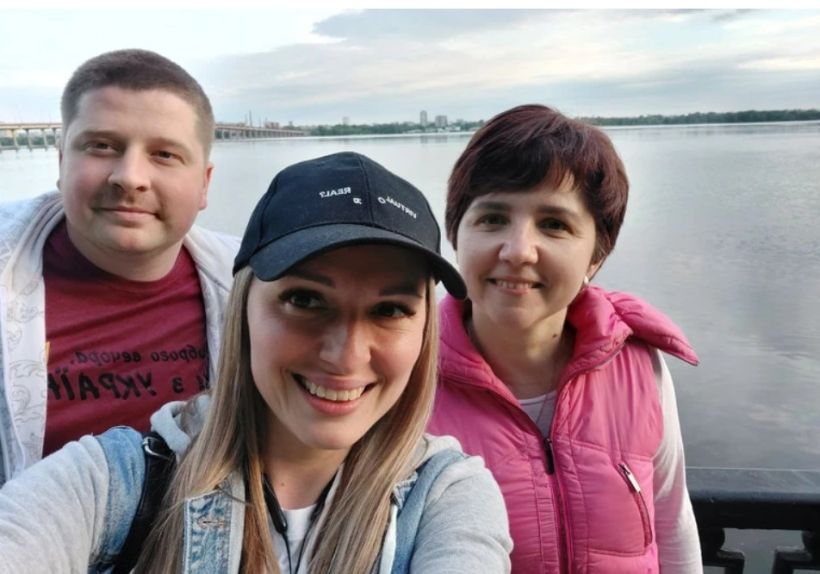
At the same time as work after the start of Russia’s full-scale invasion, Yevhen and his colleagues were involved in evacuating civilians from settlements where the front was approaching and where staying had already become life-threatening. In addition, he helped his father with the work of his foundation, which opened a shelter for IDPs.
“They helped both the military with fundraisers and contacted volunteers who could provide some necessary help, and helped with finding housing. When I think about Yevhen, the thought comes to my mind that you will not meet a kinder person in the whole world. He was smiling, hospitable, sincere, sensitive. Not a single note of indifference to someone else’s grief. And this was evident not only in his attitude toward friends, but also toward complete strangers,” says Svitlana Sulakova.
Yevhen found opportunities to help in the most difficult times.
“In 2022, I went to a village in Donetsk region, had 42 displaced people from Kharkiv, settled them. And I dragged Zhenia there too. He came, we lived for a month, became family. He, with a small child in his arms, with his wife and parents, lived in a small apartment where there was no heating, and also actively volunteered. He did not spare himself. That is literally about him. I understood that he had plenty of his own worries, but he helped,” recalls Vladyslav Bobrun.
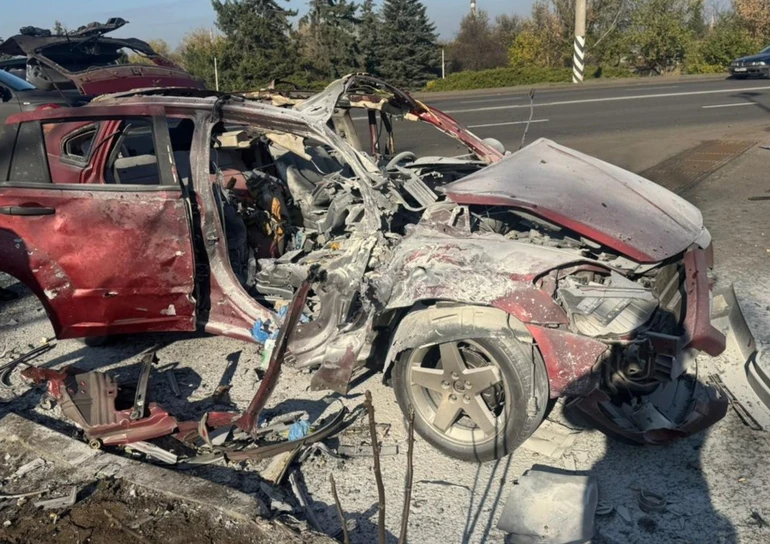
On October 23, 2025, Yevhen, together with Oleksandr and Olena, went to film a story about a Russian attack on a market in Kramatorsk. They recorded interviews, video with burned goods, damaged stalls, and the emotions of shoppers.
“We filmed this in half an hour, very quickly. And we went to make the ‘final shot’ at a gas station, where something had hit at night, and the roof was already being repaired there. And in those two minutes we ran into the Lancet,” says Oleksandr Kolychev, who then sustained a blast injury, multiple shrapnel wounds to the head and body, an open fracture and burns.
The “hit” was on the car, which the channel team had just exited.
“I was standing on my driver’s side, Alonka was two meters from me, but further forward, and Yevhen was in front of the car. At first I thought the ‘hit’ was on a propane gas cylinder, asked whether it was his. I was told no, it was the car. I thought they were farther away and should have had less damage, but it turned out that they were in an open area and died almost immediately,” the colleague recalls.
The farewell to Yevhen took place on October 27, 2025, in Kyiv, at St. Michael’s Golden-Domed Cathedral. His body was cremated, and the ashes are with his parents in Dnipro.
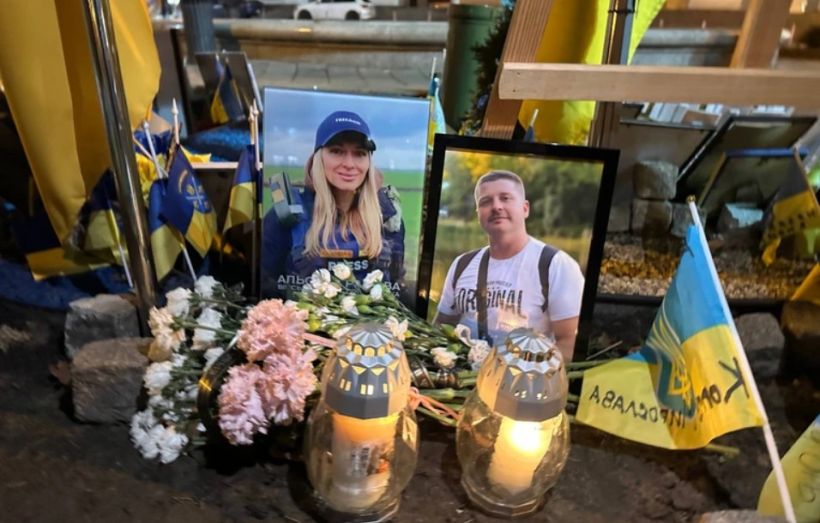
Dmytro placed Yevhen’s portrait on Maidan in Kyiv, next to Olena’s. Yevhen had many awards for Military Journalist’s Day.
“We had huge plans for the future, where Zhenia would help me with the foundation. Now everything became meaningless in an instant. You don’t know what to live for next — he was our only son. Our grandson Kyrylo remains, and if not for him, I don’t know how it would be at all,” Yevhen’s father shares.
Read also: “Lialia Always Shone Like a Star”: In Memory of Journalist and War Correspondent Olena Hramova
The text was created within the RЕСвієм project — a memory platform for journalists who were killed as a result of Russia’s full-scale war against Ukraine. The project was created by the Georgiy Gongadze Prize and Ukrainian PEN in partnership with the Institute of Mass Information, the National Endowment for Democracy (NED) and Sushko Foundation.