Today at 11:58

China’s latest escalation around Taiwan is forcing the United States to divide its already limited stockpiles of missiles and precision munitions among three fronts at once
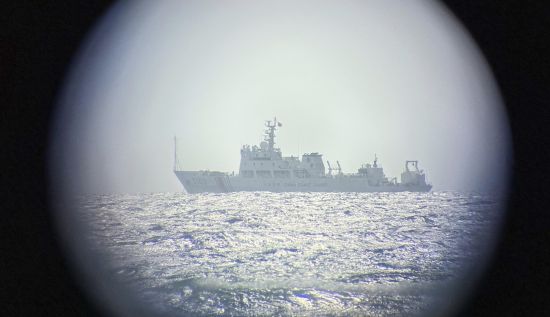
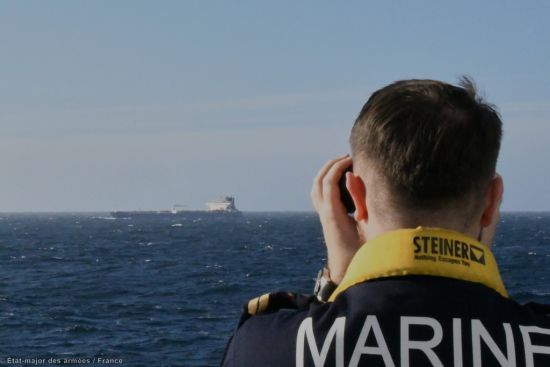
In June, while the world’s attention was focused on the Middle East, a quieter contest intensified in the western Pacific. From June 16 to 18, a Chinese survey vessel, escorted by China Coast Guard ships, operated in the waters east of Taiwan. Just days earlier, Beijing had sanctioned the Philippine secretary of national defense. Little of this reached the headlines in Kyiv. It should have, because every time tensions in the Indo-Pacific rise, they increase competition with Ukraine for the resource that is hardest to expand quickly: American strategic attention and military stockpiles.
Read the FULL article by Anton Kuchukhidze, political scientist and foreign policy analyst, co-founder of the United Ukraine Think Tank.
Kuchukhidze argues that a series of seemingly limited developments around Taiwan during June nevertheless pointed to a significant shift in Beijing’s strategy. He notes that the Chinese research vessel Xiang Yang Hong 22 conducted surveys in waters claimed by Taipei while Chinese Coast Guard ships maintained an almost continuous presence in the area. According to the analyst, Taiwan responded by ordering the vessel to leave, asserting that China possesses no sovereignty over the waters off the island’s eastern coast and deploying its own coast guard to disrupt the operation. Subsequent statements in Chinese state media, he adds, suggested that Beijing now increasingly regards these waters as part of its adjacent maritime zone, gradually expanding its territorial claims.
The foreign policy analyst explains that the immediate catalyst for this escalation was diplomatic rather than military. Following the announcement by Japan and the Philippines that they would begin formal negotiations to delimit overlapping maritime zones, Beijing condemned the initiative as illegitimate. China subsequently increased the presence of its law-enforcement vessels east of Taiwan and imposed sanctions on the Philippine defense secretary after his criticism of Chinese actions in the South China Sea. According to Kuchukhidze, this reflects a familiar pattern in which Beijing advances through incremental measures that force opponents into a reactive posture while steadily increasing long-term strategic pressure.
The expert emphasizes that such developments cannot be separated from broader concerns about the military balance in the Indo-Pacific. He points to repeated war-game simulations suggesting that U.S. forces could exhaust critical stockpiles of precision munitions within days of a major conflict over Taiwan. At the same time, he notes that Ukraine’s own wartime consumption of artillery ammunition has already exceeded the current production capacity of American industry, illustrating the growing strain on Western defence resources.
According to Kuchukhidze, these limitations are structural rather than temporary. Manufacturing advanced Patriot interceptors may require more than two years, while some long-range precision missiles take three to four years to produce. Expanding industrial capacity demands additional investment and time, making it impossible to rapidly increase production in response to simultaneous international crises.
The analyst argues that the Pentagon’s strategic prioritization of China as the United States’ principal long-term competitor reinforces this challenge. In circumstances where Washington must allocate finite military resources, the Indo-Pacific is likely to receive greater priority. He notes that American officials have already acknowledged that current production levels remain insufficient even for potential contingencies in the Pacific, while recent military operations involving Iran exposed similar constraints.
The political scientist contends that both Russia and China understand these dynamics well. From Moscow’s perspective, any crisis that diverts American military attention and resources away from Europe creates strategic opportunities. Beijing, meanwhile, benefits from a United States that is simultaneously engaged across multiple theatres, reducing its ability to concentrate deterrence in any single region.
Kuchukhidze stresses that although Russia and China are not formally coordinating every aspect of this approach, both derive advantages from the strategic overstretch of the United States and its allies. He further notes that expanded Chinese Coast Guard operations east of Taiwan also enable the People’s Liberation Army Navy to dedicate greater resources to operations beyond the First Island Chain.
The expert points to several recent indicators of China’s expanding military reach. A Chinese aircraft carrier completed a deployment lasting more than forty days across the South China Sea and the western Pacific, demonstrating Beijing’s growing operational endurance. At the same time, China introduced procurement restrictions affecting dozens of American defence companies, measures that indirectly influence the industrial base responsible for supplying military equipment to Ukraine, Taiwan, and the United States itself.
According to the analyst, these developments carry direct implications for Ukraine’s national security. Kyiv’s strategic position no longer depends exclusively on events along its own front lines but increasingly on the stability of other global theatres, including the Indo-Pacific and the Middle East, as well as on the ability of the United States to sustain defence production across multiple simultaneous crises.
The author acknowledges that Ukraine has already begun reducing some of this dependence by expanding domestic drone manufacturing and strengthening defence cooperation with partners across Asia. Nevertheless, he argues that certain critical capabilities—most notably Patriot air defence systems—remain beyond Ukraine’s production capacity, while international competition for such assets is steadily intensifying.
In conclusion, Kuchukhidze argues that the emerging “second front” confronting Ukraine is not located elsewhere in Europe but wherever the next geopolitical crisis compels Washington to make difficult choices about allocating its limited military resources. In his assessment, developments in the Taiwan Strait are therefore becoming an increasingly important variable in Ukraine’s own long-term security calculations.
Read the FULL article on The Gaze: Why China’s Pacific Pressure Is Also a Problem for Kyiv
Read also: Decentralised Ukrainian Energy: A New Model for Energy Security