Today at 16:00

Finnish President Alexander Stubb has described Russia’s full-scale war against Ukraine as a major strategic failure for the Kremlin, arguing that instead of strengthening its position, Moscow has weakened its influence and triggered long-term consequences detrimental to its own security and economy.
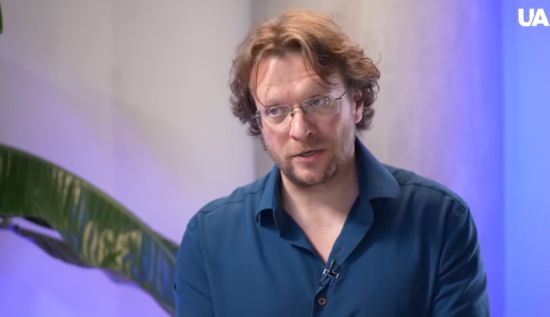
Stubb made the remarks during a discussion at the World Economic Forum in Davos, according to UATV English.
“This war has become a complete strategic failure for Vladimir Putin,” Stubb said. “He expanded NATO, he made Ukraine European, and he forced European states to increase their defense budgets. And now we are asking ourselves whether we are capable of defending ourselves. My answer is yes.”
The Finnish president noted that although Russia has occupied roughly 20% of Ukrainian territory through military force over the past four years, its actual territorial advances amount to only about 2%, achieved at an exceptionally high cost. According to Stubb, Russia has suffered approximately one million casualties, while simultaneously losing political and economic influence.
“We are seeing countries in Central Asia and the South Caucasus distancing themselves from the so-called Russian empire,” he said.
Stubb also painted a bleak picture of Russia’s economic outlook. He pointed to accelerating inflation, estimating that annual inflation could reach around 30% based on early-year data, while interest rates remain at 16%, economic growth has stalled, and financial reserves are depleted.
“There is no growth, no reserves, and no ability to pay soldiers once the war is over,” he said.
According to Stubb, the key issue is not whether Russia is capable of winning the war, but rather its unwillingness to end it, despite the mounting costs.
He also stressed that NATO is undergoing a transformation, becoming stronger than at any time since the end of the Cold War.
“I think we are actually in the process of creating a stronger NATO than we have seen since the Cold War ended. This is effectively NATO 3.0,” Stubb said.
He highlighted that the accession of Finland and Sweden has effectively doubled NATO’s border, while Europe has begun to assume a significantly greater share of responsibility for its own security.
Stubb separately emphasized the importance of transatlantic cooperation, noting that despite periodic tensions and unexpected challenges, stable channels of communication with the United States remain in place.
As previously reported by Ukrinform, NATO Secretary General Mark Rutte has reiterated that no circumstances should distract European leaders from supporting Ukraine amid continued Russian attacks, particularly strikes targeting the country’s energy infrastructure.