Yesterday at 20:06

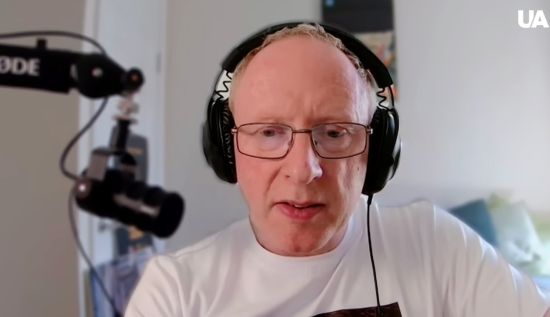
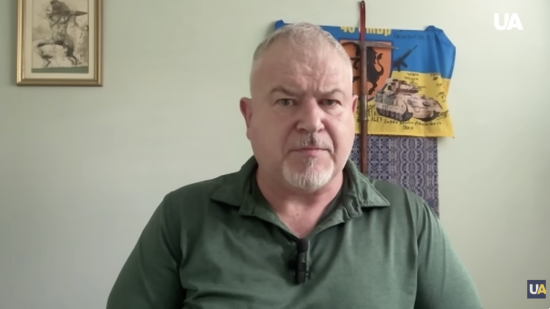
In this exclusive interview on UATV English, political analyst and host Vladyslav Faraponov sits down with legendary reporter and bestselling author of “Invasion” and “Mafia State,” Luke Harding, to dissect the fundamental turning point in the Russia-Ukraine war. Harding, who was cynically expelled from Moscow by the Kremlin regime – the first time this happened since the Cold War – for exposing the truth about FSB crimes, shares unique insights following his visit to the secret bunker of the Unmanned Systems Forces and his conversation with Robert Brovdi, widely known as “Madyar.”
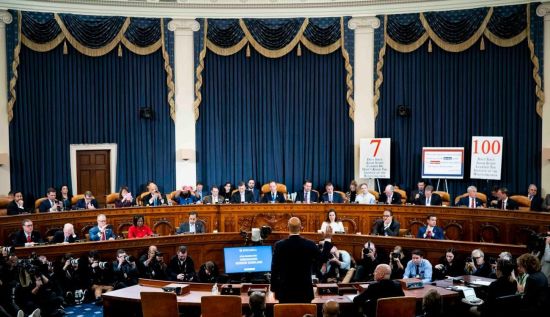
Why is Ukraine’s strategy of wiping out 25% of Russia’s oil refining capacity, including epic strikes on Saint Petersburg and Kronstadt right during Putin’s economic forum, proving far more effective than classic head-on clashes? How are the political shift in Hungary with the rise of Péter Magyar, Mark Rutte’s visit to Kyiv, and the US House of Representatives passing the new aid package and sanctions cornering the Russian dictator? Why is modern Russian society a direct collaborator in the Kremlin’s fascist project rather than its victim, and when will this bloody gamble finally end?
— Luke Harding is a foreign correspondent for The Guardian. He served as the paper’s Moscow bureau chief until the Kremlin expelled him in 2011 — the first foreign correspondent to be expelled from Russia since the Cold War.
He is also the author of several books, including Collusion, Mafia State, Shadow State, and Invasion, his frontline account of Russia’s war against Ukraine written from Kyiv, Mariupol, and many other cities.
Luke, welcome. I’m very happy to see you.
— Thank you. It’s a pleasure to be with you.
— Before we dig in, tell us briefly: after nearly two decades of covering Russia, Ukraine, and Eastern Europe, and now more than four years of full-scale war, what keeps pulling you back to this story? What motivates you to keep reporting on Ukraine from London, from Europe, and from Ukraine itself?
— That’s a good question. I think it’s a mixture of intellectual curiosity and something more personal.
I first started coming to Kyiv back in 2007. It was a period of political turmoil. Later, of course, there was a man named Viktor Yanukovych who became president in 2010.
What struck me, as someone based in Moscow, was how much freer Ukraine felt than Putin’s increasingly dark Russia.
There was always a genuine political conversation happening. There was competition among elites — the Donbas group, the Dnipro group, western Ukrainian political forces. Part of it was regional, but part of it was also about Ukraine’s future direction: whether it would move toward Europe or remain tied to the old Soviet and Moscow-centered model.
I found it a fascinating place. I returned in 2014 to report on Russia’s covert takeover of parts of eastern Ukraine through its security services and intelligence agencies. I watched that process unfold. It was a shadow war. Then I came back for the election of Volodymyr Zelenskyy.
The storyline almost seemed too good to be true: a man who played a fictional president in the television series Servant of the People actually became president.
It felt like a postmodern political narrative, except that it was real. And since 2022, I’ve been covering the full-scale invasion.
— After more than four years of full-scale war, what changes do you see in Ukraine and in Ukrainians? And has the war changed the way you cover the story professionally?
— It’s interesting because most countries evolve quite slowly. The United Kingdom, where I’m speaking from today, has a long history stretching back many centuries. At one point we even executed a king, but that was 400 years ago and most people have forgotten about it.
Ukraine is different. Every time I come here, the country feels transformed. It changes at extraordinary speed.
There was the Orange Revolution, then the Revolution of Dignity, which I covered, and now the experience of full-scale war.
The overall trend is very clear: Ukraine is becoming more Ukrainian.
This is the most Ukrainian Ukraine I have ever seen. And the person who has done more to Ukrainianize Ukraine than anyone else is Vladimir Putin.
Putin complains that Ukraine has become an anti-Russian project. But he is the person who made it so.
When I first visited, there were certainly differences in attitudes toward Russia. Some support for the Kremlin existed, particularly in the east, although it was never a majority in my view.
Those attitudes have largely disappeared. Today there is a broad understanding that this is an existential struggle — a war for Ukraine’s statehood, dignity, language, culture, history, literature, and right to exist. The Russian project is essentially to erase Ukraine from Europe’s map and absorb it into some quasi-mystical version of a greater Russia.
And frankly, that is a fascist project. We should not be afraid to use that word. This is the return of a form of fascism to Europe that we last witnessed in the 1930s. Ukraine now sits at the center of a much larger struggle. What happens in Ukraine will shape not only Europe’s future, but also the future of the international order.
— You observed this regime long before much of Europe and the wider world saw its true face.
Do you see what happened in Mariupol, Bucha, Kharkiv, and other cities as the logical outcome of the system itself, or are these isolated manifestations of the so-called “Russian World” ideology?
— They are absolutely not isolated. This is the system. I had an early preview of it while I was living in Moscow.
The Federal Security Service — Putin’s former agency, which he led before becoming prime minister and then president — broke into my apartment. They installed surveillance devices, including, I was told, cameras in the bedroom. On one occasion, my family returned home to discover that someone had opened the window next to the bed where my six-year-old son slept. We lived on the tenth floor. The implication was obvious: perhaps he might have an accident and fall. They never explained their actions, but it was clearly connected to my reporting on corruption, the security services, and Kremlin-linked murders. I’m not a religious person, but I came to understand what these people represented. There was something profoundly inhuman about them. Something cruel and almost medieval. It was as though certain historical developments that transformed Europe never fully reached Russia. And we have seen the consequences of that mentality in Ukraine. Nothing I saw in Bucha or Mariupol surprised me. The mentality of the ruling elite is very simple.
In their view, Ukrainians have only two options: submit and embrace the Russian world, or be eliminated. They genuinely see Ukraine as some kind of western virus or disease that must be cured. That is an astonishing worldview. And it has taken Western governments far too long to recognize how dangerous modern Russia really is.
The threat is not limited to Ukraine. It extends far beyond Ukraine’s borders and affects the security of Europe as a whole.
— Like many people in Europe — and even beyond Europe — believe that Russia will be different after Vladimir Putin. Do you agree with that assessment?
— I think it’s unlikely. And this is a conversation I keep coming back to. Who is responsible for the horrors Ukraine has experienced since 2014? Is it only Putin and a handful of generals and intelligence chiefs around him? Or does responsibility extend more broadly across Russian society?
At this point, in the fifth year of the full-scale war, I think there is only one conclusion: Russian society is complicit. Most people there are participants rather than victims. We have around 1.2 million Russians who have been killed or wounded after voluntarily going to Ukraine to fight, often for money.
We have an entire wartime economy built around the war effort — factory workers producing Shahed drones, oligarchs supporting the Kremlin’s agenda, and countless others contributing to the system. Another conclusion I reached while reporting from Ukraine is that Ukrainians and Russians are fundamentally different.
Their mentalities are different. The Russian political culture is vertical, Soviet in character, passive, and fatalistic. Many people simply shrug and say, “What can we do?” Some genuinely support the war. Others simply go along with it.
Ukrainians, by contrast, are noisier, more democratic, perhaps even more anarchic. They enjoy electing leaders — and then criticizing them.
Presidents come and go. There is a kind of Cossack spirit that is rebellious by nature. That is why Ukraine repeatedly experiences revolutions whenever leaders try to become tsars. Ukraine is not a land of tsars.
It is a democracy, and it is a European democracy.
If you step back from the daily horror of what Russia is doing, I actually feel quite optimistic about Ukraine’s future.
— A few months ago, there was a serious discussion about a possible ceasefire. Now the topic is back on the agenda. What do you make of it? Do Ukraine’s deep strikes into Russia and other military actions help convince the world that Russia is the side unwilling to pursue peace?
— I don’t entirely agree with the premise of the question. I don’t think a ceasefire was ever genuinely on the table from the Russian side. Obviously, everyone in Ukraine wants peace. That is absolutely true. But not peace at any price. Not if it means capitulation, surrendering territory, or creating more Buchas and more Mariupols.
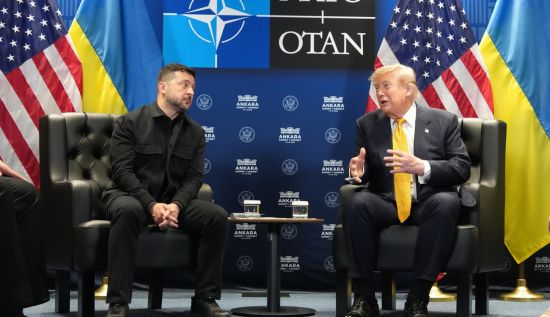
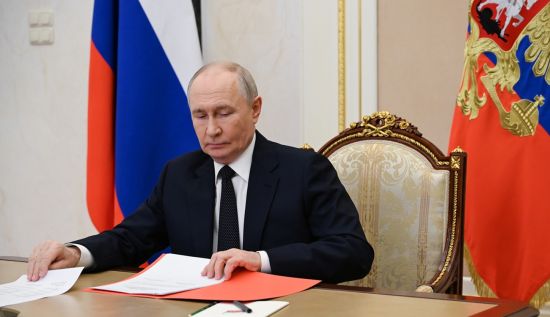
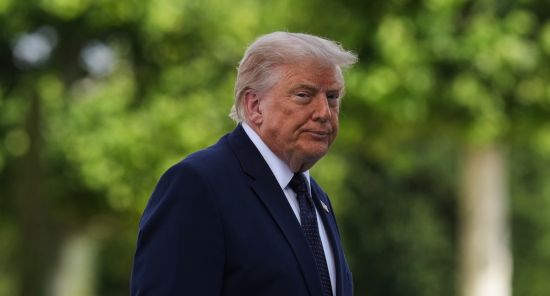
To be very clear, Putin is not interested in peace. He has used the negotiation process as a smokescreen while continuing to pursue Russia’s wartime objectives. He hopes that his friend in the White House, Donald Trump, can deliver politically what Russia has failed to achieve militarily.
The strategy has been to string the Americans along. But there is no indication that Putin’s goals have changed. He still wants everything. He wants Ukraine to disappear. As I said earlier, his objectives remain exactly the same.
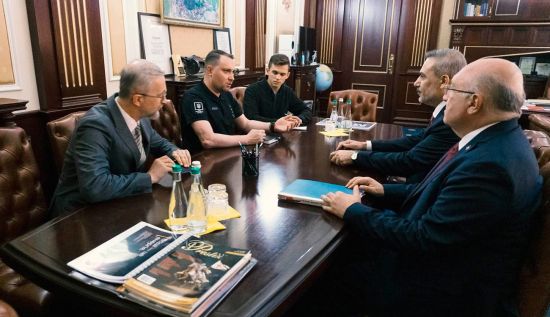
What I find truly fascinating, however, is how the nature of the war is changing and how events are gradually shifting in Ukraine’s favor. During my last visit, I interviewed Robert Brovdi, known as “Madyar,” the commander of Ukraine’s unmanned systems forces. I visited his bunker and saw firsthand how these operations are coordinated. I had always believed Ukraine could eventually win this war.
But after seeing that operation, I began to understand how such a victory might actually happen. That is where many of the long-range strikes against Russian targets are coordinated. When people see a Russian oil terminal or port burning, they often assume a drone simply flew there and hit the target.
In reality, it is a highly complex process. Russian air defenses must first be systematically degraded. That is exactly what Ukraine has been doing. We saw evidence of this even around the recent events in St. Petersburg. To conclude, I think Ukraine now has a more convincing path to victory than at any previous point in the war.
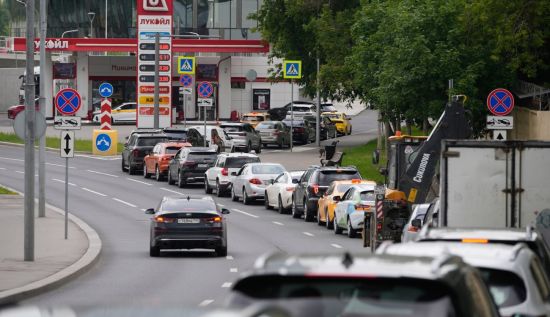
The plan is not to push every Russian soldier out through costly frontal assaults. The strategy is to undermine Russia’s economy. To reduce its ability to export and refine oil. To cut off revenue streams. To create a credit crisis, a fuel crisis, and a banking crisis.
In other words, to make the entire system begin to wobble. And we are already seeing signs of that process. People in Ukraine are undoubtedly tired. They are tired of the war. But at the same time, I sense a growing optimism.
— If a ceasefire is not really on the table from Russia’s side, then what is Russia’s interim objective? Is Moscow simply trying to wait for the next American presidential election, or is it attempting to buy another two or three years?
— The problem is that you’re approaching this with a logical, educated Ukrainian perspective. But the person we’re dealing with is Vladimir Putin. And Putin is a psychopath. We know he lacks empathy. We know he is willing to kill enormous numbers of people. We know he is deeply concerned with his own survival.
And that personal survival is now tied directly to the continuation of the war. If he were to stop the war or abandon what he calls the “special military operation,” people around him would begin plotting against him. There are already credible reports that his paranoia has increased dramatically. He reportedly fears being poisoned.
Even Russia’s periodic internet shutdowns may have as much to do with his personal security concerns as with anything else. His logic is simple: he believes he must continue, regardless of how badly the war is going. For that reason, I do not see a genuine resolution while Putin remains in power.
At the same time, waiting for him to die is not a strategy — neither for Ukraine nor for its Western partners. Ukraine should continue doing exactly what it is doing now. It should pursue diplomacy while simultaneously expanding drone production, investing in technology, increasing innovation, and bringing the consequences of the war directly to Russia.
When oil terminals near St. Petersburg — Putin’s hometown — are burning, that sends a powerful message. It is a message of Ukrainian strength and Russian weakness. We cannot rely on a popular uprising in Russia. I do not think that is going to happen.
But I can easily imagine members of the Russian elite becoming increasingly dissatisfied in private, because they understand something very important:
This war is not being won. And for Russia, it is not winnable.
— Let’s talk more about Britain, your home country. From a Ukrainian perspective, it seems that the United Kingdom has positioned itself as a bridge between Trump’s Washington and Kyiv. It also appears that London has become a leader, or at least a co-leader, of the so-called Coalition of the Willing. Is this genuine strategic leadership that benefits Ukraine and Europe, or is Britain simply filling a vacuum left by the United States?
— The first thing to say is that support for Ukraine in the UK remains enormous. What is particularly interesting is that this support extends far beyond politicians. With the exception of the far right — figures such as Nigel Farage and his party — there is broad political consensus on supporting Ukraine. But support also comes from ordinary people. You can walk through a small English village in the middle of nowhere and see a Ukrainian flag flying from a 12th-century church. That is extraordinary.
There is a genuine sense of solidarity with the underdog, but there is also an understanding of the nature of the Russian regime. After all, Putin has repeatedly sent assassins to the United Kingdom. I think Britain understood earlier than many countries that this is a highly aggressive and dangerous government. So British diplomacy is genuine and useful.
What we have actually seen since the full-scale invasion is that Britain has moved closer to its European partners despite Brexit. Brexit in 2016 was, in my view, a disaster.
Ironically, Ukraine has helped bring Britain and Europe closer together again.
As for the United States, Britain and America are traditionally close allies with deep historical ties. The problem is Donald Trump. Trump has made it fairly clear that he dislikes Keir Starmer. He appears to believe that European civilization is being undermined by migration. And, frankly, Trump dislikes Ukraine. The Trump administration has, to some degree, switched sides. It increasingly appears sympathetic to Russia. People can debate why that is — whether it is ideology, admiration for strongman leaders, or something else entirely.
But the reality is that Trump has behaved as though he were advancing Russian interests. He has alienated traditional allies, weakened confidence in NATO, limited support for Ukraine, criticized President Zelenskyy, and repeated talking points that often echo Kremlin narratives. As a result, the key political alliance today is not centered on Washington.
It is Ukraine together with its European partners and a handful of other allies. And that alliance has proven remarkably resilient. European support for Ukraine continues and, in my view, will continue.
— We are now almost halfway through 2026. Do you believe the West is genuinely helping Ukraine win the war, or are we still operating under the old concept of merely preventing Ukraine from losing?
— I think that question belonged more to 2022 or 2023. There was certainly enormous frustration during the presidency of Joe Biden regarding slow deliveries of tanks, restrictions on long-range strikes, and various red lines imposed on Ukraine. But the story has changed.
The story now is Ukraine becoming a drone superpower.
Ukraine is not only producing drones capable of striking deep inside Russia; it is also exporting expertise and technology abroad. Countries in the Gulf facing attacks by Iranian-made drones are seeking Ukrainian assistance. Even institutions in the United States are learning from Ukraine’s experience.
Of course, Ukraine still needs support. It needs more air-defense systems, including Patriot missiles. Europe does not yet possess an equivalent capability for dealing with large-scale ballistic missile attacks. But the conversation itself has changed. The question used to be whether NATO should allow Ukraine to join NATO. Now the question is whether Ukraine should allow NATO to join Ukraine. That sounds provocative, but the point is clear.
Ukraine possesses the most battle-tested, innovative, adaptable, and technologically advanced military force in Europe. The model of warfare being developed in Ukraine will influence future conflicts around the world.
So while Ukraine still needs money, aircraft, and military assistance, the future increasingly revolves around partnership, co-production, innovation, and long-term defense integration between Ukraine and Europe. This is not a project for the next year. It is a project for the next 10, 15, 20, or even 30 years.
— After more than four years of war, can Western media still effectively convey the reality of the conflict to audiences that may have become numb to it? And what does that numbness cost Ukraine?
— I’m not entirely convinced that this so-called Ukraine fatigue exists to the extent people claim. Whenever I’m in Kyiv, I hear discussions about Ukraine fatigue. To be honest, I’m more fatigued by the phrase itself. The readership numbers remain strong. For example, I recently wrote a story for The Guardian about Ukrainian drone strikes near St. Petersburg. More than half a million people read it worldwide. That was a single article written in one morning. I also posted a video on social media that attracted thousands of reactions. The interest is still there. The challenge for journalists is not overcoming indifference. The challenge is finding fresh ways to tell the story. You have to be more creative.
On my most recent trip, I visited Robert Brovdi. But I also traveled to Dnipro to meet a woman caring for an owl that had been injured during a Russian attack. The bird had lost a wing and was blind in one eye. So I wrote about wildlife and the environmental consequences of war. You cannot simply show another burning building. Of course those stories matter, but you also need stories about poetry, culture, ecology, and human resilience. I have written about the destruction of the Kakhovka Dam. I have written about soldiers and civilians.
One story involved a Ukrainian soldier who was captured by a Russian soldier in a trench and eventually convinced his captor to surrender to Ukrainian forces. These are human stories. The task is to combine high politics and international diplomacy with the experiences of ordinary people living through the war, particularly those near the front lines.
— Looking ahead is difficult in Ukraine. But when you imagine the end of this war, what do you see?
— I’ve been thinking about that question a great deal. I have just completed a new book, Betrayal: Trump, Putin and the New Age of Conquest, much of which focuses on Ukraine. It will be published later this year.
My view is that the war will ultimately change fundamentally when Putin leaves the scene. Despite all the rhetoric about nationalism and patriotism, another major project in Russia is the accumulation and distribution of wealth. Putin serves as the arbiter among oligarchs, generals, and the security services. When he is gone, there will be an intense struggle for power and resources.
That could create opportunities for Ukraine. Beyond that, I cannot predict exactly when the war will end. But I do believe the Russian regime is weaker than it appears. It projects an image of strength and invincibility. Yet we can increasingly see signs of weakness. Videos showing Ukrainian drones reaching deep into Russian territory demonstrate that vulnerability.
Russia does not traditionally tolerate weak leadership. At some point, something will happen. Whether that takes the form of elite conflict, internal instability, or something else, I do not know. But I am convinced of one thing:
Ukraine will outlast the current Russian regime. And it will outlast it as an independent state.