Today at 19:20

Ukraine has fundamentally changed the character of modern warfare by combining precision strike capabilities with mass deployment on an unprecedented scale, according to retired Lieutenant-General Christopher Coates, former commander of Canada’s Joint Operational Command.
In an interview with Ukrinform, Coates argued that while precision weapons existed long before Russia’s full-scale invasion, Ukraine has demonstrated a new way of employing them.
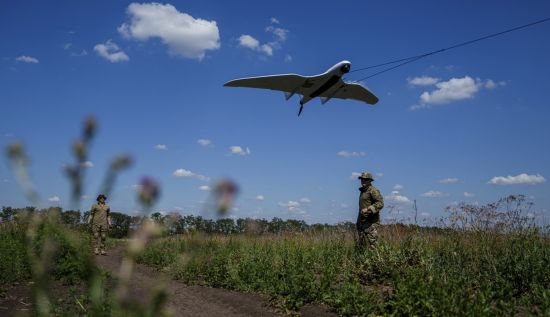
“Precision strike existed before this war, but Ukraine has successfully combined precision with scale. Drones have not replaced traditional military power; they have added an entirely new layer to it. At the same time, the cycle of innovation is moving at extraordinary speed — technology, counter-technology, and counter-counter-technology are evolving almost in real time,” Coates said.
According to the Canadian military leader, the most important lesson from Ukraine is not simply the widespread use of drones, but the speed at which armed forces can adapt when technology, innovation, and mass production are combined.
“The key lesson is not simply to buy drones. Ukraine demonstrates how rapidly warfare can evolve when technological innovation, adaptability, and scale come together,” he explained.
Coates noted that many Western defense concepts were built around highly sophisticated but expensive precision-guided weapons produced in relatively small numbers. Ukraine’s experience, he said, is challenging some of those assumptions.
“Ukraine is showing that low-cost systems deployed at scale can create major strategic challenges for traditional military models. This has implications not only for armed forces but also for the entire Western defense-industrial system,” he said.
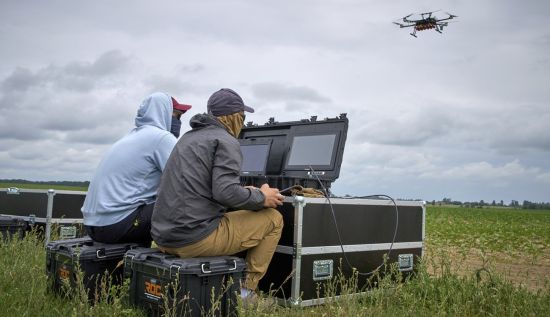
The general also emphasized that one of Ukraine’s greatest strengths is its ability to adapt commercially available technologies for military purposes.
Reflecting on a recent visit to Ukraine, Coates said that what impressed him most was not a particular weapon system but the country’s overall approach to innovation and adaptation.
“A good example is the DELTA combat system, a digital environment that integrates command, reconnaissance, and strike capabilities into a unified platform,” he noted.
According to Coates, Ukraine has developed a culture of rapid experimentation and problem-solving under wartime conditions, allowing it to react to changing battlefield realities faster than many larger militaries.
“Ukraine has built an extraordinary culture of improvisation and rapid adaptation. That ability to innovate under pressure may be its most important strategic advantage,” he said.
The comments come as NATO countries increasingly study Ukraine’s battlefield experience to modernize their own armed forces.
Earlier this year, Canada and Latvia conducted joint military exercises focused on lessons learned from the Ukrainian military’s use of aerial and ground-based unmanned systems, highlighting growing international interest in Ukraine’s combat-tested technologies and operational approaches.
Read also: Ukrainian Forces Cut Off Key Land Routes to Crimea from Occupied Kherson Region, — ISW