Today at 17:01

In a world where food security is increasingly shaped by war, climate disruption, and geopolitical shocks, Ukraine continues to play a central role in stabilizing global agricultural markets. As Danylo Yershov argues, Ukrainian grain is no longer just a commodity—it is a strategic factor influencing food prices from Europe to North America. In the spring of 2026, as sowing begins across Ukraine, any disruption in production is quickly reflected in supermarket prices in cities such as Berlin, Paris, and Chicago.
Read the full article by Danylo Yershov, political scientist specializing in international relations, junior expert at the United Ukraine Think Tank
Yershov emphasizes that Ukraine should not be viewed solely as a victim of aggression, but as a key contributor to global stability. Despite the ongoing war, the country maintains its position as one of the world’s leading grain suppliers, supported by fertile soils, advanced agricultural practices, and a highly skilled farming sector. Even under constant threat, Ukrainian agriculture continues to function—directly benefiting both European consumers and global markets.
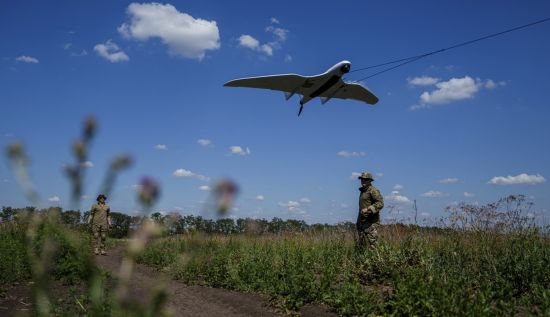
At the same time, the 2026 sowing campaign is unfolding under exceptionally difficult conditions. In frontline regions, farmers operate under shelling, increasingly relying on drones for field monitoring and electronic warfare systems to protect equipment. In safer regions, agricultural producers face rising costs for fuel and fertilizers, placing additional pressure on production. According to Ukraine’s Ministry of Economy, more than 16 million hectares are expected to be cultivated this season, yet the main challenge remains ensuring the safety of workers and maintaining operational continuity. As Yershov notes, any reduction in output—caused by mined land, logistical disruptions, or security risks—would immediately impact global supply and pricing.
This risk is closely tied to the security of export routes. In March 2026, negotiations intensified around maintaining and expanding maritime security in the Black Sea, a critical corridor for Ukrainian grain exports. Coverage by The New York Times and Financial Times highlights the stakes: without secure shipping lanes, Europe could face increased reliance on more expensive suppliers, while the United States would encounter additional pressure on food aid budgets.
The European Union remains one of the largest consumers of Ukrainian grain, driven by geographic proximity, competitive pricing, and product quality. Although tariff quotas introduced in 2025 have affected certain categories, Ukraine continues to fill critical supply gaps, particularly in regions with intensive livestock production. As Yershov explains, alternative suppliers—such as Canada, Australia, or Latin American producers—face higher transportation costs, longer delivery times, and greater exposure to climate volatility. Consequently, disruptions in Ukrainian exports translate almost immediately into higher prices across European markets.
From this perspective, reliance on Ukrainian grain is not a vulnerability but a reflection of structural interdependence in the global food system. Alternative sources cannot fully replace Ukraine in terms of scale, reliability, and speed of delivery. For Europe, this makes Ukraine a cornerstone of food security amid broader economic and environmental transitions. For the United States, it serves as a stabilizing factor that helps contain global price volatility and reduces the burden of international food assistance.
For Ukraine itself, this role brings both economic support and geopolitical significance. As Yershov concludes, continued investment in Ukraine’s agricultural sector is not an act of charity, but a rational strategy aimed at preserving stable food prices worldwide. In 2026, as sowing progresses and negotiations over maritime security continue, the message is clear: supporting Ukraine’s agricultural capacity is an investment in global stability—one that benefits consumers from Lisbon to New York while reinforcing a more resilient international food system.
Read the FULL article on The Gaze: How Ukrainian Grain Is Keeping Food Prices Stable in Europe and the U.S.