Today at 22:05
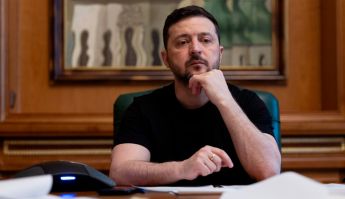
President Volodymyr Zelenskyy has enacted two National Security and Defense Council decisions aligning Ukraine’s sanctions policy with the European Union’s latest restrictive measures against Russian, Iranian and Sudanese individuals, as well as dozens of companies linked to military production, sanctions evasion and support for Russia’s war effort.
According to the Office of the President, decrees No. 447/2026 and No. 448/2026 synchronize Ukrainian sanctions with the EU’s 20th sanctions package, covering a total of 120 individuals and entities and targeting key sectors of the Russian economy, UATV English reports.
The latest measures apply to an additional 16 Russian citizens and 31 companies from Russia, Belarus, the United Arab Emirates, Kyrgyzstan, Kazakhstan, Uzbekistan and the temporarily occupied territories of Ukraine. Some of the targeted entities had already been sanctioned by Ukraine, while others were added as part of the latest alignment with EU restrictions.
Those sanctioned include executives of major Russian state enterprises, budget-funded institutions, military units and individuals involved in supporting Russia’s occupation administration in Ukrainian territories.
The sanctions also target companies linked to Russia’s defense-industrial complex, including manufacturers of electronic warfare systems, drone components and specialized software. Among them are Atlant Aero, a Russian aerospace producer involved in drone component manufacturing, and IRZ-Svyaz, a Russian communications systems producer supplying components for unmanned aerial vehicles and missiles.
Ukraine additionally imposed restrictions on companies based in the United Arab Emirates that supply industrial machinery, laboratory equipment, chemical products and spare parts for commercial aircraft, as well as on a Belarusian oil-exporting company.
The sanctions list includes several Russian individuals accused of participating in political repression. Among them are prosecutor Lyudmila Balandina, accused of involvement in human rights abuses against people supporting Ukraine or criticizing Russian authorities; judge Dmitry Gordeyev, who allegedly issued politically motivated rulings against opposition figures and activists; and Russian state television presenter and propagandist Maria Sittel.
The measures also cover 19 Iranian citizens, seven Sudanese nationals and 11 Iranian companies connected to Tehran’s ballistic missile and drone production programs.
Presidential sanctions policy adviser Vladyslav Vlasiuk said Ukraine would continue synchronizing its sanctions regime with those of the European Union and partner countries.
“We expect further pressure on Russia and all those helping sustain its aggression. Joint work is already nearing completion on the next rounds of sanctions by the EU and partner states, including the 21st sanctions package,” Vlasiuk said.
The latest move follows sanctions introduced by Ukraine on May 23 against Russian military personnel responsible for missile strikes on Ukrainian cities, including the attack on Kyiv’s Okhmatdyt children’s hospital, as well as measures targeting Russia’s military maritime logistics network.