Today at 17:05
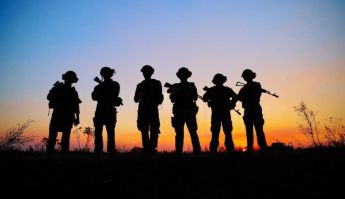
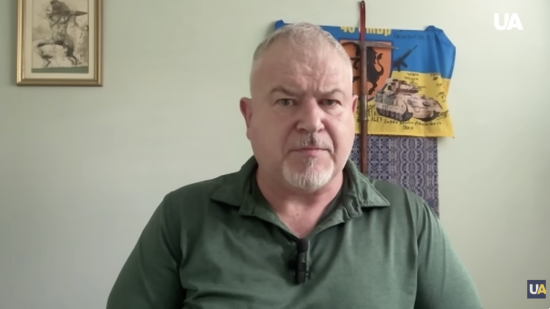
Ukrainian servicemen are defending not only their own country but also the security of Poland and the rest of Europe, according to Tomasz Sikora, a Polish volunteer and board member of the foundation Sikorki na Ukrainie.
In an interview with Ukrinform, Sikora explained that this belief shapes the way his organization views its work in support of Ukraine.
“The level of support for Ukraine is lower today than it was in 2022, but that is a natural human reaction. We live in a volunteer ‘bubble,’ surrounded by people who regularly travel to Ukraine. We avoid using the word ‘aid’ because we are convinced that Ukrainian soldiers are protecting us from the threat coming from the East, while we are simply helping them preserve the world in which we all live,” Sikora said.
According to the volunteer, his involvement began during the first days of Russia’s full-scale invasion, when he and his colleagues assisted refugees arriving at the Polish-Ukrainian border and helped transport them throughout Poland.
As the war continued, the group expanded its activities and began delivering humanitarian supplies to Ukraine, including assistance to communities in Vinnytsia.
“We quickly understood that no amount of powdered milk or hygiene products would matter if there was no soldier standing between civilians and the aggressor. That is why we shifted our focus toward supporting Ukrainian military personnel. Some of the brigades we work with today have been our partners for five years,” Sikora explained.
The Sikorki na Ukrainie Foundation now specializes primarily in providing technological and logistical support for Ukrainian forces. According to Sikora, the organization purchases drones, Starlink communication systems, signal repeaters that extend communication ranges, and ground-based robotic systems.
He noted that approximately 95% of the equipment procured by the foundation is purchased directly from Ukrainian manufacturers, helping both the military and Ukraine’s domestic defense industry.
Sikora also spoke about information attacks targeting volunteers and organizations supporting Ukraine.
According to him, a recent fundraising campaign to purchase decommissioned buses for the Ukrainian city of Vinnytsia generated a wave of hostile reactions online.
“The so-called Kremlin troll farms are very active. These are large organizations with budgets worth hundreds of millions of dollars annually. Their activity demonstrates how important information warfare and propaganda are for Russia. We view this online hatred as another weapon used by the enemy and try to turn it against them,” he said.
Despite such challenges, support initiatives continue to attract significant public backing. Sikora pointed to a recent campaign in Poland that raised 500,000 zlotys—more than six million Ukrainian hryvnias—in just four days. The funds were used to purchase 15 retired buses from the Polish city of Kielce for delivery to Vinnytsia.
According to the volunteer, the campaign demonstrated that although public attention may fluctuate, there remains a strong understanding among many Poles that Ukraine’s struggle is closely connected to the security and stability of Europe as a whole.
“By supporting Ukrainian soldiers, we are supporting our own security as well,” Sikora concluded.
Read also: Ramstein commitments could total $4 billion — Fedorov