Today at 01:03

The time of “soft calculations” has passed. The European Union is now shifting to a strategy of maximum pressure on the aggressor’s economy. Moreover, if Russia demands restrictions on the Armed Forces of Ukraine, it will face symmetrical limitations on its own military potential. Hungarian blackmail will not prevent the allocation of the decisive €90 billion.
This was stated in an exclusive interview with FREEДOM TV channel by the EU High Representative for Foreign Affairs and Security Policy, Kaja Kallas, UATV English reports.
The host is FREEДOM’s special correspondent in Europe, Vitalii Syzov.
— You have been deeply involved in Ukrainian policy for many years. As a Member of the European Parliament in 2014–2018, and as Prime Minister of Estonia from 2021 to 2024, you repeatedly visited Ukraine. Did you expect Russia’s war against Ukraine to last this long — more than 10 years? And today, four years into the full-scale invasion, how do you assess the EU’s actions? Was everything done correctly?
— I regret that we did not do immediately [after Russia’s invasion in 2014] everything we are doing now. I think that if everyone had provided such significant military assistance from the very beginning… Yes, my country, Estonia, was providing military aid to Ukraine even before the full-scale invasion. But not everyone did so.
If we had provided from the start everything we are providing now, perhaps the Russians would have changed their plans and realized that they cannot actually win this war.
And since the war is still ongoing, it means we have done too little. We imposed sanctions, but there is still sanctions circumvention that we must fight. Unfortunately, Russia is still capable of waging this war.
— Do you see an increase in support for Ukraine? Are you satisfied with the current situation — all these defense programs such as SAFE (Security Action for Europe) and other initiatives? Is it enough?
— In December, we adopted a decision to provide Ukraine with a €90 billion loan, including funding for military needs. But today we face a serious problem (Hungary is blocking the allocation of this loan, — ed.). However, we are working to finalize this process, because it could truly be a game changer — we are focused on the long term.
We must also do more in terms of sanctions, including pressing on Russia’s shadow fleet. Then the Russians will not have the funds to finance their war.
— Hungary continues to block the 20th EU sanctions package against Russia and the €90 billion loan to Ukraine. How do you assess the dialogue with Budapest? Is it possible to resolve this problem?
— We are conducting dialogues at various levels, including at the level of leaders. We are trying to take Hungary’s concerns on certain issues into account and seek solutions.
But they (Prime Minister Viktor Orbán and his government, — ed.) are linking together issues that are completely unrelated (for example, Orbán demands that Ukraine resume the transit of Russian oil via the Druzhba pipeline to unblock the loan, — ed.). This certainly complicates the process. But in the end, we have always found a solution.
— You have repeatedly stated that to end the war, Russia must make concessions. The media is discussing numerous documents now. Does the EU have a specific list of concessions, and how realistic is it?
— I proposed to EU member states a list of concessions. Because we see that all the pressure in the negotiations is being put on Ukraine. Although Russia started this war — Russia is the problem. Therefore, we must put pressure on Russia to make concessions.
Sustainable and long-term peace must be not only in Ukraine, but also in Europe. And Russia, as you know, has clearly defined its maximalist demands.
So how should we proceed? We are negotiating with member states, and we will see what comes out of it.
— French President Emmanuel Macron proposed resuming direct negotiations with Russia. Is now the right time to start? Are you ready to sit at the same table, for example, with Russian Foreign Minister Lavrov or with dictator Putin?
— I have sat at the same table with Lavrov at various international forums. But returning to the question, it is important to discuss what we want to ask the Russians. There are clear commitments and positions. But the main thing is to clearly understand that the European Union can conduct negotiations.
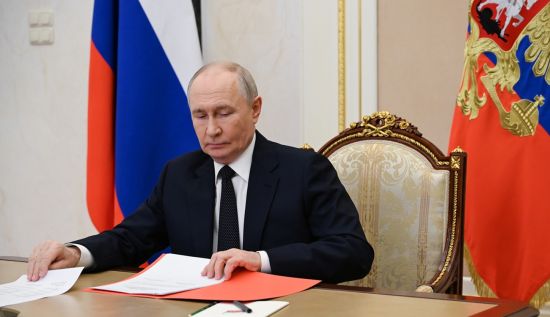
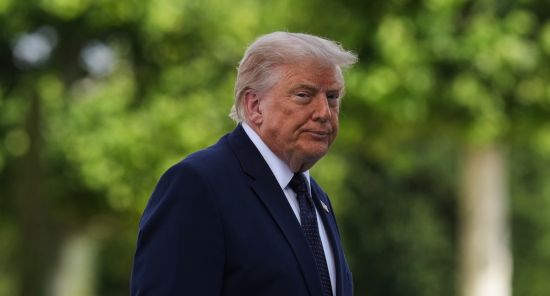
It is not about becoming hostages in negotiations between Russia and the United States. That is absolutely clear. But it is also a matter of timing. We cannot demand to be included in negotiations. If the Russians are waiting for Americans to fulfill agreements reached in Alaska [between Putin and Trump], meaning Russia’s maximalist demands, why should they talk to us?
We cannot put pressure on Ukraine to surrender or make all concessions.
If Russia is interested in lifting sanctions or other steps, then obviously we also have demands toward Russia. We are not going to give these things away for free. To balance the negotiations, we must obtain concessions from the Russian side.
We have made it very clear that we are increasing pressure so that Russians move from pretending to negotiate to real negotiations.
— You mentioned the Putin–Trump talks in Alaska on August 15, 2025, in Anchorage. Russian media began speaking about the “Spirit of Anchorage.” How do you understand this concept, and what place does the EU have in this close Moscow–Washington contact?
— The Anchorage agreement or understandings between Russia and the US concern Russia’s maximalist demands. First of all, the demand to hand over the entire Ukrainian Donbas — territory they have not even conquered militarily. Obviously, neither Europe nor Ukraine can agree to this.
This war has been ongoing for 12 years, and Russians have still failed to conquer Donbas militarily. Now they demand it at the negotiating table. This is Russia’s usual tactic, and we must be extremely vigilant.
— How realistic is the idea of limiting the size of the Russian army and ensuring withdrawal from partially occupied sovereign territories such as Moldova and Georgia?
— In some of these countries, they have already committed to withdraw troops. They simply did not fulfill these commitments.
We see in the draft agreement a requirement to limit the size of the Ukrainian army. But let’s be honest: the Ukrainian army is not the problem — the Russian army is the problem.
If there are restrictions on the Ukrainian army (which I consider wrong), then there must also be restrictions on the Russian army — at least for balance.
— How do you assess the current negotiations between Ukraine, the US, and Russia? Do you see signs of progress?
— For a year now, we have seen aspirations for peace, and Ukraine has repeatedly proposed a ceasefire. Ukraine agreed to an unconditional ceasefire; Russia did not. If they put forward maximalist demands without conducting genuine negotiations, merely pretending to do so, I do not think there will be a breakthrough — because Russians do not want it.
— The current sanctions model involves packages. The 20th package is being prepared. When will this series end — 21st, 22nd, 23rd?
— When this war ends, we will not need to do this anymore. We impose sanctions because we want the financing of this war to stop.
Yes, Russia’s economy had inertia. But now sanctions are truly hitting them hard.
The Russian economy is already in bad shape. They are raising taxes and seeking capital externally. They are in trouble. Therefore, we must not soften but move forward.
— Russian propaganda media constantly discuss and criticize you. How do you react?
— I do not follow them. Russian media are not welcome in Europe because they are not free media. I do not know what they write about me.
But if they hate me, it means I am doing something right.
Read also: Trump’s Positions Weaken Over Epstein Files – Interview with Glen Grant