Today at 14:05

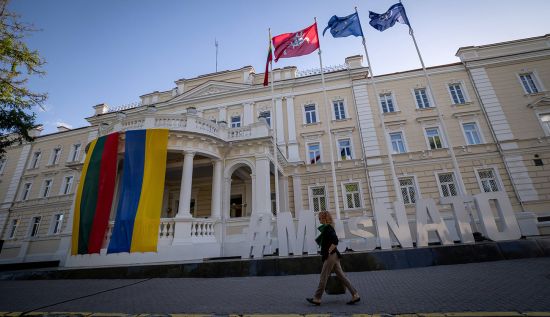
The Baltic states have urged the European Union to accelerate plans to ban imports of Russian oil, arguing that concerns over a potential energy crisis caused by the conflict involving Iran have not materialized, the Financial Times reported, citing sources.
According to the report, EU member states agreed late last year that the European Commission would soon present proposals to phase out Russian oil imports. However, the initiative was delayed after the conflict involving Iran and concerns over disruptions to shipping through the Strait of Hormuz raised fears of an energy supply crisis, UATV English reports.
The proposal had initially been expected on April 15 but was removed from the Commission’s preliminary agenda in March.
Sources familiar with the discussions told the Financial Times that during a meeting of EU energy ministers on Friday, Estonia, Latvia, and Lithuania called on the European Commission to move forward with plans to gradually end imports of Russian oil, arguing that energy exports continue to finance the Kremlin’s war against Ukraine.
According to the sources, EU Energy Commissioner Dan Jørgensen did not respond to the proposal during the closed-door meeting, although the European Commission remains committed to presenting the initiative.
Since Russia launched its full-scale invasion of Ukraine, the EU has significantly reduced its dependence on Russian energy. European Commission data show that Russian oil accounted for just 2% of EU imports in 2025, down from 27% at the beginning of 2022. However, the bloc still imported 9.7 million tonnes of Russian crude last year.
The proposal is expected to face resistance from countries that remain heavily dependent on Russian oil, including Hungary and Slovakia, as well as from member states concerned about high energy prices. However, individual member states will not be able to veto the measure.
Poland’s Deputy Energy Minister Wojciech Wrochna told the Financial Times that Warsaw supports introducing the ban before the end of the year.
“We understand concerns about prices, supply availability, and competitiveness, but this is the price we will have to pay to become independent of Russian resources,” he said.
The European Commission said on Friday that oil product markets had demonstrated resilience despite earlier warnings of possible shortages of aviation fuel in Europe.
Following the meeting, Jørgensen said the situation in the Middle East had increased the likelihood that Europe would avoid shortages of aviation fuel and other petroleum products this summer. At the same time, he cautioned that even if a broader agreement is reached, oil markets could take months and gas markets years to fully stabilize.
The Commission is also seeking to accelerate Europe’s transition away from fossil fuels. On Friday, EU member states agreed on a new package of rules designed to speed up permitting procedures and facilitate the construction of cross-border electricity transmission infrastructure.
Earlier, the Council of the European Union extended its restrictive measures against Russia for another 12 months, until July 31, 2027.