Today at 20:06
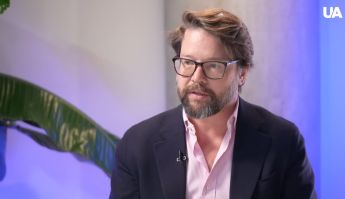
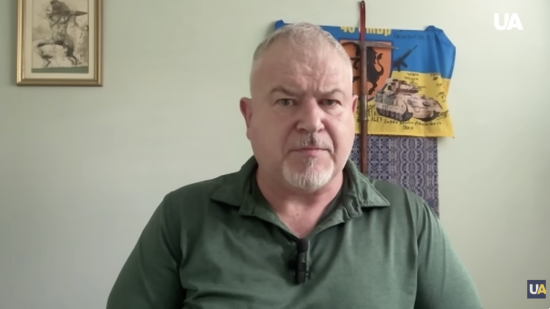
In this episode, we present a sensational interview with Kip Hale — an American attorney, war crimes investigation expert, and Chief of Staff of The Reckoning Project. The renowned lawyer openly reveals classified details and legal mechanisms that guarantee inevitable punishment for Vladimir Putin and his generals.
How do unique digital linkage evidence and massive intercepts of Russian military phone calls prove the systemic normalization of genocide and violence even among Russia’s civilian population? Watch the full analysis of the Special Tribunal’s preparation in The Hague as of June 2026.
— You are currently working on documenting war crimes here in Ukraine. Please explain the mission of your project.
— Yeah, thank you so much for having me. As you know, I’m Kip Hale, and I’m the Chief of Staff of The Reckoning Project. The Reckoning Project is an organization that grew out of the full-scale invasion. The mission is fairly simple, but actually quite novel in this field.
It is not only about documenting and investigating atrocity crimes. By atrocity crimes, I mean war crimes, crimes against humanity, genocide, and the crime of aggression.
We use that information to help jurisdictions — Ukrainian, foreign, and international jurisdictions such as the International Criminal Court — build their cases. In other words, we provide verified and strong evidence that can assist legal proceedings.
But our mission does not end in courts of law. We take that same material and use it to win in the court of public opinion. Through media work and other forms of advocacy, we use documented evidence to fight Russian propaganda and misinformation.
We are also expanding into different parts of the world. So the mission is simple, but as I said, quite unique in the field.
— You have worked on war crimes investigations in different countries — Cambodia, Libya, the former Yugoslavia. What lessons are important for Ukraine? What has your experience taught you?
— Ukraine is already learning many of those lessons.
I always make the point that what Ukrainians are doing has rarely been done before, even since the post-World War II period.
What makes Ukraine unique is that you have a domestic jurisdiction that, from the very beginning of the war, has prioritized accountability for atrocity crimes.
As you know, the number sadly continues to grow. There are now more than 200,000 registered incidents of war crimes in Ukraine.
One of the most important lessons is that evidence must be collected as soon as possible.
Ukraine is the eighth conflict in which I have worked, whether investigating, prosecuting, or advising those who do so. Very often, cases collapse because of poor evidence or a lack of evidence.
That is why it is so important to collect evidence at the time the crimes occur, to analyze it, verify it, and preserve it for future use.
In that regard, Ukraine has implemented one of the most important lessons from previous conflicts. There are many others, but that is the first one that comes to mind.
— Why did you decide to focus on this war — the Ukrainian war?
— Ukraine is unique. I don’t like comparing conflicts because every conflict contains its own forms of suffering and destruction. But one thing I often speak about publicly is the sheer variety of criminality occurring here in Ukraine.
Of course there are murders, torture, and conflict-related sexual violence. But there is also environmental criminality, the destruction of cultural heritage, and the deportation of children across state borders.
The range of crimes is extraordinary. And then there is what I consider the most significant crime of all. This is the first conflict I have worked on where there is such a clear crime of aggression — one country invading another for territorial acquisition. That simply has not happened on this scale in a very long time. The diversity of these crimes and all their implications make accountability in Ukraine particularly important. That is why, for me and many others, it is such an important investment of our time.
— Is this truly genocide?
— That’s a very difficult question. And I’m glad you asked it because there are many misconceptions and a great deal of misinformation surrounding this issue. First and foremost, I always tell people that there is no hierarchy among atrocity crimes.
Remember the categories I mentioned earlier: crimes against humanity, genocide, war crimes, and aggression. Legally speaking, they are all equally grave. There is no “crime of crimes.”
That is true in law, although public understanding often suggests otherwise. Genocide, theoretically, could involve the death of a single person if the legal elements are met. Let me give another example. As you mentioned, I worked at the UN-backed Cambodia Tribunal, which dealt with crimes committed by the Khmer Rouge between 1975 and 1979.
That ultra-communist regime killed roughly 25 percent of the population. Yet very little of that criminality was legally classified as genocide. Most of it was prosecuted as crimes against humanity.
So what I like to emphasize is that whether or not Ukraine ultimately meets the legal definition of genocide does not change the reality that there is immense criminality occurring here. There is enormous death and destruction. There are attacks on cultural heritage. These actions can also be captured under other categories, most notably crimes against humanity.
Even if a court ultimately concludes that these acts do not legally constitute genocide, that does not create a second-class category of victims.
It is all horrific. And those responsible — both the architects and the perpetrators — should be held accountable.
— Let me ask you about the future of these investigations. Is a new Nuremberg for Russians possible?
— As you know, a very important development recently took place. The Council of Europe, together with a sufficient number of countries, including members of the European Union, signed on to create a special tribunal for the crime of aggression against Ukraine. Now the operational phase is beginning.
There are some limitations. For example, this tribunal currently does not have the ability to prosecute what many call the “troika” — Putin and members of his inner circle.
That does not mean it can never happen in the future, but this particular tribunal does not currently have that authority. Nevertheless, this is an incredibly important development.
Why? Because we are seeing aggression proliferate around the world. We see examples in Venezuela, in Iran, and in conflicts involving Israel in Lebanon and elsewhere.
Aggression is becoming increasingly common, yet accountability remains rare. What this tribunal represents is a statement that the crime of aggression must have consequences.
As for a Nuremberg-style process, international criminal justice has evolved since then — and, in many ways, for the better. Creating a specialized tribunal solely for Ukraine may sound attractive, but it could actually undermine the international legal architecture that has been built over decades.
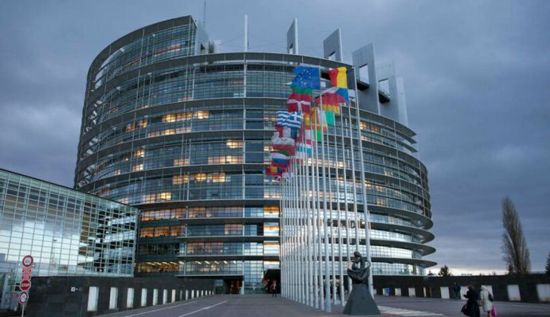
Today we have the International Criminal Court in The Hague — the only permanent international tribunal with a mandate to prosecute atrocity crimes. However, the ICC is designed to handle only the top five percent of perpetrators in any conflict.
The system is built on the assumption that domestic jurisdictions, in this case Ukraine, will carry the primary burden of accountability. That does not exclude another idea that deserves greater discussion: a hybrid tribunal.
A hybrid tribunal would combine international and Ukrainian participation. Through a treaty or another legal mechanism, international actors and the Ukrainian government would create a mixed court composed of both international and Ukrainian judges, prosecutors, and investigators.
Such a tribunal could address the vast majority of atrocity crimes committed during this war. Not only would that fit within the way the current international system is designed, it would also be a very important way of reinforcing accountability and strengthening the broader architecture of international justice.
— The system of violence, the network of violence in Russia, is very large and involves ordinary people, citizens, civilians. What role do civilians play in these crimes?
— That’s a tough question. I recently saw published transcripts of phone calls between Russian soldiers on the front lines and their families back in Russia — wives, mothers, relatives. To say those conversations were horrifying would be an understatement.
What struck me was how easily some Russian civilians were legitimizing atrocity crimes and justifying them. That, in itself, is an example of how public opinion can begin to underpin the perpetration of atrocity crimes.
And that is a very significant issue. To be honest, I don’t think I’ve encountered such blatant and crude justification of criminality elsewhere. That being said, I think we would all agree that the information available to the Russian population is extremely limited.
It passes through a state-controlled filter. People are hearing only the official narrative. They are hearing Russian propaganda. I believe in humanity, regardless of where someone comes from or what their background is. I believe we all share certain fundamental values and an understanding that some things are simply wrong.
That is why atrocity crimes exist as a legal category. Across cultures, whether in the Global North or the Global South, we recognize that these crimes represent the worst forms of human behavior.
Because of that, I believe that if the Russian population were receiving accurate information about what is actually happening — what their government is actually doing, from the deportation of children to attacks on civilian infrastructure, environmental destruction, and all the other crimes I mentioned — there would be a growing groundswell of opposition.
I often think about the Soviet invasion of Afghanistan. In the end, it was the mothers of Soviet soldiers — especially the mothers of those who had been killed — who became one of the driving forces behind the Soviet withdrawal.
So yes, civilians can play a deeply troubling role by normalizing and justifying depraved criminal behavior.
But with proper education, advocacy, and ways of reaching people with truthful information, I believe the international community can help change that.
— And what about propaganda? The role of propaganda?
— This war demonstrates the central role of propaganda. Not that propaganda is unique to this conflict. We saw it in Nazi Germany, in Rwanda, in Cambodia. Propaganda has always been used to legitimize criminality in pursuit of political objectives.
That has always been its role in conflict. However, Russia has elevated this to an industrial scale.
It is not merely a supporting tool. It is built into the entire system. As we would say in America, it is baked into the cake. It is part of the DNA of what is happening.
Propaganda serves two functions.
First, it enables criminality by creating the conditions in which it becomes acceptable.
Second, it justifies criminality after the fact.
That is why it is so important.
Some of my colleagues are doing excellent work demonstrating that weaponized propaganda can itself contribute to atrocity crimes and that individuals responsible for it may also bear legal responsibility. Of course, I come from a culture with a very liberal understanding of freedom of speech. That means we must be extremely careful.
Even when speech is offensive or disturbing, there is a very fine line that must be respected. But I think the Russian government and many of those enabling it have clearly crossed that line.
— Among anti-war Russians there is a great deal of discussion about so-called collective responsibility. The argument often goes: if everyone is guilty, then no one is guilty. What do you think about this debate? Can an entire society share responsibility?
— As you mentioned, I am an international criminal lawyer, and I have worked in this field for almost two decades. I believe accountability must rest on evidence.
You can only hold people criminally accountable when there is evidence that they participated in crimes, enabled them, permitted them, or were complicit in them.
However, the debate you are referring to concerns a much broader concept of responsibility. It concerns moral responsibility, ethical responsibility, and societal responsibility. And I do think there is something to be said about that.
Returning to our previous discussion, if accurate information were reaching the Russian population and people still chose not to react, not to resist, not to speak out, then there is a legitimate moral question to ask. Now, I fully understand that protesting in Moscow or St. Petersburg can lead to severe punishment. That is a reality.
But at the same time, I do believe there is a certain moral responsibility if you know what is happening and choose to do nothing about it. Even deciding not to leave, not to object, not to resist in any way can raise difficult moral questions. This is not unique to Russia.
We face similar debates in my own country. Of course, we are not talking about the same scale of criminality, but citizens everywhere face questions about what they should do when their governments engage in actions they consider wrong.
What is your responsibility in that situation? That is precisely why this debate matters. And frankly, I hope this debate is taking place inside Russia. Because debates like this are often what create the conditions for change.
— Let’s talk about the demonstration of violence by Russians. It is so easy to find pictures and videos on Telegram showing torture, killings, and all this brutality. Why do they do this? And as an investigator, how important is this kind of digital evidence for your work?
— Well, the question of why they film it and publish it can have many different answers. I led investigations into the Islamic State in Syria and Iraq for five years on behalf of a non-governmental organization.
For ISIS, these videos were actually a badge of honor. They were proof that they were carrying out their radical interpretation of Islam and pursuing their goal of establishing a caliphate. Publishing gruesome crimes was a way of demonstrating commitment to the mission.
In the Russian context, it is somewhat different. I think it is often intended to show that the victims are somehow dehumanized — that they are “Nazis,” as Russian propaganda alleges — and therefore deserve to be dealt with. So the question of why is complicated.
As for the second part of your question — how this material contributes to accountability — both open-source evidence and digital evidence are incredibly important. By open-source evidence, I mean material that anyone can find on a laptop or mobile phone. Digital evidence includes things like email accounts, mobile devices themselves, and other electronic records.
These forms of evidence are extremely valuable for building cases. However, there is an important caveat. Let me first talk about open-source evidence.
Open-source evidence is very effective for establishing what we call crime-based evidence — evidence that crimes occurred. But proving that crimes happened is usually not the hardest part of international criminal investigations. In fact, it is often the easiest part. The more difficult challenge is what we call linkage evidence.
That means connecting senior leaders — people who may be far removed from the actual crime scene — to the crimes themselves. How do you prove that a senior official authorized, enabled, or contributed to crimes committed by others? Open-source evidence is often limited in this regard.
We rarely have photographs of criminal orders. We rarely have people publicly admitting, “I gave this illegal order,” or “I developed a policy that led to conflict-related sexual violence.”
That type of evidence is very difficult to obtain. You need insiders. You need documents. You need information that is often hidden. Digital evidence, however, can be different.
Mobile phones, email accounts, and electronic communications can reveal actual connections. They can show how conspiracies develop and how decisions move through a chain of command. So both types of evidence are important, but they serve different purposes. Together they help build the full picture necessary to develop cases against senior leaders that can ultimately succeed in court.
— How difficult is it emotionally to deal with this brutality on a daily basis?
— First, I should say that my days of working directly on the front lines of accountability are somewhat behind me.
I no longer take as many witness statements as I once did, nor am I exposed to the crimes as directly as many of my colleagues.
I say that because there are investigators and researchers who work even closer to the crimes themselves and deserve enormous recognition. That being said, I am still exposed to these realities while managing and helping build cases.
And yes, it is difficult. That is why psychological support is so important for investigators, analysts, and team leaders alike. This work exposes you to the very worst of humanity. You see people at their most cruel and destructive. You witness the consequences of terrible crimes in a very direct way.
But personally, what keeps me going is the mission. The mission allows me to work through these horrific materials. Not because of revenge or retribution, but because accountability benefits society as a whole.
When you are able to hold senior leaders accountable, it sends a powerful message. It demonstrates that the rule of law exists. It demonstrates that no individual, no matter how powerful, stands above the law. And justice, as many people in my field believe, is essential to durable peace. If justice is avoided, you are often merely postponing the next conflict. Keeping that mission in mind helps you endure the difficult work.
Of course, the worst tragedy is the loss of human life. But for survivors, the crimes they experienced are often the most traumatic events of their entire lives. It is impossible not to feel deep empathy for them. Still, you have to keep the mission in mind. You seek justice not only for the victim or survivor sitting across from you at the table, but also for all the others you never meet. For the nameless and faceless people who no longer have anyone to fight for them. That is what keeps me — and many others in this field — going.
— This was my last question. Do you believe justice can prevent future crimes? And from your answer, I sense that you truly do.
— Yes, I really do. And it is not merely a theory or a policy position. There is empirical evidence supporting it. We know that societies emerging from conflict that pursue accountability for atrocity crimes tend to become more democratic, more respectful of human rights, and more stable and secure.
The opposite is also true. Societies that fail to address such crimes often remain less stable, less democratic, and more vulnerable to future violence. So this is not simply a nice talking point. The evidence supports it. That is why I would say to Ukrainians that justice is a long process.
It requires significant investment of time, effort, and resources. It does not happen quickly. And I completely understand how frustrating that can be. Given the devastation and trauma people have endured, victims and survivors naturally feel an urgent need for justice. I feel that urgency too. I do not criticize people for being impatient with these processes. But my message is simple:
In the end, it is worth it. It is worth it because accountability helps build not only a more stable and peaceful Ukraine, but also a stronger Ukraine for future generations.