Today at 13:03

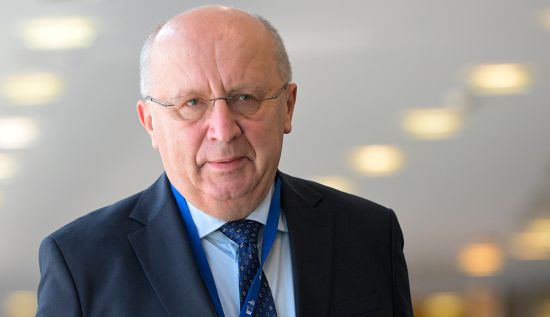
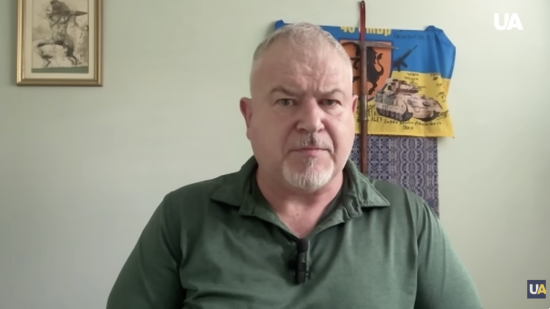
We interviewed European Commissioner for Energy Dan Jørgensen about Europe’s perspective on Ukraine’s energy challenges. The Commissioner condemned Russian strikes on Ukraine’s energy infrastructure and assured continued EU financial and expert assistance for its restoration, UATV English reports.
He emphasized that energy is part of EU accession negotiations. The Commissioner also stressed that the Union intends to completely halt imports of Russian energy carriers, and Hungary’s court case won’t affect established timelines. Steps are also being prepared to combat sanctions evasion, including through the so-called “shadow fleet.”
Read here the full interview with European Commissioner for Energy Dan Jørgensen.
— The main issue for Ukraine is the energy system. Do you see prospects for restoring this system in the short term or the long term, especially during the EU accession process?
— There is no doubt that the terrible and unjust bombings of Ukraine’s energy infrastructure are severe, and we condemn them. We want to help our friends in Ukraine as much as we can. We have already done so with funding, expertise, and other forms of support.
I am in frequent contact with the Ukrainian authorities and the government, and we will continue working closely to provide as much assistance as possible.
Looking ahead, part of the accession negotiations covers the energy sector, and Ukraine has shown remarkable progress—implementing many necessary reforms even during a full-scale war. This will make Ukraine’s energy system more resilient in the future.
Of course, the immediate focus is ensuring that people have heat, light, and electricity for essential needs.
— How would you assess the condition of Ukraine’s energy system? How strong is it?
— Ukraine has a very strong energy system. I am impressed with how Ukraine handles the enormous challenges caused by the war.
However, when you are under such aggressive drone attacks, any energy system—no matter how robust—will be challenged. I am aware that many people in Ukraine are freezing, without electricity or water, and lacking basic services because of Russia’s attacks.
— The second direction of support for Ukraine is pressure on Russia. The EU has done tremendous work to stop buying Russian gas and oil, but Hungary is trying to sue the European Commission to reverse the decision to stop Russian gas imports by 2027. From your perspective, should this legal action delay or influence the final date you established?
— The European Commission has been clear:
We want to stop all imports of Russian energy. We cannot indirectly finance the war by paying Putin for energy. This must stop as soon as possible.
We now have legislation in place to ensure this happens. One member state has chosen to challenge it, but this will not affect the timeline. I am fully confident that our decisions are legitimate and that our legal instruments are appropriate.
Of course, I would have preferred full solidarity from Hungary, but their legal challenge will not influence our final decision. Ukraine can be certain that we will follow through as promised.
— The United States often stresses that the EU still buys some refined oil from certain countries, which may include Russian-origin products. How justified is this criticism, and what can be done to limit this remaining flow?
— We have sanctions in place to stop Russian oil from reaching Europe. Two countries currently have derogations, but I intend to put forward a legislative proposal soon to end those derogations as well.
Even though the remaining amounts are small, we want to eliminate every molecule of Russian-origin oil.
There is also ongoing circumvention of sanctions. While the quantities are limited, we are committed to stopping it entirely. The shadow fleet is the most concerning issue. These ships frequently violate sanctions in European waters, and this must end.
We continuously monitor the situation, strengthen legislation, and increase sanctions to prevent such circumvention.
— Ukraine consistently raises concerns about Rosatom in Europe. President Zelensky mentioned Rosatom among entities that should be sanctioned. Why has the EU not sanctioned this major nuclear-sector enterprise?
— The Council of EU Foreign Ministers continuously discusses which companies and entities should be sanctioned. These discussions are confidential. I am not part of that room, and even if I were, I could not share details.
What I can assure the Ukrainian people is that we are hitting Russia as hard as possible, using targeted measures designed to have maximum negative impact on Russia.
— At what stage is the phase-out of Russian gas now? How much Russian gas is still present in EU markets—1%, 2%? And what about oil?
— In 2021, 45% of our gas came from Russia. Now, it is just over 10%. This is a significant reduction, but even 10% is too much.
By the end of this year, all Russian LNG will be gone. By the end of next year, the remaining pipeline gas—which is already a very small share—will also be gone.
By September next year, we will be completely rid of Russian gas.
— As a final question: Russia was present in the EU market for a long time, with political and economic connections that still partly exist. You are working to end this dependence, but have you faced pressure or attempts by Russia to influence decisions, lobby outcomes, or block measures?
— We have faced opposition, which is why these measures were not implemented earlier. Sanctions require unanimity, and if one or two countries object, we cannot move forward.
What is new is that we found a different legal path: not sanctions, but a ban—a trade policy instrument. This is unprecedented; the EU has never used such a tool against any country before.
We hope never to use it again, but it allows us to act even without unanimity. I would have preferred unanimous support, but since we do not have it, this is the way forward.
Read also: Building to Withstand: Ukraine’s Military-Civil Resilience Strategy in 2026