Today at 14:03

In a context where nearly every newly constructed facility risks becoming a military target, the question of infrastructure resilience has moved to the center of Ukraine’s recovery strategy. The concept of Military-Civil Resilience (MCR) offers a response by integrating defense-oriented technologies and protective design standards directly into reconstruction planning.
The fusion of infrastructure development with defense preparedness is increasingly becoming a Western strategic trend. As wars grow more protracted and hybrid threats intensify, the traditional separation between civilian reconstruction and military security is eroding. The MCR framework represents a comprehensive model in which bridges, transport corridors, power plants, logistics hubs, and other critical facilities are designed from the outset with military risk assessments in mind. This includes reinforced structural engineering, redundancy systems, passive and active protective measures, and digital monitoring and control mechanisms capable of maintaining functionality under attack.
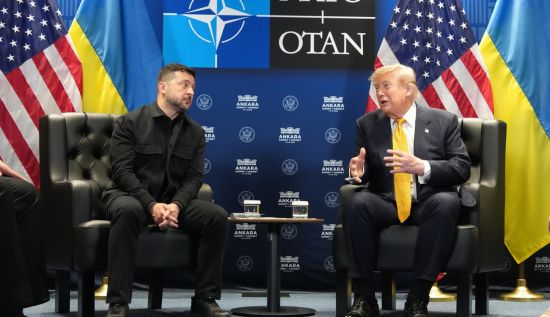
This approach is gaining traction among Ukraine’s Western partners, particularly within NATO countries that have reassessed infrastructure security standards following Russia’s full-scale invasion. Strategic facilities are increasingly viewed not only as economic assets but also as components of national defense architecture.
For Ukraine, the adoption of MCR principles could define a sustainable recovery model. Infrastructure rebuilt with embedded resilience—structural reinforcement, distributed energy systems, hardened data centers, protected logistics nodes—would not merely survive potential strikes but continue operating under pressure. In this sense, resilient infrastructure becomes both an economic lifeline and a deterrent signal: the higher the survivability of critical systems, the lower the strategic payoff for targeting them.
An effective MCR program would encompass several core dimensions:
- Priority reconstruction targets: transport corridors, energy grids, water systems, telecommunications, and industrial facilities designed with redundancy and protective layering.
- Financing mechanisms: blending international recovery funds with security-oriented investment frameworks, potentially linking resilience standards to access to Western reconstruction capital.
- Technological integration: dual-use systems such as early-warning sensors, decentralized energy production, underground facilities, hardened data networks, and AI-assisted monitoring platforms.
- Private-sector involvement: engaging engineering firms, defense contractors, and technology companies in joint projects that merge reconstruction with protective innovation.
- Strategic security impact: transforming rebuilt infrastructure into part of a broader deterrence ecosystem, raising the cost of attacks while ensuring continuity of governance and economic activity.
Ultimately, Military-Civil Resilience reframes reconstruction not as a return to the pre-war status quo, but as a structural modernization under threat conditions. In a war environment where vulnerability invites aggression, resilience itself becomes a strategic asset. For Ukraine, rebuilding smarter—rather than simply rebuilding faster—may be the decisive factor in securing long-term stability and integrating more deeply into Western security architecture.
Read the full analysis on The Gaze by Bohdan Popov, head of digital at the United Ukraine Think Tank, communications specialist, and public figure.
Read also: Power to the People: How Ukraine’s Energy Crisis Is Driving a Citizen-Led Energy Revolution