Today at 20:03

Under sustained Russian bombardment, Ukraine is creating the world’s first real-world blueprint for building a resilient, decentralised power system.
It began with the Iberian blackout of 28 April 2025, when Spain and Portugal lost nearly their entire electricity supply—approximately 15 GW, or about two-thirds of Spanish demand—in a matter of seconds. Then came a series of severed cables on the Baltic seabed, underwater incidents that increasingly bore the hallmarks of deliberate sabotage. Western capitals suddenly saw their own electricity systems for what they truly are: large, interconnected, vulnerable, and insufficiently protected.
By Davos 2026, electricity was no longer being discussed primarily as a climate issue but as a pillar of national security. Yet the world’s most demanding real-world experiment in keeping an electricity system operational under sustained attack is taking place not in Brussels or Madrid. It has been unfolding for more than three years in Ukraine—not by design, but under relentless Russian missile strikes.
Read the FULL article by Ihor Petrenko, Founder of the United Ukraine Think Tank, Doctor of Political Science.
Petrenko argues that the global debate on energy has undergone a profound transformation in recent years. Whereas international discussions once focused primarily on decarbonization and climate objectives, by 2026 the dominant priorities had shifted toward energy security, grid resilience, and the affordability of electricity. He notes that this change was clearly reflected at the World Economic Forum in Davos, where one of the central discussions was devoted to the question of who would ultimately prevail in the competition for energy security.
The political scientist points out that leading Western policymakers presented different pathways toward the same strategic objective. European Commission President Ursula von der Leyen promoted an Affordable Energy Plan centred on domestic electricity production, stronger grid infrastructure, and strategic energy autonomy. Meanwhile, Donald Trump emphasized American “energy dominance,” arguing that oil, natural gas, and nuclear power should remain the foundation of economic strength. According to Petrenko, despite these contrasting approaches, both reflected a common understanding that electricity has become an essential component of national security rather than simply an element of climate policy.
The analyst highlights the growing prominence of the concept of the “electrostate.” Citing assessments from the Council on Foreign Relations and the Carnegie Endowment, he explains that influence in the emerging energy order increasingly depends not on hydrocarbon exports but on the ability to generate, store, transmit, and control electricity through advanced technologies.
According to the expert, China represents the clearest illustration of this transition. Electricity already accounts for roughly 30 percent of the country’s final energy consumption, exceeding comparable levels in both the United States and the European Union. He notes that the CFR has described the current period as an “Age of Electricity,” in which many developing economies are bypassing traditional fossil-fuel infrastructure and moving directly toward electrified systems based on modern grids, battery storage, renewable generation, and transmission networks—technologies that China increasingly supplies.
Petrenko argues that recent events have also exposed the vulnerabilities of highly centralized electricity systems. In his view, such networks face two distinct categories of risk. The first involves internal systemic failures. He refers to the ENTSO-E investigation into the April 2025 Iberian blackout, which concluded that voltage instability, inadequate regulation, and cascading generator shutdowns caused the rapid collapse of electricity supplies across the peninsula.
The author stresses that the second threat stems from deliberate attacks on critical infrastructure. Since the destruction of the Nord Stream pipelines in 2022, the Baltic Sea has increasingly become a testing ground for operations targeting underwater infrastructure. He notes that at least a dozen subsea cables have reportedly been damaged since late 2023, while the European Council on Foreign Relations has linked many of these incidents to Russia’s so-called shadow fleet.
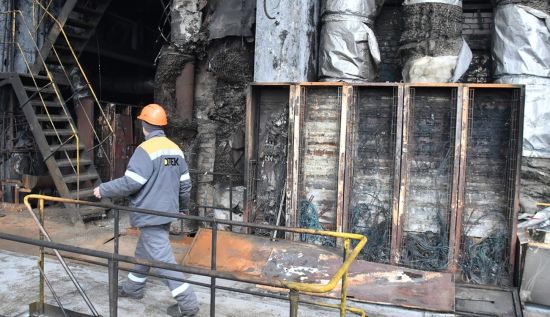
The political scientist contends that Ukraine has responded to these challenges by fundamentally changing the architecture of its energy system. Rather than rebuilding around a limited number of large thermal power plants that remain highly vulnerable to missile strikes, the country has accelerated the deployment of thousands of smaller generating facilities, including solar and wind installations, battery storage systems, and compact gas-fired power units.
The expert explains that this decentralized model significantly reduces strategic vulnerability. Smaller facilities are much harder to disable through a single attack and can be restored far more quickly if damaged. He notes that Ukraine commissioned 762 MW of new distributed gas-fired generation during 2025 alone, bringing total installed capacity close to one gigawatt.
Petrenko further highlights large-scale private investment in distributed resilience. DTEK, working together with Fluence, deployed 200 MW of battery energy storage across six geographically dispersed sites within only six months. At the same time, the company connected more than 5,000 distributed and renewable installations to its electricity networks during 2025—twice as many as in the previous year. These efforts, he adds, form part of a broader national strategy under which distributed energy sources are expected to account for 27 percent of Ukraine’s electricity consumption by 2030.
In conclusion, the analyst argues that while many Western countries and developing economies are only beginning to place concepts such as the electrostate and grid resilience at the centre of their energy strategies, Ukraine has already accumulated several years of practical experience under wartime conditions. According to Petrenko, this experience fundamentally challenges traditional approaches to post-war reconstruction. Simply rebuilding destroyed infrastructure in its previous form would recreate the same vulnerabilities that Russian attacks have repeatedly exposed.
The expert therefore concludes that reconstruction should be viewed not merely as a humanitarian or engineering task, but as an opportunity to establish a new benchmark for resilient, decentralized energy systems. In his assessment, countries seeking to understand how distributed electricity networks perform under sustained attack need not rely on theoretical models, because Ukraine has already generated the real-world evidence upon which future energy security strategies can be built.
Read the FULL article on The Gaze: Decentralised Ukrainian Energy: A New Model for Energy Security
Read also: Between Ruin and Revival: Ukraine’s Sacred Heritage and the Legacy of Empire