Today at 16:52
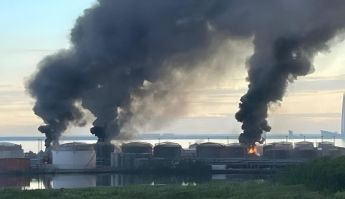
The General Staff of the Armed Forces of Ukraine has presented figures and facts illustrating the degradation of Russia’s military and economic capabilities as a result of Ukrainian long-range strikes.
According to a statement published by the General Staff of the Armed Forces of Ukraine on Facebook and cited by UATV English, more than 30% of Russia’s oil refining capacity has been put out of operation following attacks on key petroleum infrastructure.
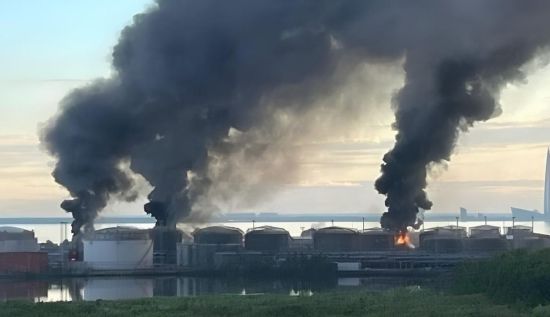
To date, 16 major Russian oil refineries and fuel terminals have been struck, and the operation of more than 40 technological processing units has been halted.
“Due to international sanctions, the enemy is unable to restore these facilities — import substitution is powerless in this case. Oil production is declining because there is nowhere to process it and exporting it has become more difficult, making extraction less profitable. Russian oil production has fallen to its lowest annual level, reaching 9.009 million barrels per day according to OPEC data,” the General Staff stated.
The Ukrainian military also reports a growing fuel crisis in Russia’s rear areas.
Gasoline production in Russia has reportedly dropped to its lowest level in 16 years. Although the Russian government has banned fuel exports in an effort to stabilize supplies, shortages persist.
In temporarily occupied Crimea and parts of the occupied Luhansk Oblast, AI-95 gasoline is reportedly being distributed through ration cards. Fuel stations in Russia’s Kursk Oblast, Belgorod Oblast, and Pskov Oblast have introduced limits of up to 20 liters per vehicle.
Fuel shortages are also affecting Russia’s largest airports, where restrictions on aircraft refueling have reportedly been introduced due to dwindling aviation fuel reserves.
“The situation has deteriorated to the point that the Russian government has officially allowed refineries to produce lower-quality fuel meeting Euro-3 standards because they are no longer capable of producing higher-quality gasoline due to equipment shortages and damage to facilities,” the General Staff said.
The Ukrainian military emphasized that every damaged refinery, disabled processing unit, and emptied fuel depot contributes to shortages for Russian military equipment, reducing the resources available for missile production, artillery ammunition, and financing the war effort.
“Our long-range weapons are systematically destroying the enemy’s fuel and energy complex and military logistics network — the main engine of Russia’s armed aggression. As of June 2026, strikes at distances exceeding 1,500 kilometers inside Russian territory are evolving into a systemic financial, technological, and logistical paralysis of the Russian occupation forces,” the Armed Forces stated.
As previously reported, Ukraine’s Defense Forces struck the Moscow Oil Refinery on June 16.
Read also: G7 Summit Delivers Key Results for Ukraine, Including Additional Air Defense Support — Zelenskyy