Today at 15:06

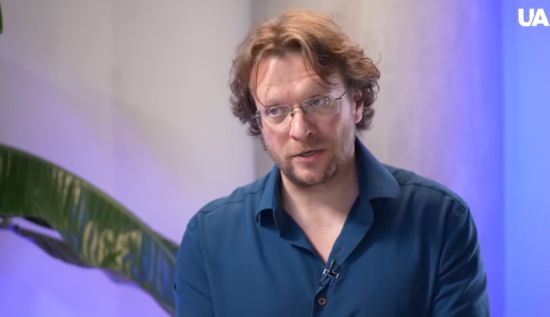
Bringing the Russian dictator Vladimir Putin and other war criminals to justice is a key topic of the spring session of the Parliamentary Assembly of the Council of Europe, which is ongoing in Strasbourg. Permanent Representative of Ukraine to the Council of Europe Mykola Tochytskyi, in an interview with the FREEДОМ TV channel, spoke about important steps toward the creation of a Special Tribunal on the crime of aggression against Ukraine. The diplomat expressed confidence that this process is moving into the practical plane, and no discussions around this can continue, UATV English reports.
Host — Oleh Borysov.
— In May, in Chisinau, the Council of Europe is to take the next step toward launching the special tribunal and conclude an agreement on its steering committee. In your assessment, how significant is this for accelerating bringing Putin to justice?
— In fact, this is an important stage. On May 15, we will move from the policy of supporting Ukraine to a practical result — the creation of the tribunal. What is meant? The member states of the Council of Europe will adopt a decision on approving an enlarged partial agreement on the creation of the Steering Committee of the Special Tribunal for the crime of aggression of the Russian Federation. In this situation, this is already the foundation around which the tribunal itself will be built.
That is, in Chisinau we will move to practical work from political support. This is an important stage and it indicates only one thing: the tribunal — to be. And no other discussions around this can continue.
We can only increase the number of states that will join. On April 21, the Secretary General of the Council of Europe Alain Berset announced that as of now we have 19 member states, with the required 16, plus one observer — Costa Rica. According to my information, a number of other countries are undergoing internal state procedures in order to become founders of the tribunal. Therefore, I think that Chisinau will confirm that this organization was, is, and remains committed to the rule of law, the protection of human rights, and the rule-of-law state.
Actually, I would like to congratulate all my colleagues who worked very hard to have this legal framework, which, by the way, has already been approved by the working group on the creation of the tribunal. In other words, de jure there is already agreement of the states that they have approved this document. Now there must be a higher form of approval, which exists in accordance with the statute of the Council of Europe — adoption by the ministers of foreign affairs. First of all, of those states that have volunteered that they will be founders of the special tribunal.
— Another important issue is the financing of the special tribunal. How will it take place, are there already certain allocated funds?
— There are 19 countries plus one that have confirmed the intention to join. And this is the effective work demonstrated by the Council of Europe. However, we cannot be responsible for the financial side. In order for us to understand what funds will be needed, during previous meetings of the Council of Europe an advance group was created, which is preparing the organizational launch of the tribunal. It is this group that will deal with the development of financing mechanisms, the budget, mechanisms for selecting judges, and so on. In order to help in the future the country that will host the tribunal on its territory to form the budget. That is, the final cost estimate of the tribunal itself.
As for whether there is money already now, for the work of this advance group, which I mentioned, which will be auxiliary in the creation of the tribunal, we have received assistance from the European Union — 10 million euros. At this stage, this is enough in order to, from the three phases — the zero one, in which we are now, and the first — work on the necessary mechanisms.
— The Special Tribunal is certainly the main topic of the spring session of PACE. In an interview, the Secretary General of the Council of Europe Alain Berset told us many details. However, on the margins of the session many other processes are taking place. In general, how is the work in PACE progressing regarding uniting around Ukraine?
— Despite the fact that this time we do not have specific resolutions on Ukraine, our delegation is working very actively in all directions. These include migration issues, questions of protection of life, freedom of religion, freedom of speech, the fight against disinformation, and so on. In each of these directions, our delegation takes an active part. From work in committees — legal, migration, social — to direct voting in the hall of the Council of Europe.
Read also: “Europe’s Leverage Is Justice”: Alain Berset on Ukraine Ahead of PACE Debate