Today at 15:06

The Ukrainian diaspora in the United States, which consists of around one million people, plays an active role in shaping American politics and elections by supporting lobbying groups, funding political candidates, and uniting their votes in strategic states.
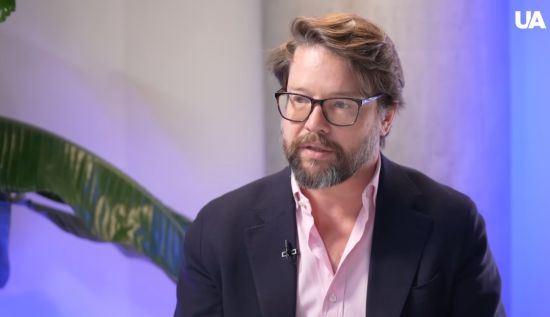
Dive in this topic with Bohdan Popov, head of digital at the United Ukraine Think Tank, communications specialist, and public figure, in his article for The Gaze.
Firstly, Popov argues that approximately one million Americans are of Ukrainian descent, making up around 0.3% of the total U.S. population. Following Russia’s full-scale invasion of Ukraine in 2022, tens of thousands of Ukrainians arrived in the United States. According to the 2023 American Community Survey, 74,694 Ukrainians came to the U.S. in 2022 alone.
Many of these new arrivals entered under temporary protection schemes such as TPS, the United for Ukraine program, or as refugees. As a result, they are not U.S. citizens and therefore ineligible to vote in American elections.
The largest Ukrainian diaspora communities in the U.S. are found in major metropolitan areas, with New York hosting 22% of Ukrainian immigrants, followed by California with 16%, and Washington with 9%, based on 2015–2019 ACS data. Other notable Ukrainian populations are located in states like Pennsylvania, Ohio, Indiana, and Illinois — often referred to as the “Rust Belt” — as well as in Minnesota, North Dakota, Washington state, and major cities such as Los Angeles and Sacramento.
Secondly, the expert emphasizes that some of the most influential Ukrainian organizations in the United States include the Ukrainian Congress Committee of America (UCCA), the U.S.-Ukraine Foundation (USUF), and initiatives like Razom for Ukraine.
The UCCA, which brings together around 110 local Ukrainian associations, has been active since the 1940s and engages in political, cultural, and educational efforts. Since 1977, it has operated a permanent office in Washington, D.C., known as the Ukrainian National Information Service (UNIS), which manages communications with Congress and federal agencies. According to UCCA, UNIS helps Ukrainian Americans across the country connect with their elected officials.
This network collaborates closely with the bipartisan Ukrainian Caucus in both the House and Senate, regularly issuing “action alerts” to mobilize community members around legislative developments and party positions. For instance, ahead of the 2020 party conventions, UCCA submitted a 100-page briefing titled “U.S. Relations with Ukraine” to both the Democratic and Republican Committees. Though UCCA is a non-profit funded by membership dues, donations, and public events like “Ukrainian Days in D.C.,” its primary focus lies in cultural and educational activities, with some elements of political advocacy.
Thirdly, the author explains that the Ukrainian diaspora holds considerable influence in the U.S. through its strong ties with members of Congress and ongoing advocacy efforts. Key supporters of Ukraine in Congress include bipartisan groups such as the Congressional Ukraine Caucus in the House of Representatives and the Senate Ukraine Caucus.
One prominent figure is Congresswoman Marcy Kaptur (D-OH), co-chair of the House Ukraine Caucus, who, according to analysts, wields significant influence and has long championed pro-Ukraine legislation. The caucus includes over 90 bipartisan members. In the Senate, support is led by co-chairs Richard Durbin (D-IL) and Roger Wicker (R-MS).
Beyond Congress, allies can also be found in the White House. The Biden administration, in particular, has maintained close communication with Ukrainian-American groups. In Ukraine, the diaspora is often described as “millions of lobbyists for Ukraine across the globe.” Ukrainian-Americans consistently back the administration’s bipartisan stance on Ukraine-related issues. For example, organizations like UCCA and UNIS frequently submitted public appeals urging the White House not to reduce financial assistance to Ukraine.
Finally, Popov summarizes that the Congressional Ukrainian Caucus, established in 1997, is a key bipartisan group within the U.S. House of Representatives dedicated to advancing U.S.-Ukraine relations. According to the UCCA, it unites lawmakers with a shared commitment to strengthening bilateral ties and, with the involvement of the Ukrainian-American community, supports Ukraine’s progress in areas such as democratization and market reforms.
This caucus is considered one of the most active ethnic advocacy groups in Congress. Given the ongoing war, its role is expected to grow even more prominent. In the future, its agenda could expand to include issues like U.S. defense industry reform or fostering technological cooperation with Ukraine’s strategic sectors.
Additionally, the possible adoption of a “dual citizenship” law (proposed in 2024) by Ukrainian lawmakers could further mobilize the diaspora’s political engagement abroad. As of 2025, the efforts of the Ukrainian Caucus have already produced concrete outcomes: several pieces of legislation passed by Congress directly reflect the influence of the Ukrainian-American community and their push to bolster Ukraine’s international standing.
Read the full article by Bohdan Popov on The Gaze: Diaspora Diplomacy: How Ukrainian Americans Strengthen U.S.-Ukraine Ties
Read also: What are the Goals of Russian State Terrorism Against Ukrainians?