Yesterday at 20:06

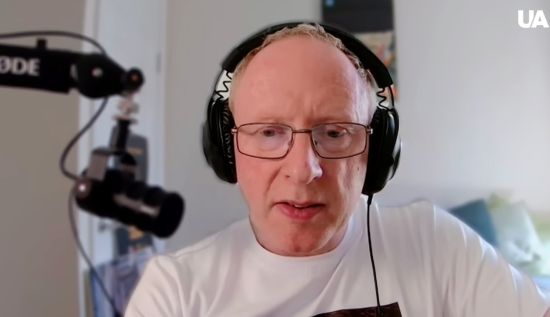
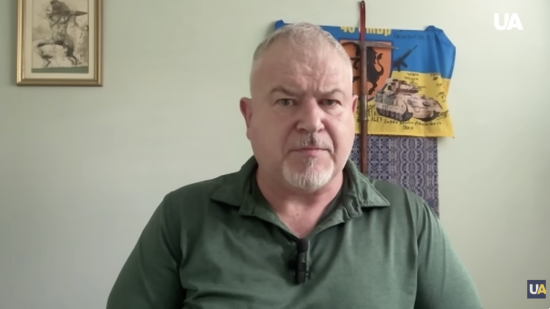
In an exclusive, candid, and in-depth interview, Tinatin Akhvlediani, a leading research fellow at the Centre for European Policy Studies (CEPS) in Brussels, along with host Henry Keen, unmask the behind-the-scenes diplomacy of major players. We analyze an unprecedented diplomatic asymmetry: why Trump’s emissaries — Steve Witkoff and Jared Kushner — have already repeatedly visited the Kremlin but have yet to find time for a visit to Ukraine.
Is European mediation capable of balancing these backstage negotiations, and how does Kyiv’s rapid institutional and digital integration into the European Union, actively overseen by CEPS, strengthen Ukraine’s positions regardless of Washington’s further steps?
— What is the purpose of your visit, and what exactly do you do?
— First of all, thank you very much for having me. We have been speaking online for a couple of years, so I’m very happy to finally be here on the ground in Kyiv and have the opportunity to spend time here.
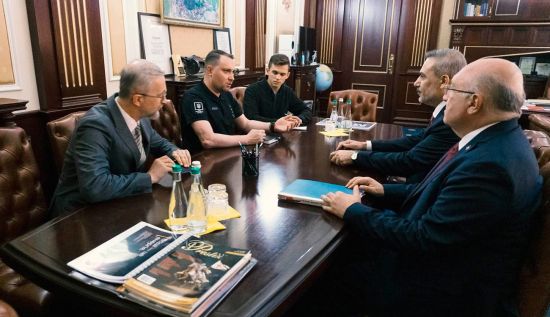
What brings me here is our work. I came together with our Director of Research and colleagues from Brussels. As representatives of a think tank, our goal is to contribute to Ukraine’s EU accession process and support it in practical ways.
Specifically, we are training government officials, policymakers, experts, and civil society representatives on EU alignment, the enlargement process, and the requirements Ukraine faces on its path toward membership. A major focus is digital transformation and digital governance.
This work is supported by the United Nations Industrial Development Organization. Through this project, we support Ukraine’s reconstruction through digital development, innovation, and the innovation ecosystem.
That is essentially what brought us here.
— Ukraine really is the place to be when it comes to innovation. Europe can probably learn quite a lot from Ukrainian IT specialists.
But let me ask you this. After last night’s massive terror attack, did it change your perspective on the war?
— It mainly reinforced what we already believed. We are deeply impressed by the resilience of the Ukrainian nation. My colleagues and I spent last night in Kyiv. We were fortunate to be staying in a hotel with a shelter, so we spent the night there and remained safe.
But the price that Ukraine is paying for its European future and its independence is enormous. Still, we continue to be amazed by the resilience of Ukrainian society. This is not my first visit to Ukraine during wartime. I remember once being told by Ukrainians: “If we wake up, we go to work. If we don’t wake up, we don’t go to work.”
Today we woke up and continued our meetings exactly as planned. Despite the lack of sleep, our schedule was not affected at all. That reflects the spirit Ukrainians have shown for more than four years now.
We will only be here for one week, but during that time we want to contribute as much as we can. Coming from Brussels, we can explain how the EU works and what issues are currently being discussed regarding Ukraine’s accession process.
Nothing can fully replace personal communication and direct contact with people. As an enlargement expert, I need to see how the country functions during wartime. I cannot rely solely on media reports or online information. So I’m grateful for the opportunity to be here and contribute in whatever way I can.
— No, our thanks go to you and your colleagues. You really have to put your feet on the ground to understand what’s happening here. Are you the only courageous person in your organization?
— Not at all. If my colleagues weren’t courageous people, they wouldn’t be here.
This time I’m here together with our Director of Research. Previous visits were supported by the German Ministry of Foreign Affairs. This time the support comes through the United Nations Industrial Development Organization.
There are many international organizations and governments helping Ukraine and supporting people who work on Ukraine-related issues, making visits like ours possible even during wartime.
— Let’s talk about sanctions. Russia always seems to find new ways to circumvent restrictions. More sanctions, more loopholes, more circumvention. Do you believe there is a way to break out of this vicious circle?
— Sanctions absolutely matter. For Putin to continue waging war against Ukraine, he needs money. We know very little about what is truly happening inside the Kremlin, but we can see signs that Putin is under significant pressure.
The attacks we’ve witnessed recently demonstrate frustration. One reason is simple: war is expensive. Russia needs enormous resources to sustain its military operations. Of course, events in Iran and rising oil prices help Putin because higher energy prices increase Russian revenues.
However, the sanctions imposed by the United States and the European Union have had real effects. We are now discussing more than twenty sanctions packages, including preparations for a twenty-first package.
These measures have not been without results. They have imposed substantial costs on the Russian economy. Are there loopholes? Absolutely. And I completely agree that closing those loopholes is essential. Many of them exist in energy trade, where enforcement remains difficult. The United States and the European Union need to apply even greater pressure. With the political changes in Hungary, I am also more optimistic that Hungary will no longer obstruct the EU’s sanctions policy toward Russia.
— I’m not saying sanctions aren’t working. I just look at the twenty-first package and wonder why everything wasn’t included in the very first package.
— Bureaucracy is part of the answer, but leverage is another part. You don’t necessarily want to use every available tool at once. Part of sanctions policy is preserving leverage over time. As the war continues, you need new measures available for future pressure.
That said, the scale of US and EU sanctions has been significant. We have seen real effects. More needs to be done, but the pressure is growing and it is working.
— Do you believe we are approaching the point where Russia’s imperial ambitions begin to crumble, or am I engaging in wishful thinking?
— No, I think the process has already started. The real question is how quickly it will progress. Another factor is how much support Ukraine continues to receive.
Putin’s strategy is to exhaust Ukraine’s air defenses, exhaust resources, and spread terror throughout society.
That is exactly why we see attacks against civilian infrastructure. The objective is to disrupt daily life and wear down public morale.
Ukraine’s strategy, together with its partners, should therefore be to exhaust Russia’s ability to finance and sustain the war.
Every successful strike against energy infrastructure, oil facilities, or other critical assets reduces Russia’s operational capacity. That pressure needs to continue.
— The Kremlin keeps saying it can handle everything. That nothing can hurt Russia. That its resources are endless. Yet we see fuel shortages and growing logistical problems.
— Russia is still finding alternatives because it continues to have international partners. Unfortunately, Russia is not fully isolated. Countries such as China, North Korea, and to some extent India continue maintaining relationships with Moscow.
As long as Russia retains significant international partners, it will continue finding ways to mitigate pressure.
That is why increasing international coordination remains so important.
— What about the nuclear issue? We could probably spend hours discussing it. My next question concerns Russia weaponizing everything — food, money, energy, and now once again the Zaporizhzhia Nuclear Power Plant.
Russia has effectively turned the plant into a military facility and then complains when something happens there. Recently, Russian claims about Ukrainian strikes near the plant were rejected by the Ukrainian Armed Forces. Is this a sign of Kremlin panic?
— Definitely. It’s panic, but it’s also a threat. Whenever Russia puts a nuclear power plant on the table, it is engaging in coercion. It is a form of blackmail. And it’s not just a threat against Ukraine. It threatens the entire region and, in many ways, the whole European continent.
That is why the international community, the European Union, the United States, and Ukraine all have a stake in preventing such scenarios.
A nuclear power plant should never become a bargaining chip.
We know Russia has repeatedly tried to weaponize this issue, but that is not how the twenty-first century should function, particularly in the democratic world. This should not even be an option.
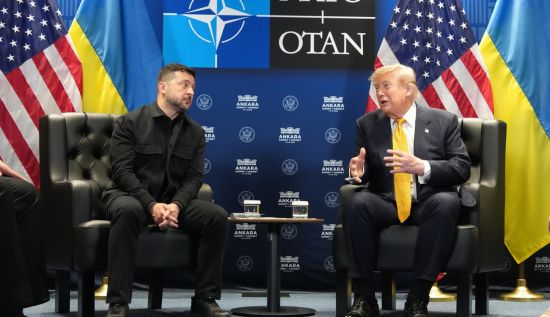
— Another topic we could discuss for hours. Let me move to something else. President Trump’s special envoys and his close associate Jared Kushner have never actually visited Ukraine. Now there are reports suggesting they may finally come. Why now?
— We need to wait and see. The challenge is that statements coming from the Trump camp are often inconsistent and sometimes even contradictory. So it is difficult to analyze US engagement through a perfectly rational framework because the messaging itself is not always consistent.
Ultimately, much depends on what is happening in President Trump’s thinking at any given moment. But if we try to identify a possible reason, then one explanation would be that they see a prospect for negotiations moving forward. If they are coming to Ukraine, perhaps they have received information suggesting that Russia may be more serious about negotiations or more willing to engage. If that is the case, it would also suggest that Putin is under increasing pressure.
Again, we do not know what is happening behind closed doors. But one indicator is that US officials have previously said they would not actively pursue ceasefire talks until both sides demonstrated genuine political willingness to negotiate.
Ukraine has consistently demonstrated that willingness. The key variable has always been Vladimir Putin. If something is changing now, then that change must be coming from the Russian side.
— And if negotiations do happen, do you believe Europe should be involved and perhaps help mediate?
— If by Europe you mean the European Union, then absolutely the EU should be at the table. This is not only about Ukraine’s security. It is about the security of the European Union itself. Ukraine is an EU candidate country and is moving through the accession process quite rapidly.
This war has shown the European Union that its future and security are directly connected to Ukraine. So the EU cannot be absent from negotiations. The real question is in what form it participates.
We have heard statements from figures such as Kaja Kallas and from leaders of several member states. Many of them argue that the EU cannot really be a neutral mediator. I agree with that assessment.
The EU has never been neutral in this conflict. It has clearly supported Ukraine.
Traditionally, mediators are expected to maintain neutrality, and that is not the EU’s position. Nevertheless, because the outcome directly affects European security, the EU must have a seat at the table and must actively defend its interests.
— Do you believe in these peace talks?
— I believe in peace talks if Russia becomes sufficiently weakened. Otherwise, I remain skeptical. Historically, Vladimir Putin has been very successful at manipulating foreign leaders and governments.
Unless he finds himself in a genuinely dangerous position — politically weakened, economically weakened, and strategically weakened — I do not believe meaningful negotiations will succeed.
That is why it has taken so many years just to bring him toward the negotiating table. I hope that moment comes soon.
— Tina, people often say that Ukraine is Europe and Europe is Ukraine. I can see that you genuinely believe this.
— I come from Georgia, so this is very personal for me. I am a citizen of Georgia and a citizen of Belgium, but first I was a citizen of Georgia. I have never considered myself anything other than European. What Russia is trying to erase in Ukraine is precisely that European identity. That is what this struggle is really about.
Georgia experienced Russian invasion back in 2008, and for us as well this has always been about returning to our European family through the European Union. Unfortunately, that path has often required sacrifice and blood. It should not be that way. It is profoundly unfair. But at the very least, we must preserve our memory and understanding of history.
We cannot allow Putin’s narratives to prevail because they are built on manipulation rather than historical truth.
— Tina, thank you very much. We have covered almost all of my questions. Perhaps you would like to ask me one?
— Certainly. I’m genuinely impressed by the resilience of Ukrainian society. Watching you continue these broadcasts and seeing daily life continue despite everything is remarkable. As someone coming from Brussels, I would like to ask: what do you see as the main challenge for Ukraine’s European future and EU accession?
— Corruption. And, importantly, the way we are fighting it. People in Europe often say Ukraine has many corrupt officials. My response is: you see them because they are being exposed.
Almost every month there are new investigations, arrests, and public scandals. That means the system is working. Ukraine is undergoing enormous changes — military, social, political, and institutional.
At night we fight to survive. During the day we try to build a better future. We want to become one of the strongest parts of the European family. And we are ready to share our military experience.
I recently spoke with Senator Richard Blumenthal, who pointed out that Ukraine immediately shared battlefield lessons and technologies such as the Delta system with its partners. Even when intelligence cooperation was interrupted at certain moments, Ukraine still shared its expertise. That real combat experience is incredibly valuable.
We are focused on the future rather than dwelling on past disagreements. And I think there have been important positive changes recently within Ukraine’s political and security institutions. The system is improving.
— I’m very glad to hear that. Corruption is indeed one of the key areas where Ukraine must continue reforms because EU accession begins and ends with the core European principles: human rights, rule of law, and justice reform.
From Brussels, that remains a central message. Progress in those areas is extremely important and very welcome.
At the same time, many people in Brussels — both policymakers and experts — are encouraged by the fact that Ukraine continues to maintain independent anti-corruption institutions that actively do their work.
I greatly admire their efforts and hope they continue with the same determination. And as you mentioned, defense and security are areas where Europe has much to learn from Ukraine. That is why we are here — to learn and then bring those lessons back to Brussels and share them across Europe.
Read also: Russia’s Military Collapse & NATO’s Fear: Glen Grant on Ukraine’s Deep Strikes