Today at 20:06
Ukraine has called on participating countries to complete domestic procedures and ratify the documents necessary for the establishment of the Special Tribunal for the Crime of Aggression against Ukraine, stressing that preparations for the tribunal’s practical launch have already entered a new phase.
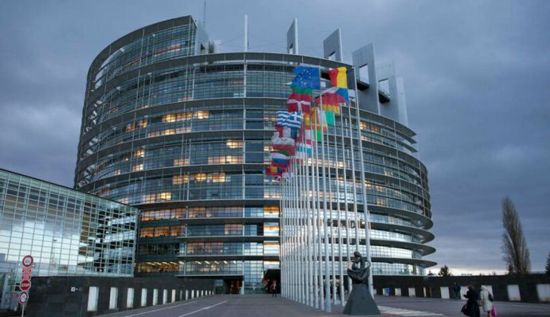
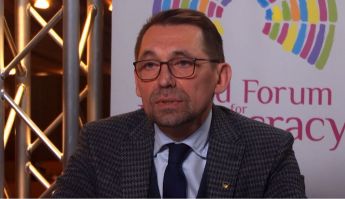
Mykola Tochytskyi, Ukraine’s Permanent Representative to the Council of Europe, made the appeal in comments to Ukrinform.
According to Tochytskyi, the issue will be one of the central topics discussed during a joint meeting of the Council of Europe’s Committee of Ministers and the Bureau of the Parliamentary Assembly of the Council of Europe (PACE).
“I will address the joint meeting of the Committee of Ministers and the PACE Bureau, where the outcomes of the ministerial meeting in Chisinau will be discussed. One of the key issues will be the need to accelerate ratification of the documents related to the establishment of the tribunal. I will urge parliamentarians not to delay domestic procedures and ratification,” he said.
The Ukrainian diplomat recalled that during the ministerial meeting held in Chisinau, 36 states and the European Union supported the creation of the Special Tribunal, which is intended to prosecute the crime of aggression committed against Ukraine.
According to Tochytskyi, Kyiv is continuing diplomatic efforts to broaden international participation in the initiative beyond the current group of supporters.
“Outside the Council of Europe and the European Union, two countries have already joined the process — one from Latin America and Australia. Since the Chisinau meeting, our advocacy work has continued without interruption. We know that several other countries from North America are also moving toward participation,” he said.
The diplomat noted that preparatory work is already being carried out by the Special Tribunal Advance Team, which was established with financial support from the European Union.
The team is currently developing recommendations regarding the future structure of the tribunal, including its composition, staffing requirements, and operational framework.
A key task, according to Tochytskyi, is cooperation with the country that will ultimately host the institution.
“The Advance Team is preparing proposals regarding the tribunal’s composition and staffing. Most importantly, it is working together with the government of the state that agrees to host the tribunal,” he explained.
Representatives of the team, together with Dutch experts, have already inspected potential facilities that could house the tribunal and are preparing recommendations on suitable locations.
Tochytskyi said that a decision on the next phase of preparations, including the selection of specific premises, could be made in the near future.
“We hope that next week a decision can be taken regarding Phase Two — specifically, which facilities will be used,” he stated.
He added that security considerations remain the primary factor in determining the final host location.
The creation of the Special Tribunal is intended to address a legal gap in international justice mechanisms by providing a framework for prosecuting senior political and military leaders responsible for the crime of aggression against Ukraine.
On May 15 in Chisinau, 36 states and the European Union adopted the Enlarged Partial Agreement on the Management Committee of the Special Tribunal for the Crime of Aggression against Ukraine. The agreement will enter into force once participating states complete the required domestic ratification procedures.
Ukrainian officials view the tribunal as a crucial step toward ensuring accountability for the decision to launch the war and strengthening the broader international system of justice and responsibility.
Read also: Zelenskyy Stresses Need for Constructive Relations With Poland Ahead of Gdańsk Recovery Conference