Today at 01:04

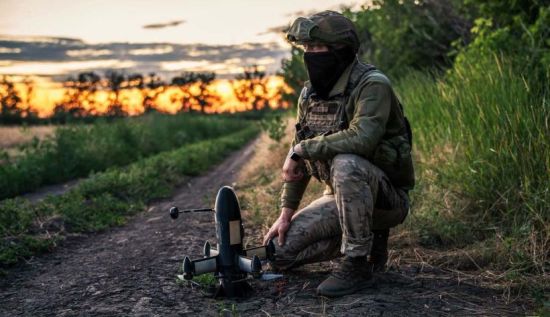
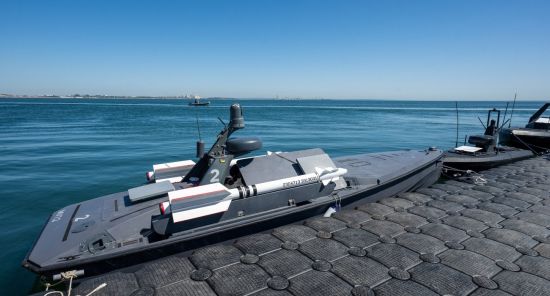
Advances in Ukrainian unmanned systems have significantly expanded the range at which the Defense Forces can strike targets, allowing them to place Russian military logistics far behind the front line under sustained fire control, UATV English informs.
This was highlighted by Yurii Fedorenko, commander of the 429th Achilles Separate Unmanned Systems Brigade of Ukraine’s Unmanned Systems Forces, during a broadcast on the FREEДOM TV channel on June 6.
According to Fedorenko, one of the key factors behind this progress has been improvements in communications systems and battery technology, which have dramatically expanded the capabilities of Ukrainian drones.
“The main change has been in communications. Our drones are receiving high-quality control and video transmission systems. If a battery previously powered equipment for five hours, today, thanks to new technologies, a battery of the same size and weight can store twice as much energy. As a result, equipment that used to operate for five hours can now function for nine or ten hours without any increase in size,” he explained.
He noted that the same trend is evident in unmanned aviation.
“If a battery remains the same size and weight but its capacity doubles, a drone that previously had a range of 30 kilometers can now operate at distances of 60 kilometers or more. And the number of such drones in Ukraine’s Defense Forces is growing literally every day,” Fedorenko said.
According to the brigade commander, this is already having a serious impact on Russia’s ability to supply its frontline units.
“Enemy logistics in rear areas are no longer merely experiencing discomfort. They have literally started burning. Through closed channels, we see genuine hysteria among the enemy. But even without access to internal information, it is enough to listen to Russian military bloggers and propagandists, who are increasingly forced to acknowledge the effectiveness of Ukrainian strikes against rear infrastructure,” he said.
Fedorenko explained that Russian logistics hubs were traditionally located about 30 kilometers behind the front line, where ammunition, drones, food supplies, and equipment were unloaded before being forwarded to combat units.
“At a depth of roughly 30 kilometers from the front, the enemy unloads shells, drones, food supplies, and other resources, which are then transferred to more mobile vehicles such as motorcycles and buggies before being delivered to frontline units. This system enabled the enemy to sustain artillery fire and support combat operations. Today, that zone is under our fire control. If we destroy a convoy carrying ammunition before it reaches the unloading point or strike warehouses 40–50 kilometers behind the front, frontline units simply do not receive the supplies they need. What is an artillery piece without ammunition? A piece of metal. What is a drone operator without drones? In the Russian system, he automatically becomes an ordinary infantryman,” Fedorenko explained.
He added that Ukrainian drone capabilities now extend far beyond the enemy’s immediate rear areas.
“We are operating not only at depths of 30–50 kilometers. Strikes are being carried out at ranges of 70, 100, and even 150 kilometers. That is where command posts, ammunition depots, railway echelons transporting weapons and explosives, and air defense systems restricting Ukrainian aviation are located. And all of these assets are now beginning to burn just like targets deep inside the Russian Federation,” he said.
Fedorenko stressed that technological superiority is becoming one of the decisive factors on the battlefield.
“Technological progress today is advancing not in small steps but in giant leaps. Most importantly, Ukraine continues to retain the technological initiative in this process,” he concluded.
Earlier, Commander-in-Chief of the Armed Forces of Ukraine Oleksandr Syrskyi reported that Russia continues to build up its forces in southern Ukraine. In particular, Russian troop concentrations on the Oleksandrivske axis now exceed 71,000 personnel.
Read also: What Mood Are Armenians Bringing to the Polls and What Are They Expecting From the Elections?