Yesterday at 20:06
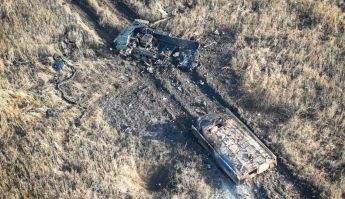
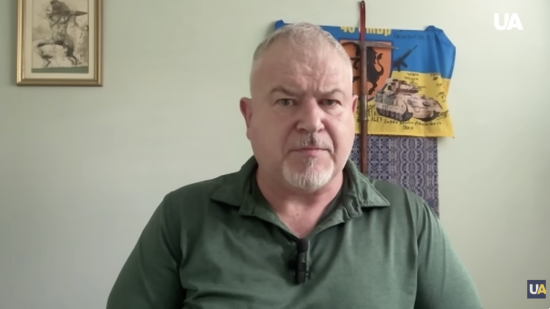
The pace of Russian territorial gains in Ukraine has decreased fiftyfold compared to last year—from about 700 square kilometers per month to just 14 square kilometers in May 2026, according to military expert and reserve colonel Serhii Hrabskyi.
Speaking on Ukrainian Radio, as reported by UATV English, Hrabskyi noted that despite Russia’s numerical superiority, its forces have failed to maintain significant momentum on the battlefield.
“Quantitatively, the enemy has more forces and should be demonstrating a high rate of advance. But that is not happening. The effectiveness of Russian troops is declining rapidly. Eleven months ago, the enemy was advancing at a rate of 700 square kilometers per month. Based on the results of May 2026, that advance amounted to 14 square kilometers. Even that figure is conditional, as it is offset by our counterattacks,” he said.
According to Hrabskyi, the Russian military machine is “seriously bogged down on Ukrainian land and in Ukrainian skies.”
He added that Ukraine remains in a strategic defensive posture but is maintaining parity through the intensive use of long-range drone strikes against targets inside Russia.
Commenting on reports that Ukrainian forces had established fire control over the area of Donetsk International Airport, Hrabskyi said this could significantly reduce Russia’s ability to use the facility as a launch site for Shahed-type attack drones.
At the same time, he cautioned that it is still too early to speak about fully severing the land corridor to Crimea. Current Ukrainian strikes on transportation routes remain selective rather than continuous.
“We are now carrying out segmentation and isolation of specific sectors. We cannot yet keep drones permanently over the occupied territory. The next stage will be the creation of isolated zones. Destroying a grouped target is far more effective than chasing individual vehicles across the steppe,” he explained.
In Hrabskyi’s view, meaningful progress toward ending the war will only come once Ukraine regains control of Crimea. He argued that sustained attacks on logistics networks could eventually make Russia’s hold on the peninsula operationally unsustainable, leaving Russian forces vulnerable to defeat or surrender.
The expert also described the likelihood of Russia using nuclear weapons in response to losing Crimea as low. He argued that Russia has never conducted modern combat testing of its nuclear arsenal and noted that Western reactions to repeated Kremlin nuclear threats have become “virtually nonexistent.”
Regarding Ukraine’s ballistic missile program, Hrabskyi said development is proceeding from the ground up and remains in the field-testing stage, making routine battlefield deployment premature at this point.
Earlier, Ukraine’s Special Operations Forces of Ukraine reported establishing aerial control over part of the Russian land corridor to occupied Crimea along the Melitopol–Chonhar route.
Read also: If Ukraine uses 600 drones and missiles every day, Russians will feel this war, — Zelenskyy