Today at 11:22

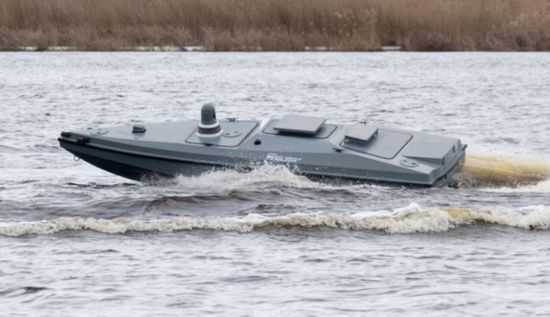
Russia has proven to be particularly unprepared for the asymmetric tactics employed by Ukrainian naval drones, allowing Ukraine to significantly limit the activity of the Russian fleet in the Black Sea and effectively confine it to its bases.
This was stated on Ukrainian Radio by Andrii Ryzhenko, a retired Navy captain first rank and former Deputy Chief of Staff of the Ukrainian Navy from 2004 to 2020, UATV English reports.
According to Ryzhenko, modern naval warfare is increasingly moving away from the principle of numerical superiority and is instead based on maneuverability and exploiting an adversary’s vulnerabilities.
“Maneuver warfare at sea is built on asymmetry. Asymmetry means identifying an enemy’s weak points and exploiting or destroying them,” the expert explained.
Ryzhenko noted that Russia’s Black Sea Fleet was designed according to Cold War-era concepts, relying on the large-scale deployment of numerous warships. However, the emergence of naval drones exposed a critical vulnerability in that model.
“The strategy was based on overwhelming force — landing large numbers of assets, crushing the opponent with sheer strength, and accomplishing objectives. But thanks to this asymmetric approach, a critical vulnerability of these massive Russian warships to naval drones was exposed,” he said.
According to the expert, despite Russia’s substantial advantage at the start of the full-scale invasion, Ukraine managed to alter the situation through the use of modern technologies.
“Thanks to this innovative approach, despite being outmatched by a ratio of 12 to 1 at the beginning of the war and 4 to 1 today, Ukraine has effectively confined enemy forces to ports and naval bases,” Ryzhenko stated.
He added that Russian bases, including those in Sevastopol and Novorossiysk, have significantly strengthened their defenses and are forced to devote additional resources to countering naval drones.
“Whereas the Russians previously maintained around 50 ships and vessels at sea at any given time, the number of ships deployed is now often close to zero. This is precisely because of that. Naval drones have truly written a new chapter,” he noted.
Ryzhenko also described the further use of unmanned systems in the Black Sea as highly promising for monitoring maritime areas, protecting ports and critical infrastructure, safeguarding shipping routes, and preventing enemy forces from reaching weapon-launch positions.
He added that Ukraine’s experience with naval drones is already being actively studied by Western partners and incorporated into both operational concepts and technological solutions.
As previously reported, Norway is allocating 1.2 billion Norwegian kroner (approximately €109 million) for the development and procurement of naval drones for Ukraine.
Read also: Moscow Oil Refinery suspends operations after Ukrainian drone strike