Yesterday at 19:21

Russia is not simply stealing Ukrainian children — it has launched a factory for erasing their identity.
The forced displacement of Ukrainian children to the territory of Russia and the occupied regions has ceased to be a matter of speculation or propagandistic accusations. It has been documented by international investigative commissions, university research laboratories, the International Criminal Court, and specialized committees of the United States Congress. The scale of what is happening allows us to speak of a systemic campaign aimed at destroying the Ukrainian identity of an entire generation.
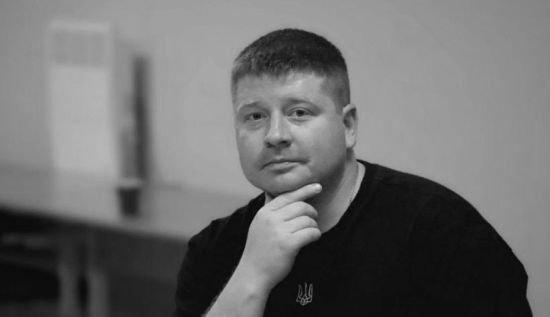
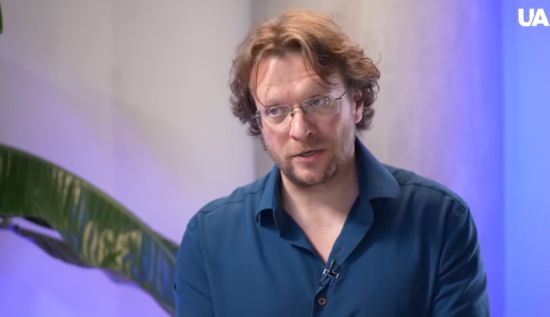
Read the FULL analysis by Bohdan Popov, Head of Digital at the United Ukraine Think Tank, communications specialist and public figure.
As Bohdan Popov emphasizes, one of the most serious legal and humanitarian conclusions of the war was formalized on March 12, 2026, when the United Nations Independent International Commission of Inquiry on Ukraine published a report recognizing that Russia committed crimes against humanity through the deportation, forced displacement, and enforced disappearance of Ukrainian children. The Commission confirmed more than 1,200 documented cases involving children from regions such as Donetsk, Luhansk, Kherson, Zaporizhzhia, and Kharkiv.
Four years into the full-scale invasion, the majority of these children have not been returned. According to the report, around 80% remain in Russia or occupied territories, with the whereabouts of some still unknown. Popov notes that investigators found clear evidence of deliberate obstruction: Russian authorities concealed information about the children from their families and significantly delayed repatriation processes. In many cases, parents were left to search for their children independently, without institutional support.
The issue has also gained political attention in the United States Congress. During hearings held in 2025–2026, lawmakers reviewed extensive evidence of deportations. Senator Lindsey Graham stated that Ukraine had documented at least 19,546 cases of illegal deportation or forced displacement of children. Russian officials were invited to participate in the hearings but did not appear. Ukrainian representatives, including Olha Stefanishyna, described the campaign as systematic, while children’s rights advocate Mykola Kuleba stressed that many children were stripped of their identity—names, language, family ties, and cultural background.
Further evidence has deepened the масштаби of the issue. On March 25, 2026, the Yale Humanitarian Research Lab released a report documenting the involvement of major Russian state-linked corporations in the relocation and indoctrination of Ukrainian children. According to the findings, companies such as Gazprom and Rosneft played a role in financing and organizing transportation to camps in Russia and occupied Crimea. Researchers identified multiple facilities where children were subjected to ideological conditioning, and in some cases, military-style training.
Popov underlines that these findings reinforce earlier legal actions. In 2023, the International Criminal Court issued arrest warrants for Vladimir Putin and Maria Lvova-Belova in connection with the deportation of children. However, enforcement remains limited due to Russia’s non-recognition of the Court’s jurisdiction.
At the same time, international efforts to document and reverse these actions are ongoing. The U.S. has allocated funding for evidence collection, while the International Coalition for the Return of Ukrainian Children—co-led by Canada and Ukraine—coordinates search and repatriation efforts across more than 40 countries. Despite this, the results remain limited: only about 2,000 children have been returned out of tens of thousands of documented cases. Estimates suggest that the total number of deported children could reach up to 35,000.
Popov concludes that the return of Ukrainian children must become a central element of any future peace process. Without full repatriation, no settlement can be considered legitimate or complete. This position, he notes, is increasingly shared across political institutions in the United States, international investigative bodies, and the Ukrainian government itself.
Read the FULL article on The Gaze: Russia Is Turning Ukrainian Children into Instruments of War
Read also: Russia and Iran Are Building a Trade Axis to Outlast Any War