Yesterday at 20:06
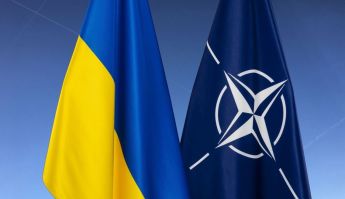
NATO member states are considering new commitments to provide Ukraine with military support worth €70 billion, which could be announced at the Alliance summit in Ankara next month, according to Politico, citing NATO diplomats, UATV English reports.
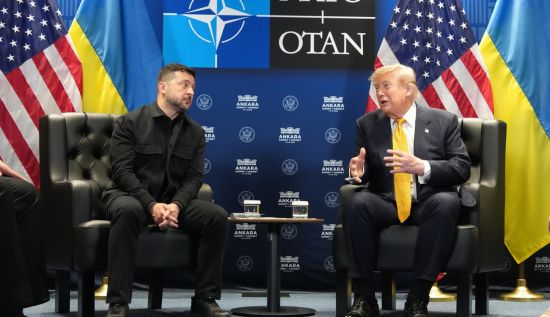
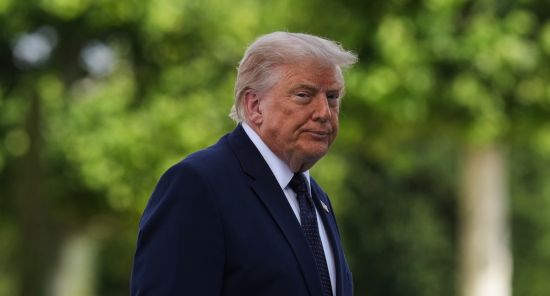
Ukrainian President Volodymyr Zelenskyy has already confirmed that he will personally lead Ukraine’s delegation at the summit. US President Donald Trump is also expected to attend.
NATO has entered the final stage of preparations for the Ankara summit, where support for Ukraine is expected to be one of the central topics. One of the key issues under discussion is a proposal by NATO Secretary General Mark Rutte for member states to allocate 0.25% of GDP annually to support Ukraine.
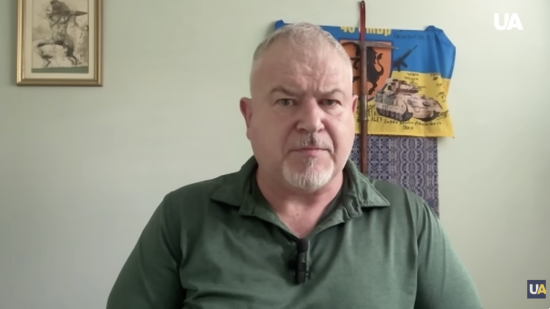
“We are among the summit’s priorities. That is why such an active discussion is taking place regarding how this support should be measured and how it should be formalized,” said Alona Hetmanchuk.
During the Ukraine–NATO Council meeting held in Kyiv on June 3, allies reaffirmed their commitment to continue supporting Ukraine, particularly in the areas of air and missile defense. Zelenskyy stated that additional partner contributions to the PURL program are expected in June and should strengthen Ukraine’s defense capabilities.
“I am grateful to every country working with us on this task, including France, Norway, Germany, Denmark, Sweden, Italy, and others. Europe will truly become stronger when this result is achieved. Not if, but when. And it will happen, but timing matters greatly, and we need to move faster. We also discussed the NATO summit in Ankara with the Secretary General. Ukraine has received an invitation and will be represented there. Most importantly, the summit must produce concrete results for Ukraine. Missile defense is one of those possible outcomes,” Zelenskyy said.
US Secretary of State Marco Rubio stressed that the Trump administration does not intend to withdraw from NATO but continues to demand substantial reforms, including increased defense spending by European allies.
“I think the next NATO meeting in Turkey in July will probably be the most important meeting in NATO’s history because there are a number of issues that need to be clarified,” Rubio said.
According to The Economist, European governments increasingly recognize that supporting Ukraine is not only an act of solidarity but also a matter of their own security. As US involvement declines, Europe is gradually assuming a larger role in supporting Kyiv through military assistance, financial aid, diplomacy, and future integration efforts.
Defense analyst Arda Mevlutoglu noted that Europe’s increased defense spending and industrial expansion since 2022 have created favorable conditions for deeper cooperation with partners such as Turkey.
“Europe needs solutions that can be implemented very quickly. Turkey has significant production and development capabilities. Conditions on the ground are favorable, but strong political will at the highest level is needed. In recent weeks, countries such as Germany and Belgium have shown encouraging signals in this direction,” he said.
Meanwhile, Finnish President Alexander Stubb called on the European Union to “think big” and seize the current geopolitical moment. He suggested that the EU could eventually expand to as many as 40 members, including not only Ukraine and Moldova but potentially the United Kingdom, Turkey, Norway, Canada, and Iceland.
German Chancellor Friedrich Merz also reiterated the EU’s commitment to enlargement, particularly regarding the Western Balkans.
“You have all seen that President Macron and I put forward a proposal on the next steps. I am extremely grateful that it was not only our joint proposal but that it received broad support in the European Council and among the Western Balkan states. We are now beginning a process that will gradually allow the countries of the Western Balkans to join the European Union. The message today remains the same: we want you with us,” Merz said.
As part of a broader European security strategy, Ukraine’s Foreign Intelligence Service reports that the EU plans to significantly expand the role of its Intelligence and Situation Centre. The initiative aims to improve intelligence-sharing mechanisms among EU institutions and member states, with a new strategy expected to be presented during the summer of 2026.