Today at 11:55

NATO is building partnerships with private companies to improve the monitoring and detection of hybrid threats, according to Politico, as reported by UATV English.
The Alliance aims to disrupt Russia’s hybrid attacks by combining private-sector capabilities with military resources to counter threats ranging from sabotage to drone incursions, a senior NATO strategist told the publication.
“The goal is to stop playing whack-a-mole,” said James Appathurai in an interview.
“Russia’s hybrid campaign is significant, it is growing, and it will not stop regardless of what happens in Ukraine,” Appathurai emphasized.
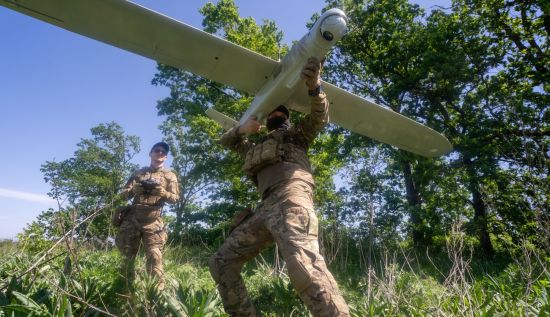
For years, Europe has faced cyberattacks, disinformation campaigns, sabotage, and other disruptive activities that Western security experts describe as a coordinated hybrid warfare campaign directed by Moscow. Recent drone incursions into NATO’s eastern flank airspace and GPS-jamming incidents have prompted European governments to adopt a more robust response.
NATO is now implementing the hybrid strategy adopted last year. The Alliance is partnering with private companies—from cybersecurity firms to utility providers—to enhance military monitoring capabilities and improve responses to hybrid threats. A broader strategy for countering hybrid aggression is also expected to be discussed at next month’s NATO summit in Ankara.
Officials warn that Russia is becoming increasingly bold in its attacks on Europe. According to Appathurai, Moscow is now “willing to risk the lives of our citizens,” referring to a December 2025 incident in Poland that threatened more than 30 wind and solar power facilities and a major power plant serving nearly half a million people.
Recently, NATO fighter jets also shot down a drone that entered Latvian airspace.
Last month, NATO established partnerships with cybersecurity leaders Microsoft, Palo Alto Networks, and ESET to strengthen the protection of Alliance networks against cyberattacks.
The Alliance has also expanded cooperation with the energy sector by sharing threat intelligence with oil and gas companies as drone incursions targeting offshore energy infrastructure continue.
“We are already connecting their sensors to our military headquarters, conducting joint exercises, and aligning long-term security plans,” Appathurai said.
The same approach is being applied to data centers. NATO is working with major U.S. cloud-service providers to help protect critical digital infrastructure while simultaneously building its own secure cloud network.
“The goal is simple: to ensure NATO can continue functioning even if a critical system fails—or if support from the United States becomes more difficult to rely on,” Appathurai noted.
For years, Western governments primarily relied on deterrence to counter hybrid threats. However, ongoing cyberattacks, infrastructure sabotage, and influence operations linked to Russia have led governments to increasingly adopt active defense measures.
Unlike conventional military operations on land, at sea, or in the air, hybrid attacks often occur in the shadows, making it significantly harder to identify perpetrators and prove intent. NATO has traditionally avoided directly attributing such attacks, instead supporting member states when they linked incidents to Russian or Chinese state-backed actors.
According to Appathurai, NATO’s hybrid strategy will help both the Alliance and its private-sector partners systematically address the full spectrum of hybrid threats instead of “lurching from crisis to crisis.”
“If a train derailment occurs in the Netherlands or a factory is set on fire, it could simply be an accident or arson. But if you see seven such incidents, all connected to support for Ukraine, then you know who is behind it,” Appathurai concluded.
Earlier, Colonel Sönke Marahrens of Germany’s Cyber and Information Domain Service stated that Germany was slow to recognize the scale of Russia’s hybrid attacks, but that political leaders and security institutions have increasingly worked in recent years to raise public awareness of the threat.
Read also: U.S., Iran reach peace deal