Yesterday at 23:59

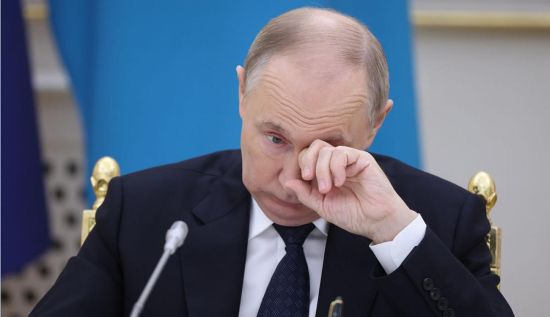
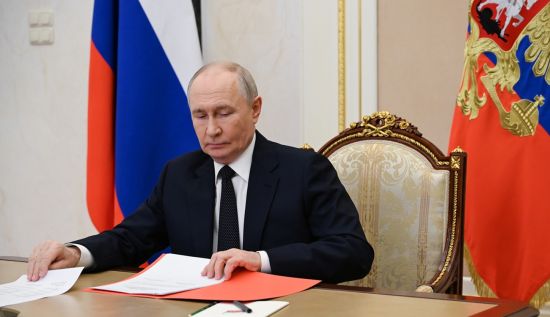
Ukraine has agreed that an immediate comprehensive ceasefire on land, sea, and air for 30 days, which could be extended, is necessary. However, Russian President Vladimir Putin is a major obstacle because he refuses to accept the proposal.
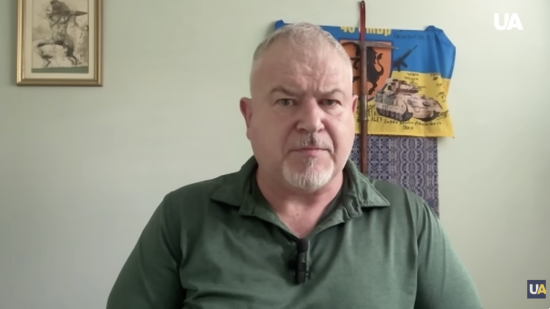
This was stated by Trump’s special representative Keith Kellogg.
“We returned from London two weeks ago, we spoke with the ‘coalition of the willing’ led by the British, French, and Germans, who are ready for this comprehensive ceasefire with many conditions. And the Ukrainians agreed to it,” Kellogg said.
He acknowledged that Ukraine “is not thrilled with all the proposals, but this is the path that needs to be taken.” Kellogg also assessed that an agreement between the parties is “close.”
“And the only person who can deliver the desired result is President Trump. But that’s if Putin agrees. Right now, our main obstacle to progress on peace is the Russian president, who refuses to agree,” Kellogg stated.
Kellogg also claims that Ukraine is ready for a 30-kilometer demilitarized zone in its war with Russia.
The U.S. special envoy on Ukraine, Keith Kellogg, voiced the idea of a demilitarized zone jointly controlled by Ukraine and Russia.
Speaking on Fox News, Kellogg said that a solution could involve a ceasefire “in place,” meaning both sides retain control over the territories they currently hold.
“So, the Ukrainians need to be told: ‘This is one of those situations that can change over time.’ If you agree to a ceasefire along current positions, then the land you control and have fought for — that’s your land for now,” he said.
He cited post-WWII examples from the Baltic states and German reunification, noting that political realities can shift over time.
Kellogg reported that Ukraine is allegedly ready for a temporary demilitarized zone: Ukrainian forces would withdraw 15 km, and Russian forces would do the same. This would create a 30-kilometer buffer zone free of hostilities, monitored by the “coalition of the willing.”
“And they are ready, for a certain period, to establish a demilitarized zone. In fact, they said: we move back 15 km, and you, Russians, also move back 15 km. This creates a 30-km zone that is clearly controlled. It will be possible to monitor for any violations,” the U.S. envoy suggested.
Kellogg believes that a 30-day ceasefire could be a turning point.
“And if we can hold that truce for 30 days — I really believe this — then it can be extended. And as a military man, I’ll say: it’s very hard to restart a conflict once the fighting has stopped. And I don’t think they will go back to war,” he asserted.
Earlier, media reports stated that Donald Trump’s team handed Ukraine a one-page document in Paris, presenting it as a “final offer” for peace. Among other things, the U.S. was ready to recognize Russia’s control over Crimea and ease sanctions on Moscow.
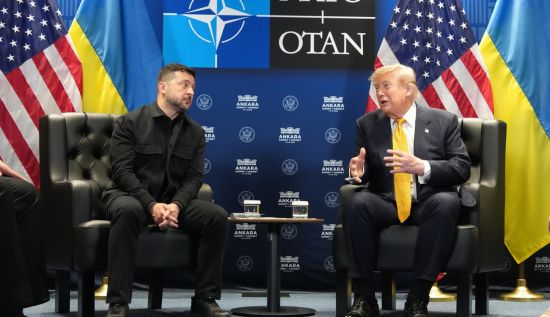
On April 24, President Volodymyr Zelenskyy confirmed that the U.S. had proposed its own strategy on Ukrainian territories during talks in London. However, he said that “another paper appeared” after the U.S. proposal.
According to the president, this document was prepared after Ukrainian, European, and U.S. representatives had “talked” in London.
Reuters later published the full text of the American proposal to end the Russia-Ukraine war, which includes U.S. recognition of Russian control over several occupied Ukrainian territories.
Read also: India Launches Missile Strikes on Targets in Pakistan