Yesterday at 20:01

The world is once again fragmenting. What once appeared settled is now openly contested.
In the 1990s, following the collapse of the Soviet Union, many believed that liberal democracy had achieved a definitive victory. Today, that confidence has evaporated. The international order built after World War II is no longer universally accepted as the only viable model for global development. Forces long thought defeated—revanchism, authoritarianism, propaganda, and the cult of power—have returned to the center of world politics.
Global polarization is no longer rhetorical; it is structural. States are increasingly compelled to choose where they stand: with an order based on freedom and rules, or with an alternative rooted in coercion and dominance.
This shift did not occur overnight. It began when the West relaxed prematurely. Rather than completing the work of dismantling the Soviet ideological legacy, Washington and Brussels became absorbed in self-referential nation-building projects in the Middle East. At the same time, Beijing methodically constructed an alternative system of influence through economic expansion, while Moscow nurtured resentment and pursued revenge for its Cold War defeat. Iran continued to cultivate proxy networks, and North Korea refined its nuclear ambitions.
Neglect of the global periphery, asymmetric market practices, and a technocratic, detached diplomatic language gradually alienated much of the Global South. By the 2020s, this produced a volatile mixture: Western fatigue combined with sophisticated hybrid strategies from China and Russia.
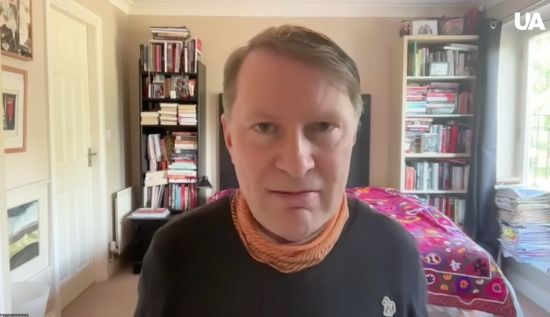
Read more in the article by Bohdan Popov, head of digital at the United Ukraine Think Tank, communications specialist, and public figure.
The expert explains that today’s world is increasingly divided into two broad camps. The first is the pro-Western group—comprising Europe, North America, key Asian democracies, and close partners in the Indo-Pacific. Their strength lies in institutionalized rules, open markets, free media, and democratic governance. Their vulnerability, however, stems from internal crises of confidence, cultural polarization, and the rise of populism.
Popov argues that opposing them is a loosely coordinated anti-Western bloc. Russia acts as a disruptor and spoiler. China operates as a long-term strategist, constructing a parallel architecture of influence. Iran and North Korea function as ideologically driven regimes. Surrounding them is a constellation of dependent or sympathetic states stretching from Africa to Latin America. What unites this camp is not a shared ideology, but a shared grievance: the belief that the West is hypocritical, exploitative, and no longer entitled to global leadership.
The specialist emphasizes that the conflict is not limited to battlefields. Media platforms, state-sponsored broadcasters, social networks, and digital influencers have become weapons in a new kind of global confrontation where narratives matter as much as missiles. The message is built on persistent myths: the West as a neo-colonial power, democracy as disorder, Ukraine as a proxy rather than a sovereign state.
These narratives resonate strongly in parts of the Global South because they align with historical grievances, religious sensitivities, and populist instincts. Here, the West is losing ground—not because its values are weak, but because its voice is muted, fragmented, and uncertain.
Popov concludes that reversal requires a strategic shift:
- First, the West must abandon defensive diplomacy and reclaim ideological confidence. Democracy is not a liability but a source of resilience. Markets are not instruments of exploitation but engines of opportunity. Human rights are not a Western imposition; they are universal principles.
- Second, engagement must extend beyond the traditional Western core. A new relationship with the Global South is essential—built through education, cultural exchange, infrastructure investment, and genuinely fair economic cooperation. Countering China’s influence requires not obstruction alone, but a more compelling alternative grounded in tangible outcomes rather than bureaucratic rhetoric.
- Third, the West must wage a coordinated information campaign. Media ecosystems need to be built for audiences in Africa, Latin America, and Asia, using local languages, journalists, and cultural contexts. Digital platforms—from TikTok to YouTube—must matter as much in Nairobi or São Paulo as they do in New York. Ukraine’s experience with hybrid warfare offers valuable lessons in this domain.
- Finally, the West must abandon the comforting illusion that history automatically favors democracy. History favors those who act decisively. Global polarization is already underway. If democratic societies do not shift from reactive defense to strategic initiative, they risk awakening in a world shaped by authoritarian platforms, coercive energy dependencies, and ideological extremism.
Read the full article by Bohdan Popov on The Gaze: Global Polarization: How to Counteract the Creation of an Anti-Western Camp
Read also: Trump’s Sanctions Gambit: Can Economic Pressure Really Cripple Russia’s War Machine?