Today at 20:09

The European Union is prepared to accept a trade deal with the United States that includes a 10% universal tariff on many goods exported from the EU—but it wants Washington to commit to lowering rates in key sectors.
This was reported by Bloomberg, citing informed sources.
According to the sources, the “key sectors” include pharmaceuticals, alcohol, semiconductors, and commercial aircraft.
They noted that the EU is also insisting on quotas and exemptions in order to effectively reduce Washington’s 25% tariff on cars and auto parts, as well as the 50% tariff on steel and aluminum.
Sources claim that the European Commission, which handles the EU’s trade matters, views the deal as somewhat favorable to the US, but still acceptable.
As is known, the EU must conclude a trade agreement with US President Donald Trump by July 9, before tariffs on nearly all EU exports to the US rise to 50%.
Both the EU and the US are increasingly confident that a temporary agreement can be reached by the July 9 deadline, allowing talks to continue beyond it. According to the sources, any deal would cover both tariff and non-tariff barriers, the procurement of key US goods, and outline areas for further cooperation.
Sources also said that European Trade Commissioner Maroš Šefčovič will lead a delegation to Washington this week to try to advance negotiations.
The agency also learned that the European Commission informed member states on Monday, June 30, that the EU had received a US proposal covering tariffs, non-tariff trade barriers, and strategic cooperation areas. However, the specific details of the American proposal—such as the potential tariff levels—were not disclosed to the member states.
Ahead of next week’s deadline, officials have identified four possible scenarios:
- a deal with an acceptable level of asymmetry;
- an unbalanced US offer the EU cannot accept;
- an extension of the negotiation period;
- Trump pulling out of talks and raising tariffs.
In the latter case, the EU will most likely respond with full retaliatory measures, the sources said.
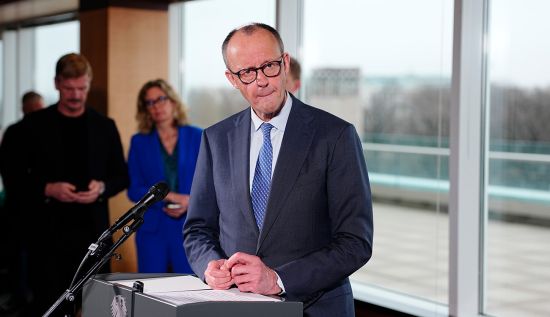
Notably, German Chancellor Friedrich Merz stated that a quick and simple trade agreement with the US is better than a “slow and complicated” one.
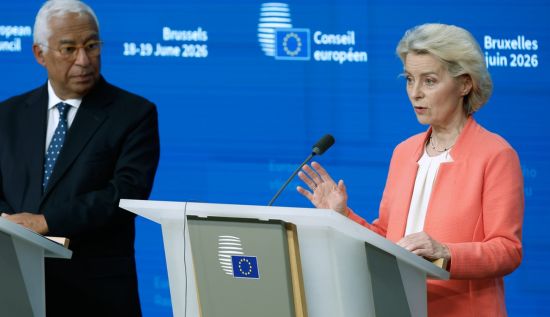
Meanwhile, European Commission President Ursula von der Leyen said the EU is ready to reach a trade deal with the US—but also prepared for the possibility that no such agreement will be made.
Read also: Germany supports Ukraine’s NATO membership – Zelenskyy