Today at 19:05

Ukraine’s growing long-range strike capability has forced the Russian leadership into difficult decisions over how to allocate its limited air defense assets, according to Gert Kaju, head of the Defense Readiness Department at Estonia’s Ministry of Defence, UATV English reports.
“As Ukraine’s long-range strike capabilities continue to grow, the Russian leadership faces a difficult choice. Since there are not enough air defense systems to protect every facility, they have to prioritize certain targets. This inevitably creates risks, leaving some sites unprotected and forcing them to accept that they may be destroyed or put out of action,” Kaju said, as quoted by ERR.
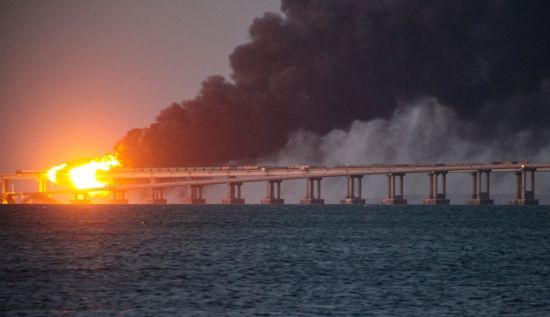
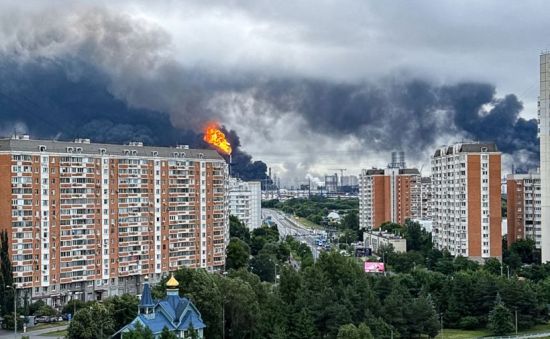
According to the report, Ukrainian strikes this week targeted two Russian space communications centers that play a key role in military communications. Other attacks hit oil refineries in the Moscow, Tyumen, and Orenburg regions, fuel storage facilities, including in occupied Crimea, and a missile component manufacturing plant in Russia’s Voronezh region.
Kaju said Ukraine’s strikes have increasingly complicated decision-making for the Russian military and political leadership.
He noted that Ukrainian medium- and long-range attacks have disabled up to 20% of Russia’s oil refining capacity, contributing to serious fuel shortages and prompting restrictions on gasoline sales in around 20 Russian regions.
Kaju added that Russian leader Vladimir Putin has publicly acknowledged the impact of Ukraine’s long-range strikes and ordered the government to mitigate their consequences.
According to the Estonian defense official, Ukraine’s 2026 strategy is focused on inflicting greater losses on Russian forces, expanding its precision strike capabilities, disrupting Russian logistics, and weakening Russia’s economic ability to sustain the war in order to push Moscow toward serious negotiations.
Kaju also said the intensity of Russia’s long-range attacks declined significantly over the past week.
“Compared to the previous period, the intensity of Russian long-range strikes has dropped considerably. Moscow launched around 900 drones and 12 missiles, representing a 35% decrease in drones and an 84% decrease in missiles compared to previous weeks,” he said.