Today at 14:22

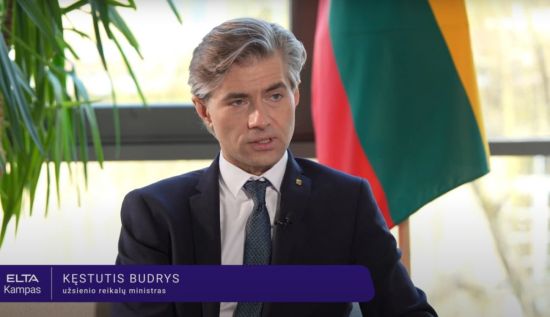
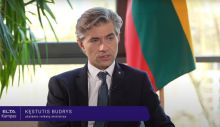
Lithuanian Foreign Minister Kęstutis Budrys considers it a dangerous trend that the economic interests of EU member states are gaining greater influence over the process of developing sanctions against the aggressor state.
He said this to journalists ahead of the EU Foreign Affairs Council meeting in Brussels, an Ukrinform correspondent reports, cited by UATV English.
“We don’t yet have a result [on the 21st sanctions package — ed.]. I expect further discussions to figure out exactly where we’re stuck with these decisions,” the minister said.
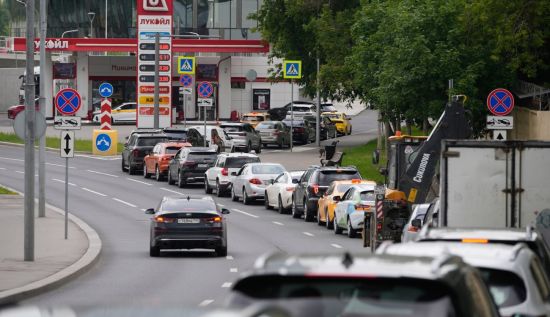
He recalled that Lithuania advocates imposing economic restrictions on Russia’s leading energy companies, including Rosatom and Lukoil, as well as a full ban on shipping services for Russia’s shadow fleet.
“We still can’t make a decision on banning such services, or on the transport of Russian LNG. I’m waiting for the discussions to see whether we’re taking this seriously enough. It can’t be that the level of ambition of our sanctions is limited by our commercial interests,” Budrys said.
In his view, economic interests must not outweigh security interests.
“With every new package, the economic interests of member states dominate the discussions more and more, and this is a very dangerous trend,” Budrys said.
As previously reported, the EU Foreign Affairs Council meeting is taking place today in Brussels, with Ukrainian Foreign Minister Andrii Sybiha participating.
Read also: Germany’s Quantum Systems to Test Autonomous Trucks and Unmanned Ground Vehicles in Ukraine