Yesterday at 20:06
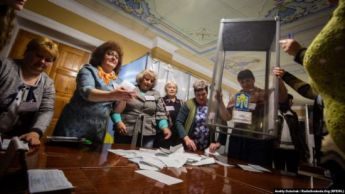
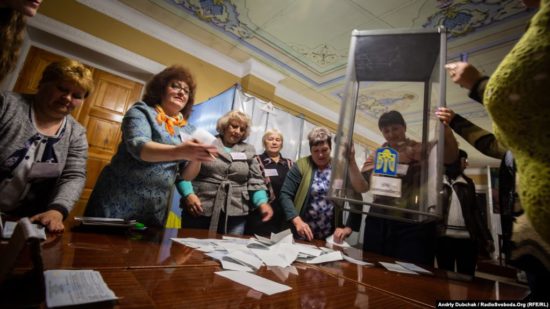
Photo RadioFreeEurope/RadioLiberty
If Ukraine’s presidential elections marked the rise of the so-called “clone candidates,” then its parliamentary elections mark their revenge.
Yes, the “clones” are back — and with a vengeance, RadioFreeEurope/RadioLiberty reported.
The appearance of candidates with identical or nearly identical names on Ukrainian ballots has been around for years, but the tactic has garnered fresh attention since the presidential election in April, when at least three are believed to have run.
The best example was that of Yulia Volodymyrivna Tymoshenko, Ukraine’s former prime minister and leader of the Batkivshchyna (Fatherland) party, who found herself on the ballot in the first-round presidential vote beside a little-known lawmaker with a nearly identical name — Yuriy Volodymyrovich Tymoshenko.
Yulia claimed that Yuriy, who admitted to the BBC that someone else had paid his roughly $90,000 registration fee, was put up to it by her political opponent and now former President Petro Poroshenko — an accusation his campaign denied.
Yulia finished third behind Poroshenko and Volodymyr Zelensky, the eventual winner. Yuriy, meanwhile, finished 10th, managing to get 117,693 votes. If Yulia had received all of Yuriy’s votes she still wouldn’t have overtaken Poroshenko to reach the runoff against Zelenskiy, but she nonetheless believed the “clone” harmed her campaign.
Political experts call candidates like Yuriy “clones” and say they are planted maliciously on ballots by opponents to trick people into voting for the wrong candidate, thus costing another candidate crucial votes.
Ukrainians casting their vote in the early parliamentary elections on July 21 will not only face more difficult political choices, but they will also need to be eagle-eyed, as many more like-named candidates will be looking back at them.
Ukraine’s parliament is elected using a mixed election system. Half of its 450 lawmakers are chosen from national party lists, with each party required to clear a 5 percent threshold to take seats. The other half are elected from constituencies using first-past-the-post voting. The clones have infiltrated the latter races.
Ukraine’s parliament approved legislation on July 11 under which all future parliaments would be elected by party-list voting, although the upcoming poll will be unaffected.
Analysis by RFE/RL of more than two dozen constituency ballots shows dozens of clone candidates running with identities similar to incumbents, bigger-name candidates, or those affiliated with popular parties.
In some cases, the clones resemble not other candidates on the ballot, but those in other government positions who are associated with political leaders, including the president.
The best example of the latter is perhaps found in constituency No. 25, where a candidate by the name of Andriy Valeriyovych Bohdan is registered. Bohdan’s biography on the ballot makes it appear that he’s connected to President Zelenskiy and his Servant of the People party — and that just maybe he is the same Andriy Bohdan appointed by Zelenskiy as his chief of staff.
Except that Bohdan is Andriy Yosypovych, and he is not running for parliament. Also, Servant of the People has an official candidate — Maksym Arkadiyovych Buzhansky — on the constituency’s ballot.
On other ballots, the clones are abundant and more straightforward…
For more.