Today at 17:22

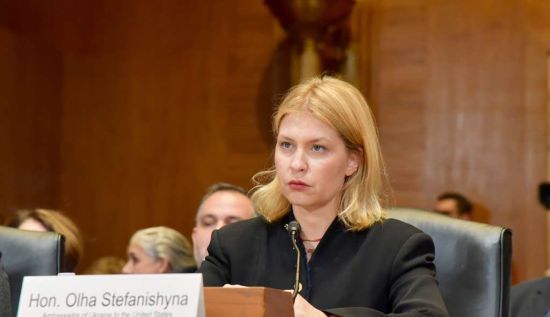
Ukraine’s Ambassador to the United States, Olha Stefanishyna, says recent congressional action on the Ukraine Support Act demonstrates that bipartisan support for Kyiv remains strong as lawmakers continue work on the U.S. defense budget for fiscal year 2027.
In an interview with Ukrinform, Stefanishyna noted that the U.S. House of Representatives approved the Ukraine Support Act earlier this month, describing the vote as an important political signal that Ukraine continues to enjoy broad backing from both Republicans and Democrats.
“The passage of the Ukraine Support Act stirred Congress and demonstrated that Ukraine remains a priority,” Stefanishyna said.
According to the ambassador, numerous Ukraine-related legislative initiatives have been introduced in both chambers of Congress throughout 2025 and 2026, reflecting sustained bipartisan commitment to supporting Ukraine’s defense.
She noted that while the House has already passed the Ukraine Support Act, the Senate is simultaneously advancing additional legislation, including bipartisan proposals that could introduce a broad new package of sanctions against Russia.
Stefanishyna said she continues to maintain regular contacts with lawmakers from both political parties as discussions on Ukraine-related legislation move forward.
At the same time, both the House of Representatives and the Senate are working to finalize their respective versions of the National Defense Authorization Act (NDAA) for fiscal year 2027, one of the most important annual pieces of U.S. defense legislation.
According to Stefanishyna, the Senate Armed Services Committee has already approved a version of the bill that allocates $750 million for Ukraine under the Ukraine Security Assistance Initiative (USAI), nearly three times the amount authorized in the current fiscal year.
The Senate proposal would also extend the USAI program through 2029, preserving one of the principal mechanisms for long-term U.S. military assistance to Ukraine.
In addition, the Senate version includes provisions to establish a U.S.-Ukraine Strategic Defense Innovation Working Group focused on the development of unmanned technologies and requires the Pentagon to continue providing intelligence support for Ukraine’s defense and efforts to liberate its internationally recognized territory.
Those measures are not included in the House version of the legislation.
Instead, the House bill directs the U.S. Departments of State and Defense to prepare a joint report documenting religious persecution committed by Russia in Ukraine and the temporarily occupied territories. It also предусматривает sanctions against individuals responsible for such violations.
The ambassador stressed that the next stage of the legislative process will involve negotiations between the House and Senate to reconcile differences between their respective bills before a final version can be adopted.
Ukraine hopes the final NDAA will retain the provisions considered essential for strengthening the country’s defense capabilities and ensuring continued long-term security assistance.
Stefanishyna also noted that congressional work on Ukraine-related legislation continued despite the Pentagon devoting increased attention to developments involving Iran and the broader Middle East.
According to her, those developments have not resulted in significant disruptions to U.S. military assistance or weapons deliveries to Ukraine.
“It demonstrated that Ukraine remains a priority,” she said, emphasizing that continued U.S. support is particularly important in the areas of defense, air defense, and the protection of Ukrainian cities from ongoing Russian attacks.
The House of Representatives recently also approved separate legislation aimed at strengthening support for Ukraine while increasing sanctions pressure on Russia, underscoring continued congressional engagement on issues related to the war.
Read also: Between Ruin and Revival: Ukraine’s Sacred Heritage and the Legacy of Empire