Today at 20:09

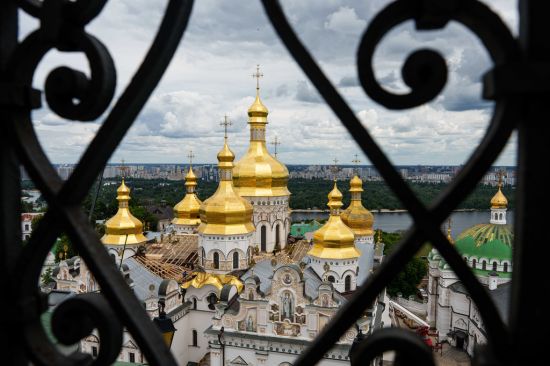
Russia’s recent drone strike on the Dormition Cathedral of the Kyiv Pechersk Lavra has once again highlighted that Ukraine’s cultural and religious heritage remains a target of war. For many Ukrainians, the attack revived memories of an earlier era when Soviet authorities systematically destroyed or repurposed churches, monasteries, and other religious monuments in an effort to erase historical and spiritual identity.
Throughout the twentieth century, thousands of religious buildings across Ukraine were demolished, converted into warehouses, museums, or industrial facilities, while clergy faced persecution and religious communities were dismantled. Following Ukraine’s independence in 1991, the restoration of many of these monuments became one of the country’s most significant cultural revival projects, symbolizing the recovery of historical memory after decades of ideological repression.
Landmark sites such as St. Michael’s Golden-Domed Monastery and Saint Sophia Cathedral illustrate both the destruction inflicted during the Soviet period and the long process of rebuilding Ukraine’s cultural landscape. Their preservation and reconstruction have come to represent not only architectural restoration but also the broader effort to reclaim a national historical narrative independent of imperial legacies.
The article also examines how religious independence became intertwined with questions of national security after Russia’s aggression against Ukraine. While freedom of religion has been preserved, debates have increasingly focused on the institutional influence of religious organizations historically connected to Moscow and the role such structures have played during Russia’s ongoing hybrid war against Ukraine.
Against this backdrop, the Kyiv Pechersk Lavra has become a powerful symbol of Ukraine’s broader struggle to protect both its cultural heritage and its sovereignty. The recent attack on the Dormition Cathedral underscores how religious monuments continue to occupy a central place in the conflict—not only as historical landmarks, but also as symbols of national identity and resilience.
More broadly, the article argues that protecting sacred heritage extends beyond preserving historic buildings. It is inseparable from safeguarding cultural memory, strengthening independent institutions, and defending the right of Ukrainians to shape their own historical and spiritual future without external domination.
Read the full article by Anastasiia Stepanenko, grant writer, project manager, cultural critic, and expert at the United Ukraine Think Tank.